News Broadcasting
TDSAT to accept news broadcasters’ appeal on ad cap


MUMBAI: Is there some relief in store for India’s TV broadcast sector in terms of advertising allowed to be telecast per hour? A slight glimmer of hope appears to have emerged yesterday.
Media reports are that the Telecom Disputes Settlement Apellate Tribunal (TDSAT) has given directions to the News Broadcasters Association (NBA) to submit its appeal against the 12 minute per hour Telecom Regulatory Authority of India’s (TRAI’s) mandate. It also gave TRAI two weeks to file its responses to news broadcasters’ concerns. And the NBA has been given a further two weeks to file a rejoinder after that, say media reports. A new chairman Justice Aftab Alam was appointed to the TRAI last month.

TRAI’s order has forced news channels to reduce their advertising commercial time per clock hour down to 20 minutes and general entertainment channels to 16 minutes per hour from 1 July 2013. This is slated to go down further to 12 minutes per hour from 1 October during the peak season of spending by most brands on TV.
News channels have for the past decade or so operated by having an advertising inventory of between 25 and 30 minutes per hour of telecast, is what the TRAI had observed. This dragged down the quality of viewing experience of TV viewers and it had hence under the quality of service rules for consumers mandated that the advertising air time be brought down almost immediately mid-last year.
Broadcasters had yelped and protested and even challenged TRAI’s locus standi on this decision last year with the TDSAT. But with no chairperson in place, the appeal had been kept in abeyance. The TRAI then came up with the quality of service regulations for advertising on TV on 22 March which have since then been enforced on the industry.
”It is true that broadcasters were going overboard in carrying too much advertising per hour,” says a media observer. ”But the business model of high carriage fees, low distribution revenues and relatively low ad rates has forced this upon news broadcasters. At least, general entertainment channels can charge higher rates. The government could have waited till digitisation was completed and the benefits of higher subscription-lower-carriage fees kicked in.”
In fact most news broadcasters have pleaded that their survival is at stake. Estimates are that news channels in India account for an approximate six per cent genre viewership share.
Advertising revenues for the almost 150 plus news channels operating in India in various language tot up to about Rs 2,200 crore. Broadcasters have claimed that the reduction in air time will not concomitantly be compensated by a hike in ad rates as advertisers and their agencies have only been eroding those over the past few years. They have also said that a large group of small advertisers who have been the main revenue source for TV news channels will not be in a position to absorb sharp hikes in ad rates. 10 second TV commercial rates for news channels vary between Rs 200 to Rs 2,500.







News Broadcasting
News18 India launches Command Centre war explainer with Arya
New show shifts from debates to decoding global conflicts and impacts
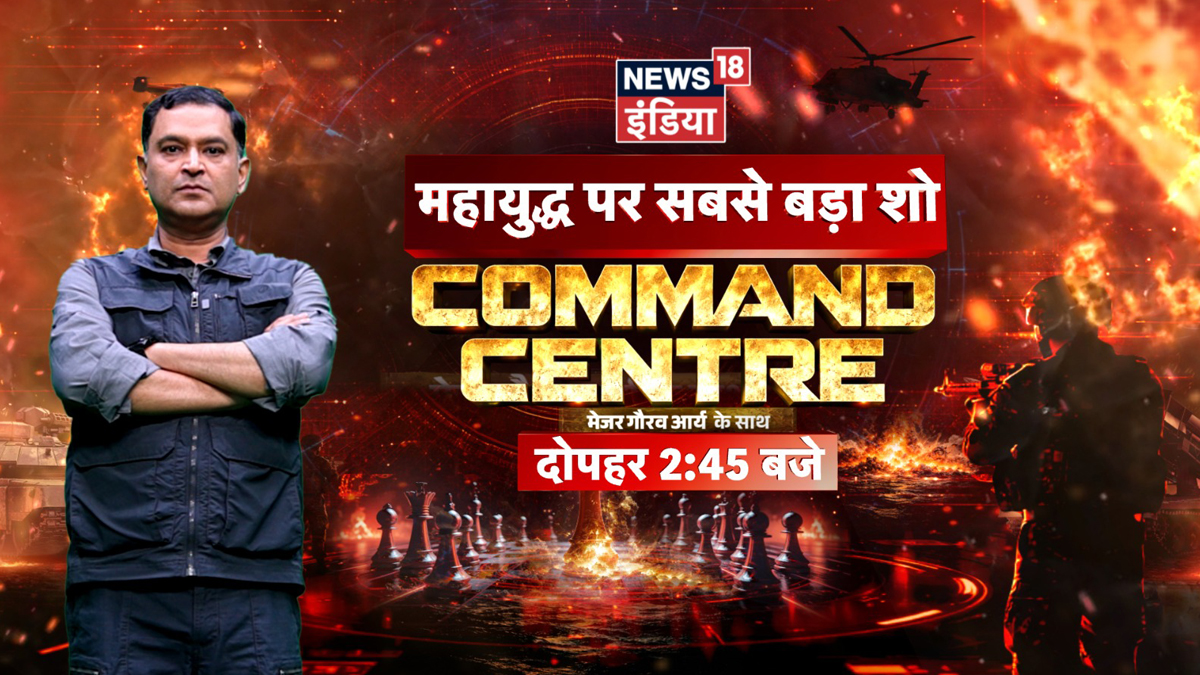
MUMBAI: News18 India has rolled out a new war-focused programme, Command Centre, featuring Gaurav Arya, as it looks to offer viewers a sharper, more grounded take on global conflicts amid rising tensions in West Asia.
Positioned as an “insider war room”, the show moves away from conventional panel debates and instead focuses on explaining military developments, decoding strategy and connecting global events to their everyday impact, from fuel prices to economic shifts.
The format leans heavily on visuals and data. The studio has been designed like a command hub, complete with large LED war maps, real-time graphics and an alert system to track developments as they unfold.
At the centre of it all is Arya, who brings his military background to simplify complex war strategies for viewers. His signature line, “Seedhi baat samjhiye”, anchors the show’s promise of clarity over noise.
News18 India managing editor Jyoti Kamal said, “Command Centre, featuring Major Gaurav Arya is designed to deliver accurate insights and a clear perspective on how evolving conflicts impact everyday life, from household budgets to national security. With expert voices analysing every development in real time, the show goes beyond headlines to decode what’s happening now, what it means, and what could come next.”
Echoing the intent, Gaurav Arya added, “In times of war, confusion is the biggest threat. With News18 India’s Command Centre, we are bringing viewers inside the war room, decoding strategies, tracking every escalation, and explaining, in the simplest terms, what it means for India and for every household. Seedhi baat samjhiye, this is where you understand not just what is happening, but what happens next.”
The weekday show will air in the afternoon slot and will also feature Gaurav Shukla, adding to its editorial depth.
With its mix of analysis, visuals and a clear focus on impact, the show reflects a broader shift in news consumption. Viewers are no longer just watching events unfold, they are looking to understand what those events mean for them.






