News Broadcasting
Tata Sons Chairman N. Chandrasekaran is Business Today’s Business Icon of the Year

Mumbai: Tata Group Chairman N. Chandrasekaran was Awarded the newly instituted Business Icon of the Year, while Infosys Co-founder and Chairman Nandan Nilekani was honoured with the prestigious Lifetime Achievement award at the BT-PwC India’s Best CEOs ranking at a glittering ceremony in Mumbai on Wednesday.
Chandrasekaran won top honours in a ranking that had 19 other winners, including Nilekani.
Union Minister for Civil Aviation and Steel Jyotiraditya Scindia honoured the 20 winners of India Inc at the event, which takes off from Business Today’s Best CEOs issue – an annual compendium of top leaders from various sectors who are leading from the front amid challenging times and geopolitical scenarios.

Scindia also unveiled Business Today’s Best CEOs special issue which profiled the winners belonging to three overall categories – Super Large (TV Narendran, CEO and MD, Tata Steel); Mid-sized (Ashish Bharat Ram, Chairman of SRF); and Emerging (A. Prathap Reddy, Chairman of Balaji Amines) — and across 15 sectors.
Sector-wise winners included Puneet Yadu Dalmia, MD & CEO, Dalmia Bharat (cement), Praveer Sinha, CEO & MD, Tata Power (power), Sandeep Kumar Gupta, CMD, GAIL (oil & gas), Shashi Kiran Shetty, Founder and Chairman, Allcargo Group (Transport & Logistics), Sanjay Koul, CMD, Timken India (Auto & Auto Ancillaries), S. Suresh, MD, EID Parry (Agriculture & Allied), Deepak C Mehta, CMD, Deepak Nitrite (Chemicals), Sajjan Bhajanka, Chairman, Century Plyboards (Industrials), Parmod Sagar, MD & CEO – India, RHI Magnesita (Consumer Goods), Suneeta Reddy, MD, Apollo Hospitals Enterprise (Pharma & Healthcare), Suresh Narayanan, CMD, Nestlé India (FMCG) and Dinesh Kumar Khara, Chairman, SBI (BFSI).
The winners were based on BT-PwC India’s Best CEOs ranking. The study used a robust methodology to assess the top 500 most valuable companies in the country by market capitalisation for growth in revenues, profits, EBITDA and total shareholder returns. After applying further stringent filters, the names of top 3 CEOs in each group – overall and sector-wise – were placed before the jury, who chose the final winners.
This year’s jury comprised Ajay Piramal, Chairman, Piramal Group (Jury Chair); Cyril Shroff, Managing Partner, Cyril Amarchand Mangaldas; Milind Sarwate, Founder & CEO, Increate Value Advisors; Mehul Pandya, MD & CEO, CARE Ratings; Mathew Cyriac, Executive Chairman, Florintree Advisors; and J.N. Gupta, Co-founder & MD, Stakeholders Empowerment Services.
The awards ceremony was the highlight of the day-long BT MindRush programme, BT’s flagship annual conference. The programme saw several stars of corporate India such as N. Chandrasekaran, Nandan Nilekani and Piramal Group Chairman Ajay Piramal talk about the burning topics of the day. In addition, there were master classes from Swami Gaur Gopal Das and Prof. Saugata Ray of ISB, besides two stimulating panel discussions involving top corporate leaders such as Suresh Narayanan, CMD of Nestle India, Suneeta Reddy, MD of Apollo Hospitals, TV Narendran of Tata Steel, Praveer Sinha, CEO & MD of Tata Power, among others.
BT MindRush was started in 2013. Since then, the event has established itself as one of the most sought-after conferences in the Indian corporate calendar.

News Broadcasting
WITT Summit 2026 concludes in New Delhi
Babar Azam’s comical diving attempt goes viral as league introduces anti-dew measures.
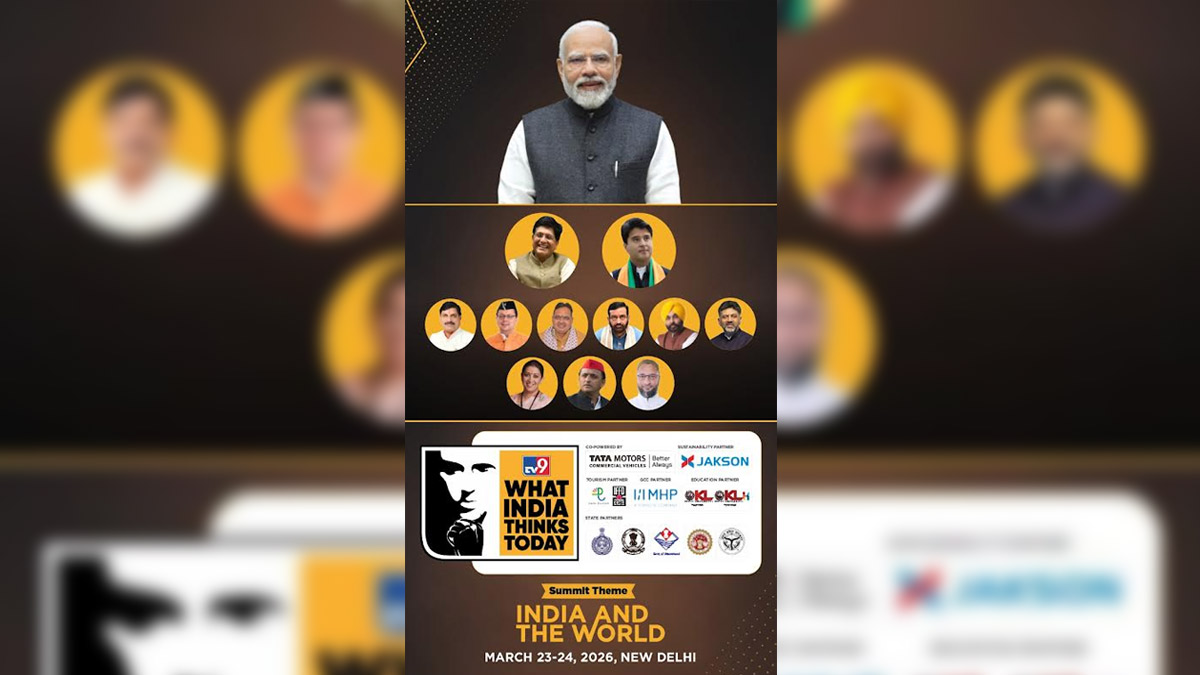
MUMBAI: The WITT Summit just wrapped up with enough big ideas to fill a policy playbook because when India’s leaders, thinkers and icons gather under one roof, even the conversations hit sixes. The eighth edition of TV9 Network’s flagship What India Thinks Today (WITT) Summit 2026 concluded on Saturday after two days of dynamic discussions at its New Delhi venue. India’s largest multi-domain public policy and culture summit brought together political leaders, policymakers, sports icons, artists and technology innovators to examine the forces shaping contemporary India and its global standing.
Prime minister Narendra Modi delivered the keynote address on the theme “India and the World” for the third consecutive year. In a wide-ranging speech, he addressed the ongoing conflict in West Asia, calling for restraint and compassion while highlighting India’s continued development trajectory despite global turmoil.
The summit featured candid conversations with state leaders. Telangana Chief Minister A. Revanth Reddy articulated a people-first governance model and contrasted it with other development approaches. Madhya Pradesh Chief Minister Mohan Yadav declared that Left-wing extremism had been effectively eliminated in his state and highlighted preparations for the upcoming Kumbh Mela. Punjab Chief Minister Bhagwant Mann defended his government’s record, citing the closure of 19 toll plazas and creation of the Sadak Suraksha Force. Karnataka Deputy Chief Minister D.K. Shivakumar expressed confidence in Congress prospects in Assam and addressed recent allegations against him.
On geopolitics and national security, Union Minister Jyotiraditya Scindia outlined India’s ambition to become a builder of trusted digital infrastructure for the world, citing the rapid 5G rollout and village-level 4G connectivity.
Cricket received significant attention. Former India captain Sourav Ganguly praised player freedom and trust as hallmarks of great leadership and named MS Dhoni as the greatest captain due to his World Cup successes. India women’s team bowling coach Aavishkar Salvi credited the BCCI and Women’s Premier League for building a pipeline of world-class talent behind the team’s recent ODI World Cup triumph.
The summit also hosted the inaugural AI² Awards 2026, celebrating the convergence of human creativity and machine intelligence in storytelling and content creation. Poet and kathavachak Kumar Vishwas delivered a nuanced take on India’s concept of Dharma and criticised the recent arrest of an 80-year-old Shankaracharya. Veteran lyricist Sameer Anjaan and storyteller Neelesh Misra reflected on changing music trends and artistic responsibility in the wake of a recent controversy involving Nora Fatehi.
In a country where conversations often run as deep as the Ganges, the WITT Summit proved once again that when leaders, thinkers and storytellers come together, the real winner is public discourse lively, layered and refreshingly unafraid to tackle the big questions shaping India’s tomorrow.








