DTH
Tata Sky demos 4K TV with FIFA World Cup quarter-final match

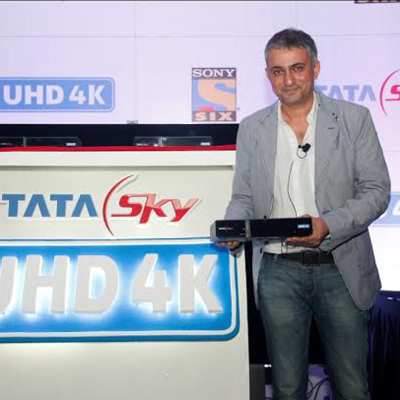
MUMBAI: The era of India being a country that lags behind the more developed nations is gone. Indian DTH operators in the country are waking up, ancticipating future desires of Indian TV viewers. Which is why one of the oldest and largest DTH operators Tata Sky, is keeping itself and its subscribers up to date with the introduction of its 4k Ultra HD service.
The first quarter of 2015 will see Tata Sky roll out its set top boxes (STBs) for its 4k Ultra HD service. The STBs are being made by Technicolor and are based on the high efficiency video coding (HEVC) format that 4k uses the world over. However, prices of the STB are not yet known as the DTH operator wants to reveal it closer to the commercial launch date.

At a demonstration event in Mumbai, Tata Sky along with Sony Six unveiled the 4k UHD service with a live uninterrupted broadcast of the France versus Germany FIFA World Cup 2014 quarter final. The FIFA 4k signal rights had been bought by Sony Six while the cost of acquisition and transmission was split 50:50 by the broadcaster and the operator. The telecast took place live via satellite transmission.
Indiantelevision.com readers will note that Videocon d2h had previewed its 4K service on 3 July 2014 too, a day before Tata Sky..
Even though most industry professionals claim that it is too early to launch 4k Ultra HD in India, Tata Sky chief commercial officer Vikram Mehra feels otherwise. “When we launched HD in 2010, people doubted us saying it won’t work. As you keep enhancing TV experience, the viewer will appreciate it. So, Ultra HD is our endeavour in that area. A technology becomes popular when mainline pay-TV adopts it.”
Mehra feels that movies and sports will be the initial drivers for 4k technology and talks with broadcasters have already commenced. In three to four years, he expects it to be the way of life for most Indian TV viewers. Even though currently there is a lack of 4K content, he feels that it isn’t too far away. “We will make a product that makes sense to the customer. Customers will not buy STBs to adorn their homes. They will buy it for content,” he says.
Sony Six business head Prasana Krishnan feels that more sporting events should be produced in 4K soon, probably in the next year or so. “4K is the future of broadcasting, specially sports. We saw technology move from SD to HD and now HD has become standard. 4K is next,” he says. Krishnan is aware that a full-fledged 4K channel can’t be expected very soon. Big sporting events will have 4K production on crucial days such as the finals, while the run up matches will be in HD and SD.
The 4K screening of the FIFA World Cup 2014 quarter finals that took place in Mumbai yesterday, 4 July saw the Sony Six logo being superimposed on the FIFA feed on an 84 inch Sony television set that is soon to be launched in India and across the world. 4K screens give four times the clarity as compared to an HD feed.
Mehra was not willing to venture any guesstimates about how much uptake the Tata Sky 4K service will have when it launches next year as he feels making futuristic statements is of no use. However, the fact that the DTH operator is confident about its prospects is clear from the contract that it has signed with Technicolor, according to which deliveries of 4K set top boxes in “volume” are expected to commence in early 2015.
Adds Mehra: “We started active service in 2007 and today we have 2.9million people paying Rs 45 each for them. Close to 65 per cent of our STBs sold today are HD. This from our total subscriber base of 13.5 million.” It is pertinent to note that Tata Sky, since late last year, has stopped buying any more SD boxes.






DTH
DD Free Dish e-auction revenue dips to Rs 642 crore as slot sales fall
Revenue dips as revised norms reshape bidding in 94th round
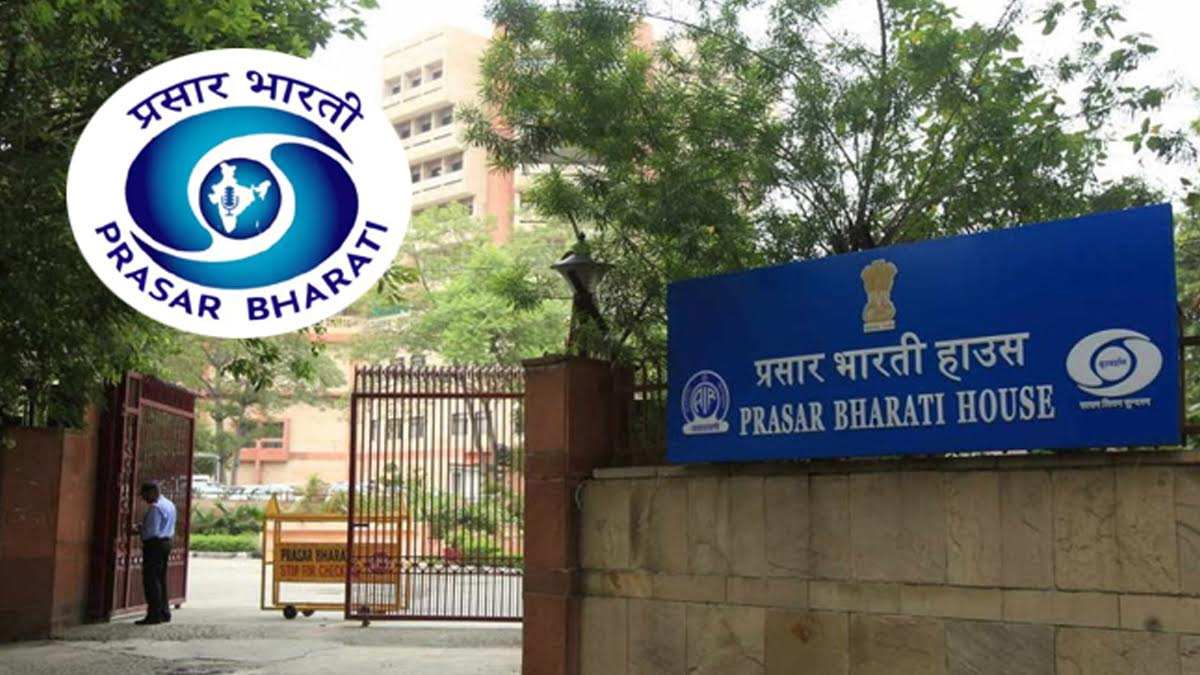
NEW DELHI: Prasar Bharati’s DD Free Dish has closed its 8th annual, and 94th overall, e-auction for MPEG-2 slots with total collections of Rs 642 crore for the period April 1, 2026 to March 31, 2027.
That is lower than last year’s Rs 780 crore haul, with 55 slots sold compared with 61 in FY25–26. The softer topline reflects both a slimmer inventory and a recalibrated auction framework.
This was the first auction conducted after amendments to the e-auction methodology, including tighter eligibility norms and a revised reserve price structure for MPEG-2 slots. The stated aim was greater transparency and more serious participation. The immediate outcome appears to be more measured bidding in certain categories.
Day one set the tone. Eight slots were sold, six in the premium Bucket A+ and two in Bucket A. The strong early action in A+, which typically houses Hindi GECs and movie channels, reaffirmed the enduring appeal of mass Hindi programming on the platform.
Among the broadcasters securing slots in the initial rounds were Zee Entertainment Enterprises, Sony Pictures Networks India, Viacom18’s Colors network, Sun Network and Shemaroo Entertainment. Their continued presence signals that, despite the pull of digital platforms, Free Dish remains a strategic must have for legacy networks chasing scale in price sensitive markets.
The final bouquet of 55 channels leans heavily towards Hindi news, movies, devotional fare, Bhojpuri and regional programming.
In Hindi news, familiar heavyweights such as Aaj Tak, ABP News, India TV, News18 India, Republic Bharat and Zee News made the cut. Entertainment and movie offerings include Colors Rishtey, Star Utsav, Dangal TV, Sony Pal, Shemaroo TV, Goldmines, B4U Movies and Zee Biskope. Devotional viewers will find Aastha, Sanskar and Sadhna Gold among the selected channels.
Regional representation includes Sun Marathi, Fakt Marathi, PTC Punjabi and GTC Punjabi.
Equally telling were the absences. Broadcasters such as Big Magic, Filamchi Bhojpuri, India News, Bharat Express, Movieplex Maithili, TV9 Marathi, Shemaroo Marathibana, Zee Chitra Mandir and Satsang did not participate. The pullback is particularly visible across Marathi, Bhojpuri, Maithili and spiritual programming. Industry observers point to the revised reserve prices, tighter eligibility norms and a reassessment of commercial viability as possible factors.
DD Free Dish continues to beam into over 40 million homes, largely in rural and semi urban India. For advertisers and broadcasters alike, it offers efficient access to Bharat markets where pay TV penetration remains uneven and OTT subscriptions are limited.
The moderation in revenue this year may be read as a pause rather than a retreat. Fewer slots, a reworked auction playbook and evolving broadcaster strategies have clearly shaped outcomes. Yet premium Hindi entertainment retains its pull, and the platform’s mass reach remains hard to ignore.
As the FY26–27 line-up settles in, the mix of winners and walkaways will define the private satellite channel landscape on DD Free Dish for the year ahead.