iWorld
Tata Communications, Comcast, others collectively win MEF Excellence Award for Third Network PoC Innovation


MUMBAI: Comcast Business, ECI, Sparkle, Tata Communications and Viavi Solutions have collectively won one of two 2016 MEF Excellence Award for its Third Network Proof of Concept innovation. The companies collaborated on an orchestrated, multi-carrier, multi-platform demonstration as part of the Proof of Concept (PoC) Showcase at MEF16, in Baltimore, Maryland.
Recognizing that enterprises today have diverse requirements; the Third Network combines the performance and security assurances together with the agility and ubiquity of the Internet and brings a new network experience to millions of new users.
This award-winning collaboration was designed to showcase how a customer could gain access to flexible bandwidth and applications on-demand without human intervention – enabling unprecedented levels of network control for new and evolving types of cloud-centric applications, for network connectivity services within current network architectures as well as emerging SDN and NFV implementations. For service providers, additional upsides include the drastic reduction of service turn-up time.

During the PoC, the joint innovation simulated the delivery of Ethernet services through the three different network service providers, via an orchestrated environment with flexible bandwidth deployed on demand and connectivity bursting to Amazon Web Services (AWS) when needed.
“The Proof of Concept Showcase allowed MEF16 attendees to witness, first-hand, leading-edge implementations of agile/dynamic, assured, and orchestrated Third Network services powered by LSO, SDN, NFV, and CE 2.0,” said Nan Chen, president of MEF. “We congratulate Comcast Business, Sparkle, Tata Communications, ECI, and Viavi on winning a coveted Proof of Concept Award for demonstrating the ability to provision on-demand Carrier Ethernet services across multiple network operators and multiple technology platforms.”
The PoC showcased how a CE 2.0 E-Line service with a bandwidth on-demand requirement can be provisioned and orchestrated across multiple service and cloud providers using the MEF LSO Reference Architecture. Comcast Business, Tata Communications and Sparkle provided the originating network, the intermediate network and the direct connection into the cloud, respectively. ECI’s EPIC platform with fulfillment functionality developed as part of the OpenLSO fulfillment project provided the means to seamlessly connect these disparate domains. Viavi’s VNF-based service acceptance and testing technology verified the newly created service meets previously defined SLA requirements. The EPIC open source platform works towards a “vendor-agnostic” vision to deliver real-time control and assure network performance across carriers.
MEF is the driving force enabling Third Network services for the digital economy and the hyper-connected world. Comcast Business offers Ethernet, Internet, Wi-Fi, Voice, TV and Managed Enterprise Solutions to help organizations of all sizes transform their business. ECI is a global provider of ELASTIC network solutions to CSPs, critical infrastructures as well as data center operators. Sparkle is the wholly owned subsidiary of Telecom Italia Group (NYSE: TI) with the mission to develop and consolidate the Italian telco’s international services business.
Tata Communications along with its subsidiaries is a leading global provider of A New World of Communications™. With a leadership position in emerging markets, Tata Communications leverages its advanced solutions capabilities and domain expertise across its global and pan-India network to deliver managed solutions to multi-national enterprises, service providers and Indian consumers.
Viavi is a global provider of network test, monitoring and assurance solutions to communications service providers, enterprises and their ecosystems, supported by a worldwide channel community including Viavi Velocity Solution Partners.





e-commerce
Instamart gold dig event at Hussain Sagar goes viral
Hyderabad activation ties to gold price lock offer ahead of Akshaya Tritiya
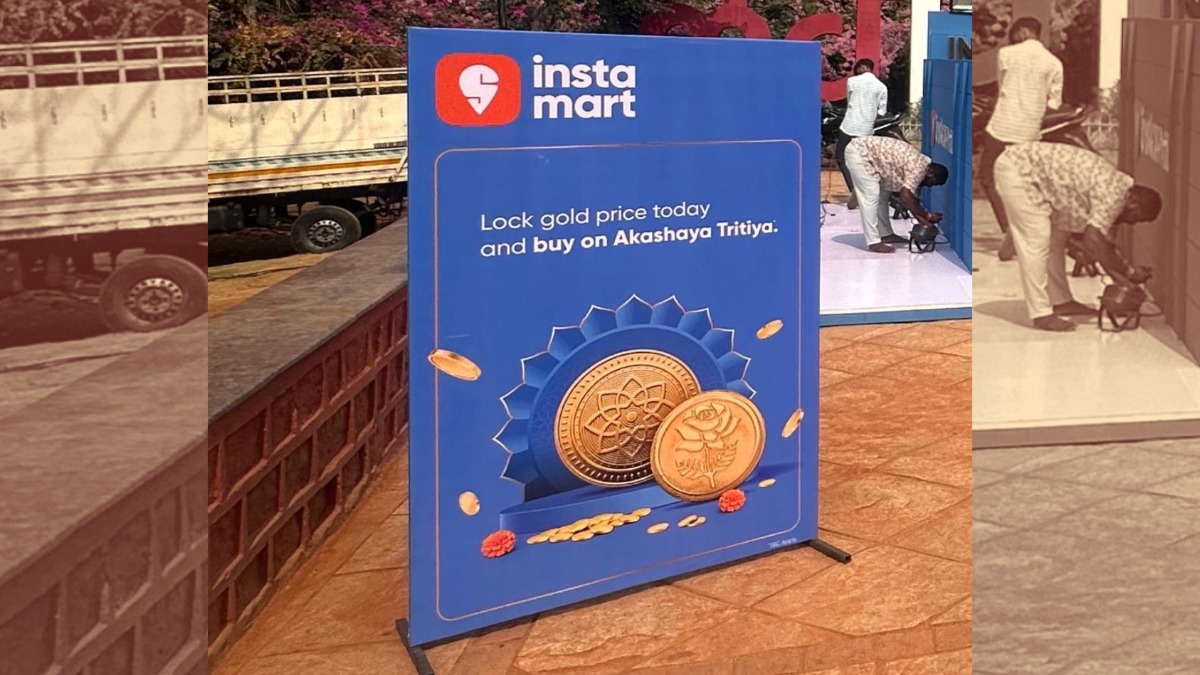
MUMBAI: All that glitters isn’t just gold, it’s also great marketing. A quirky on-ground activation by Instamart at Hussain Sagar Lake has turned into a viral spectacle, with videos of people digging for gold coins flooding social media feeds this week. The campaign, executed in collaboration with Moms, transformed a patch of the city’s iconic lakefront into what online users quickly dubbed a “mini gold rush”. Armed with spades, participants dug through a mud-filled pit in search of hidden gold coins, an activity that drew crowds, cameras and plenty of commentary online, ranging from amused disbelief to outright fascination.
At the heart of the frenzy was a promotional push for Instamart’s ‘Gold Price Lock’ feature, which allows users to secure prevailing gold rates between April 10 and April 16 and complete their purchase later during Akshaya Tritiya, a period traditionally associated with high gold buying. The mechanic cleverly blended physical participation with digital conversion, turning curiosity into a potential transaction.
Branded as ‘Gold Diggers’, the activation leaned into gamified engagement. Those who struck lucky walked away with coins, those who didn’t were nudged with a simple message: lock the price now, buy later. The result was a steady stream of footfall and a surge in user-generated content, as onlookers and participants alike documented the spectacle.
The timing is significant. India remains one of the world’s largest consumers of gold, with demand peaking around Akshaya Tritiya. Data from the World Gold Council suggests the festival alone accounts for roughly 25–30 tonnes of gold purchases annually, making it a high-stakes window for brands looking to tap into consumer sentiment.
As the ‘Gold Price Lock’ feature remains live until April 16, the campaign has already done its job turning a simple product feature into a citywide moment. Because sometimes, the quickest way to get people talking about gold isn’t to sell it, it’s to make them dig for it.