News Broadcasting
Synamedia joins Alliance for Open Media

MUMBAI: The Alliance for Open Media (AOMedia) has announced that Synamedia, the world's largest independent video software provider, has joined at the promoter level.
As a member of the Alliance, Synamedia will collaborate with AOMedia members, which include fellow leading internet and media technology companies, to advance open standards for media compression and delivery over the web. Synamedia's video network portfolio features video distribution, processing, and delivery services, and solutions to power premium quality broadcast and broadband video, create compelling live multi-screen experiences, enable software-defined video processing and unify operations.
AOMedia members include industry leaders like Amazon, ARM, Cisco, Facebook, Google, Intel, Microsoft, Mozilla, Netflix, NVIDIA, Samsung Electronics, and Tencent.

The availability of AOMedia Video Codec 1.0 (AV1), AOMedia's open-source, royalty-free video coding format is a significant milestone in the journey to deliver a next-generation video format. AV1 is interoperable, open, optimized for internet delivery and scalable to any modern device at any bandwidth. AV1 enables more screens to display the vivid images, deeper colours, brighter highlights, darker shadows, and other enhanced UHD imaging features that consumers and businesses have come to expect – all while using less data.
"We're thrilled to join AOMedia. As customers make more intelligent use of virtualization and cloud, we see the adoption of AV1 as a way to further our own goals of enhancing online video streaming experiences for OTT at scale. We look forward to working alongside AOMedia members to open up new possibilities to use AV1 for royalty-free, cross-platform online video across a wide range of applications," said Julien Signes, senior vice president and general manager, video network at Synamedia.
"We're excited to have Synamedia as our newest member, reflecting our joint commitment to increase the openness and interoperability of internet video," said Matt Frost, AOMedia vice president of communications and membership, and director at Google. "Synamedia brings to AOMedia a long history of live encoding and OTT delivery for major content distributors. We look forward to collaborating to improve the quality and availability of streaming video with AV1."
Designed at the outset for hardware optimization, the AV1 specification, reference code, and bindings are available for toolmakers and developers to download here to begin designing AV1 into products. Specifically, the release of AV1 includes:
Ø Bitstream specification to enable the next generation of silicon
Ø Unoptimized, experimental software decoder and encoder to create and consume the bitstream
Ø Reference streams for product validation
Ø Binding specifications to allow content creation and streaming tools for user-generated and commercial video.
Alliance for Open Media
Launched in 2015, the Alliance for Open Media (AOMedia) was formed to define and develop media technologies to address marketplace demand for an open standard for video compression and delivery over the web. Board-level, Founding Members include Amazon, Apple, Arm, Cisco, Facebook, Google, Intel, Microsoft, Mozilla, Netflix, NVIDIA, Samsung Electronics, and Tencent. AOMedia's open-source, royalty-free, video codec AV1 is a significant milestone in the ability to deliver a next-generation video format that is interoperable, open, optimized for internet delivery and scalable to any modern device at any bandwidth.






News Broadcasting
CNN-News18 to host Fury in the Gulf conclave on West Asia crisis
Three-hour summit to unpack geopolitical fallout and impact on India
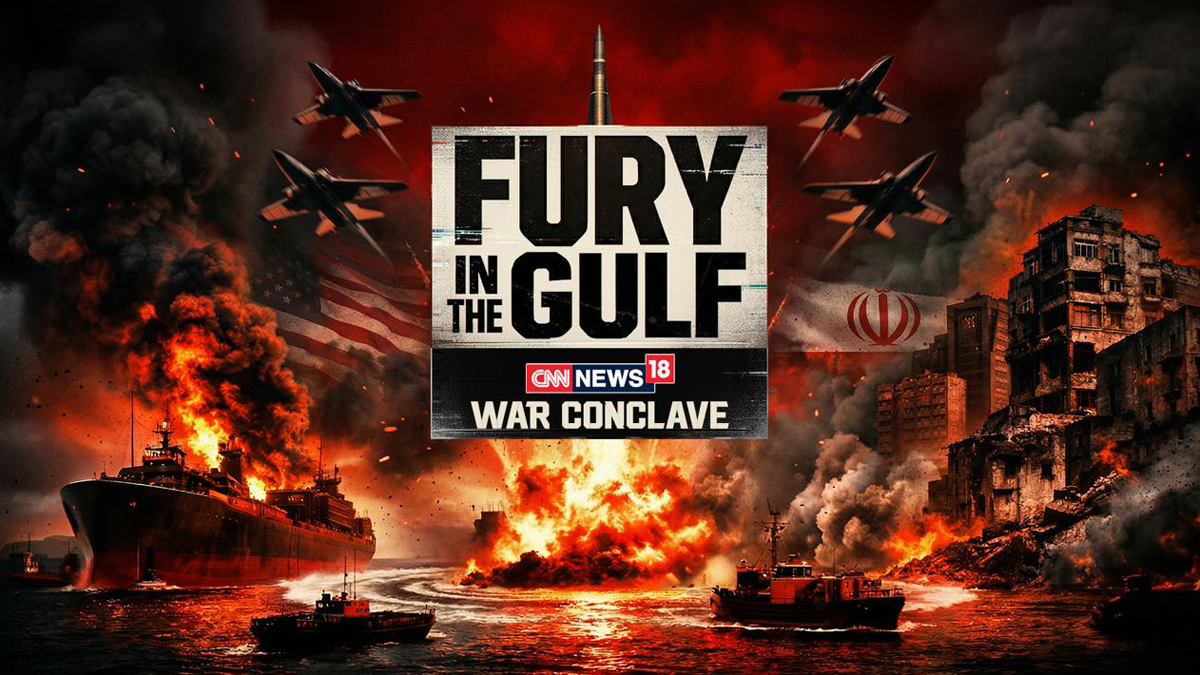
MUMBAI: CNN-News18 is set to host a special three-hour broadcast, Fury in the Gulf – War Conclave, on April 7, aiming to decode the escalating West Asia crisis and its far-reaching implications for India.
Scheduled from 4:00 PM to 7:00 PM, the conclave comes at a time when tensions between Iran and the United States are reshaping global geopolitics and triggering economic uncertainty. With India’s deep energy ties, trade links and large diaspora in the Gulf, the developments carry significant domestic relevance.
Built around the theme ‘Conflict, Consequences, and The Future,’ the programme will feature six curated sessions combining one-on-one interviews and panel discussions. The focus is to cut through the clutter and offer viewers a clearer understanding of the fast-evolving situation.
Key sessions include ‘Diplomacy in Times of War’ featuring Shashi Tharoor, and ‘World After the Iran Conflict’ with voices such as Ram Madhav, Reuven Azar, representatives from the European Union and the Iranian Deputy Envoy. Another session titled ‘Another Dunkirk?’ will bring together K. J. S. Dhillon and Jitin Prasada among others.
CNN-News18 editorial affairs director Rahul Shivshankar said, “In times of war, clarity becomes the most powerful tool. Fury in the Gulf – War Conclave brings together credible voices to address the questions and confusion that arise amid an overwhelming influx of information.”
He added that the initiative is aimed at delivering “facts, perspective, and insight” at a time when misinformation can easily cloud public understanding.
Echoing the sentiment, CNN-News18 CEO– English and business news Smriti Mehra said the conflict marks a defining global moment, with consequences that extend well beyond the region. She noted that the conclave seeks to present the crisis with “depth, nuance and responsibility” so audiences can better grasp its real-world impact.
As geopolitical tensions continue to dominate headlines, the conclave positions itself as an attempt to bring order to the noise, offering viewers a structured, insight-led look at a complex and rapidly shifting global situation.






