News Broadcasting
Swaraj makes politics of convergence regulation; says bill is not delayed


Indian information and broadcasting minister Sushma Swaraj again resorted to some political speak yesterday on the convergence bill. She said that she was not aware that the Group of Ministers (GoM) was supposed to meet to discuss the Fali Nariman redraft of the earlier convergence draft.
Earlier she and information technology minister Pramod Mahajan had insisted that the GoM was to meet on 21 December. Later they could not do so because they were too busy to meet because of the pressures of Parliament, reports indicated.
Swaraj said that the Bill was very much a priority with the government and it would take efforts to get it into shape. She added that hardly one per cent of convergence had happened in India, so there was no point in saying that the regulation accompanying it has been delayed.

The group of ministers had earlier hurled the convergence bill ball back at Nariman to clarify the role of the spectrum manager, the name of the bill, and specify which ministry should play the steering role for convergence, among other issues. The IT,telecom and I&B ministry have all been jostling with each other take up that role.
The bottomline of Swaraj’s statements is that the convergence draft will take some more time to see the light of day before being shaped as a bill. Following this it will be posted onto the Net for people’s views. It will be placed before a parliamentary subcommittee before being introduced in parliament for enactment. The net is that, it is quite likely that it may scrape through in the budget session of Parliament, if things pan out. Or the industry will have to wait for the monsoon session.
Keep those fingers crossed!!!!






News Broadcasting
News18 India launches Command Centre war explainer with Arya
New show shifts from debates to decoding global conflicts and impacts
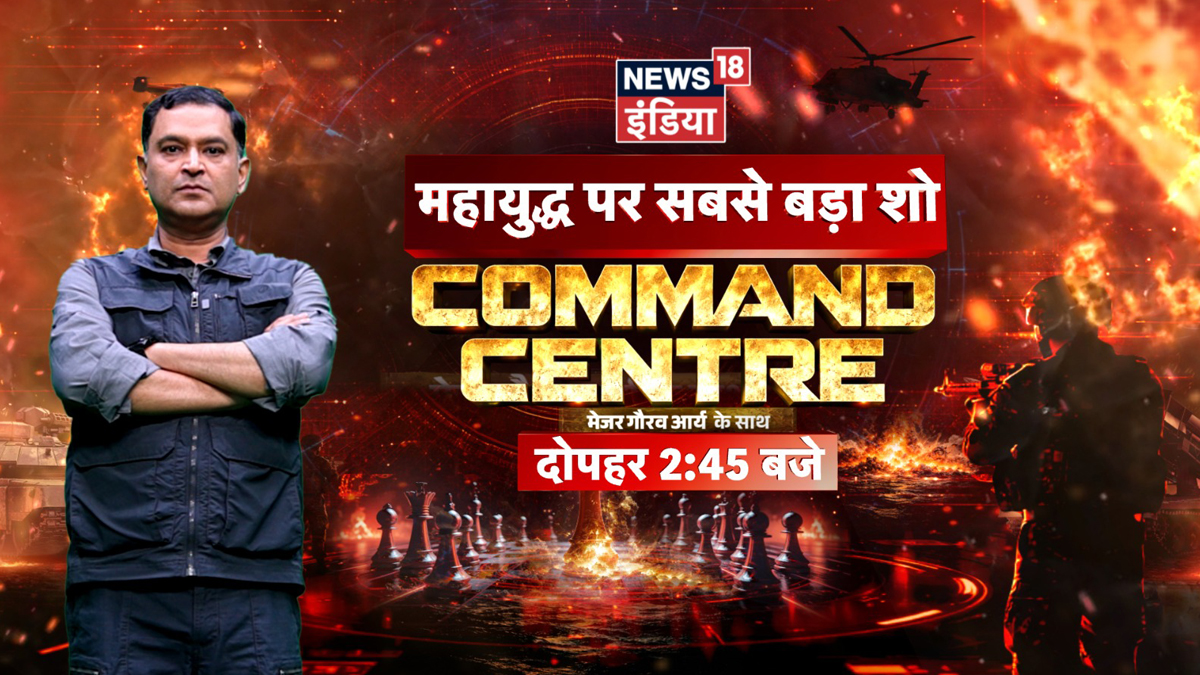
MUMBAI: News18 India has rolled out a new war-focused programme, Command Centre, featuring Gaurav Arya, as it looks to offer viewers a sharper, more grounded take on global conflicts amid rising tensions in West Asia.
Positioned as an “insider war room”, the show moves away from conventional panel debates and instead focuses on explaining military developments, decoding strategy and connecting global events to their everyday impact, from fuel prices to economic shifts.
The format leans heavily on visuals and data. The studio has been designed like a command hub, complete with large LED war maps, real-time graphics and an alert system to track developments as they unfold.
At the centre of it all is Arya, who brings his military background to simplify complex war strategies for viewers. His signature line, “Seedhi baat samjhiye”, anchors the show’s promise of clarity over noise.
News18 India managing editor Jyoti Kamal said, “Command Centre, featuring Major Gaurav Arya is designed to deliver accurate insights and a clear perspective on how evolving conflicts impact everyday life, from household budgets to national security. With expert voices analysing every development in real time, the show goes beyond headlines to decode what’s happening now, what it means, and what could come next.”
Echoing the intent, Gaurav Arya added, “In times of war, confusion is the biggest threat. With News18 India’s Command Centre, we are bringing viewers inside the war room, decoding strategies, tracking every escalation, and explaining, in the simplest terms, what it means for India and for every household. Seedhi baat samjhiye, this is where you understand not just what is happening, but what happens next.”
The weekday show will air in the afternoon slot and will also feature Gaurav Shukla, adding to its editorial depth.
With its mix of analysis, visuals and a clear focus on impact, the show reflects a broader shift in news consumption. Viewers are no longer just watching events unfold, they are looking to understand what those events mean for them.






