Hindi
Susan Sarandon inaugurates 44th edition of IFFI


MUMBAI: The 44th edition of the International Film Festival of India (IFFI) got underway with Hollywood star Susan Sarandon lighting the ceremonial lamp on 20 November.
The inauguration ceremony was attended by actors as well as officials which included the likes of Kamal Hasan, Waheeda Rahman, information and broadcasting secretary Bimal Jhulka, information and publicity (Goa government) minister Milind Naik, Goa chief minister Manohar Parrikar and union minister of state for information and broadcasting (ind. charge) Manish Tewari.
Waheeda Rehman was honoured with the first Centanary Award at the event

Speaking on the occasion, Jhukla said: “We are promoting India as a filming destination and to encourage foreign film makers to come to India we are setting up a single window clearance system”.
The top official also said that over Rs 600 crore will be invested on the National Film Heritage Mission. Asia contributes to half of the world’s film production and half of it comes from India, he added.
Asha Bhosle, who spoke on the occasion, said that she herself hailed from Goa and expressed her debt to the film industry. “I sang my first song when I was 10. I have been singing since then. The film line has given us so much,” the legendary singer said.
Susan Sarandon, who won an Academy award for her role in the film ‘Dead Man Walking’, among several other Oscar award nominations, said that she was looking forward to spending her time in Goa appreciating films and the place.
“India has produced so many films rich in history of cinema. I am looking forward to meeting artists and seeing film,” the actress said.






Hindi
Zee5 and Applause Entertainment team up for whodunnit ‘Everybody Loves Sohrab Handa’
Rajat Kapoor directs star-studded murder mystery streaming from 10 April.
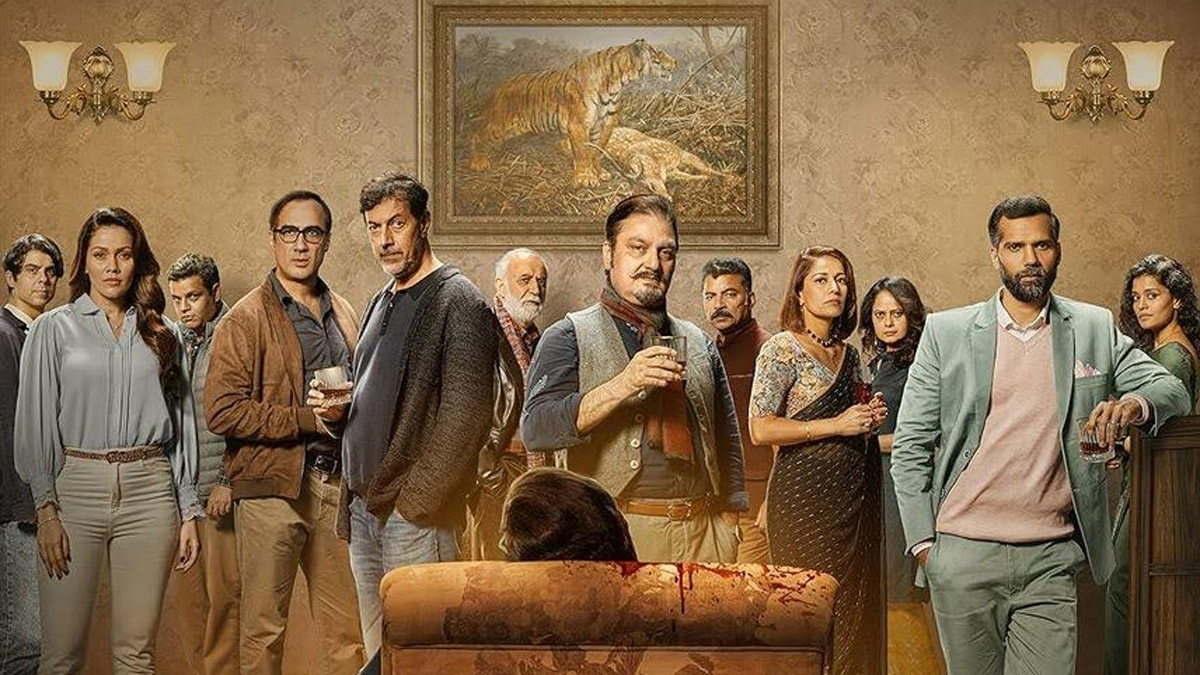
MUMBAI: Zee5 is serving up another killer collaboration and this time, the murder mystery comes with a generous side of dark humour and family dysfunction. The streaming platform has partnered with Applause Entertainment and Mithya Talkies to bring Everybody Loves Sohrab Handa, a fresh, twisted whodunnit written and directed by acclaimed filmmaker and actor Rajat Kapoor. The film will stream exclusively on Hindi Zee5 from 10 April.
The movie reimagines the classic murder mystery genre with a contemporary, darkly comic edge. It revolves around a group of friends and family who smile, drink, and celebrate together until the silence snaps and long-buried secrets spill out. The stellar ensemble cast includes Vinay Pathak, Ranvir Shorey, Waluscha De Sousa, Saurabh Shukla, Chandrachoor Rai, Neil Bhoopalam, Koel Purie, Palomi Ghosh, and Rajat Kapoor himself.
This latest offering continues the successful partnership between Zee5 and Applause Entertainment, which has previously delivered diverse hits such as Mithya, Bloody Brothers, and Jab Khuli Kitaab.
&TV Business Head of hindi Zee5 and chief channel officer Kaveri Das said, “Our collaboration with Applause Entertainment has consistently delivered distinct, high-impact storytelling. Everybody Loves Sohrab Handa is a natural progression, reinforcing our focus on genre-led content with a compelling whodunnit premise and a strong ensemble cast.”
Applause Entertainment business head for movies Sunil Chainani added, “This film adds yet another compelling layer to our slate with Rajat Kapoor’s unmistakable voice.”
Rajat Kapoor shared, “What interested me was not just the mechanics of a whodunnit, but the emotional violence that precedes physical violence. These are people who smile at each other, but there’s so much that is not said.”
The film promises razor-sharp writing, layered performances, and simmering tension, inviting viewers not just to solve the crime but to unravel the complex relationships at its heart.
If you love a good murder mystery served with wit and emotional depth, Everybody Loves Sohrab Handa looks set to be your next addictive watch. Mark your calendars, the whodunnit drops on Hindi Zee5 from 10 April.







