News Headline
Supreme Court scraps ‘draconian’ Section 66A of IT Act

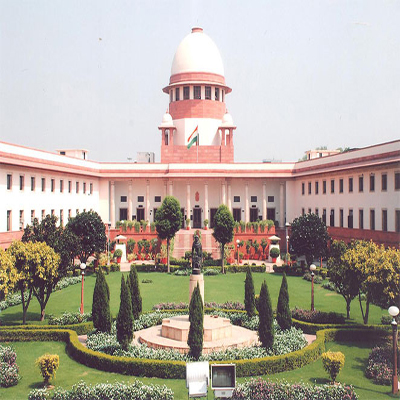
MUMBAI: In a landmark judgement the Indian Supreme Court today scrapped the ‘draconian’ Section 66A of the IT Act, which provides the power to arrest a person for posting allegedly offensive content online.
The court ruled that the controversial Section 66A of the Information Technology Act was unconstitutional.

The move comes in the wake of multiple arrests that have been made over the last year of citizens for posting their personal views on social media websites like Facebook and Twitter. The latest was the arrest of a teenager from Bareilly, Uttar Pradesh last week. The Class 12 student was arrested and sent to jail for a Facebook post about senior Uttar Pradesh minister Azam Khan.
The order was delivered by a two-judge bench of the Supreme Court on petitions filed by civil rights groups and a law student, who argued that Section 66A violated people’s fundamental right to freedom of speech and expression. In the judgment, the Supreme Court said, “There is a difference between discussion, advocacy and incitement. Discussion and advocacy, no matter how annoying, is allowed.”
The Supreme Court’s move has been lauded by members of the film and media fraternity online, who took to Twitter to express their views on the verdict.
Journalist turned filmmaker Pritish Nandy tweeted, “Section 66A of the IT Act, the noxious, draconian law has been struck down by the Supreme Court. Restores our faith in democracy. What an achievement! @karunanundy #66A, the black act goes.”
Director Madhur Bhandarkar said, “Landmark judgement by Hon Supreme Court as it strikes down Sec 66A of IT Act. Freedom of thought & expression rightly upheld in a democracy.”
Filmmaker Shekhar Kapur added, “As Supreme Court has quashed #Sec66A, its time for every1 to realise growing power of #socialmedia… a powerful tool 2 be used responsibly.”
Actress Suchitra Krishnamurty tweeted, “Yippee #Sec66A has been scrapped. So our freedom of speech is back. Can we have a law to scrap/challenge bans imposed by Govt too?”
Journalist Sagarika Ghosh expressed her views by tweeting this, “Now that #Sec66A gone, in same spirit will GOI apologise to Priya Pillai, allow Wendy Doniger, un-ban books, stop calling media anti-national?”
India Today consulting editor Rajdeep Sardesai tweeted, “The only exception to free speech must remain hate speech and incitement to violence. Defamation/slander as per common law. #Sec66A”







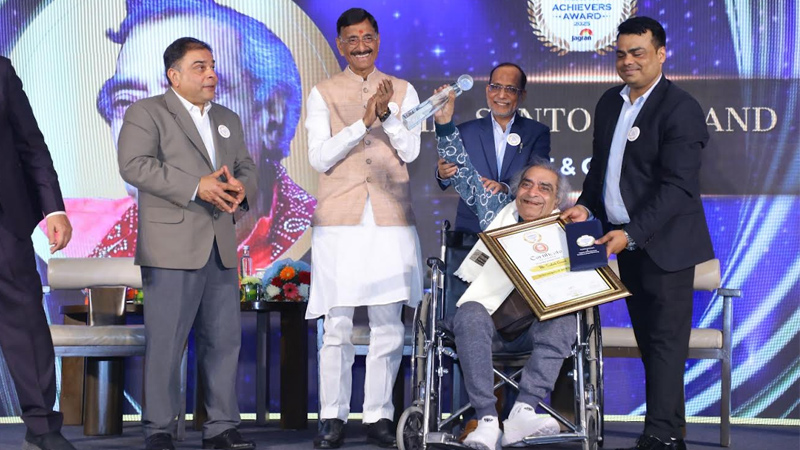
NEW DELHI: Hamdard Laboratories gathered a cross-section of India’s achievers in New Delhi on Friday, handing out the Hakeem Abdul Hameed Excellence Awards to figures who have left their mark across healthcare, education, sport, public service and the arts.
The ceremony, attended by minister of state for defence Sanjay Seth and senior officials from the ministry of Ayush, celebrated individuals whose work blends professional success with a sense of public purpose. It was as much a roll call of achievement as it was a reminder that influence is not measured only in profits or podiums, but in people reached and lives improved.
Among the headline awardees was Alakh Pandey, founder and chief executive of PhysicsWallah, recognised for turning affordable digital learning into a mass movement. On the sporting front, Arjuna Awardee and kabaddi player Sakshi Puniya was honoured for her contribution to the game and for pushing women’s participation onto bigger stages.
The cultural spotlight fell on veteran lyricist and poet Santosh Anand, whose songs have echoed across generations of Hindi cinema. At 97, Anand accepted the honour with characteristic humility, reflecting on a life shaped by perseverance and hope.
Healthcare honours spanned both modern and traditional systems. Manoj N. Nesari was recognised for strengthening Ayurveda’s place in national and global health frameworks. Padma shri Mohammed Abdul Waheed was honoured for his research-backed work in Unani medicine, while padma shri Mohsin Wali received recognition for his long-standing contribution to patient-centred care.
Education and social development also featured prominently. Padma shri Zahir Ishaq Kazi was honoured for decades of work in education, while former Meghalaya superintendent of Police T. C. Chacko was recognised for public service. Goonj founder Anshu Gupta received an award for his dignity-centred rural development initiatives, and the Hunar Shakti Foundation was honoured for empowering women and young girls through skill development.
The Lifetime Achievement Award went to former IAS officer Shailaja Chandra for her long career in public healthcare and governance, particularly in the traditional systems under Ayush.
Speaking at the event, Hamdard chairman Abdul Majeed said the awards were a tribute to those who combine excellence with empathy. “These awardees reflect Hakeem Sahib’s belief that healthcare, education and public service must ultimately serve humanity,” he said.
Minister Seth struck a forward-looking note, saying India’s young population gives the country a unique opportunity to become a global destination for learning, health and wellness by 2047.
The ceremony also featured the trailer launch of Unani Ki Kahaani, an upcoming documentary starring actor Jim Sarbh, set to premiere on Discovery on 11 February.
Instituted in memory of Unani scholar and educationist Hakeem Abdul Hameed, the awards have grown into a national platform that celebrates those building a more inclusive and resilient India. For one evening at least, the spotlight was not just on success, but on service with substance.







