Components
SugarBox Network’s seamless offline video delivery tech, ZEE5 integration & monetisation plans


MUMBAI: While data revolution has catalysed the emergence of over-the-top (OTT) platforms and e-commerce services in the last two-three years, there are still challenges existing in the ecosystem regarding data speed and patchy internet connectivity. SugarBox Networks is offering an alternative plan as it is a platform that enables a user to use mobile apps and digital services seamlessly without requiring internet connectivity. Although the OTT industry is of utmost importance for the company's business strategy, SugarBox is also looking at the e-commerce sector, educational apps and the gaming industry as well.
SugarBox Networks CEO Rohit Paranjpe spoke to Indiantelevision.com on its product USP, business strategy, revenue models and target markets. Edited excerpts:
When did you start the journey? If you could tell us about your initial experience…

We started the company in August 2016. We started out as very similar to what offline content distribution companies do but it was slightly different. What they do is they put some content on the box, they create an application that talks in the box so that you can watch the content on the application which is very similar to the system inside Jet Airways and Vistara Airlines. What we always wanted to achieve was to not make a separate platform for this. The endeavour was to see if an OTT app really works from this box rather than having to create a separate platform altogether.
In September and October of 2016, ZEE had an app called OZEE. We made OZEE work off the box. At that time what happened is any player who would install this box would be able to watch OZEE. But OZEE was a very simple OTT app. It did not really have all the layers. Then, we tried integrating with ZEE5. Then we realised there are far more complex equations. That’s what the product completely evolved to what it is today.
How does your platform differentiate itself from others?
So today if we want to describe it in a nutshell, we are something that can be attributed as a hyperlocal or intermittently-connected content distribution. What I really want to mean is, if you take an equivalent of an Akamai, which is CDN, what it does is deliver the content file for an OTT where everything else is coming from the OTT. Because we are hyperlocal we are doing two things, the first thing we have done is figured out an Akamai CDN server and miniaturising it so the CDN can work from anywhere in the world instead of requiring a data centre. It can fit in a bus, train, plane, hotel, mall, corporate park, residential complex etc. Anything that is a physical constraint, I can configure a box to support that place and install a CDN server. The second thing is because it is in a premise, I can expose the CDN server over what we call as LAN. So, the moment you expose it over a LAN, you are not dependent on the internet anymore because a device can talk to a CDN server without the help of the internet. Most importantly, today a CDN has to be permanently connected, so that is why it is put in a data centre. What we manage to do is we make a CDN run without being permanent.
How does it benefit end consumers?
As a product what this does is for consumers, it facilitates three things. A consumer who is using an OTT app that is using SugarBox, can now get unlimited, uninterrupted, unrestricted service. Today, the problem OTT industry is facing that the data speed is going down, so the buffers are getting worse and the availability of the data is going down. As I go beyond tier 1 cities, I don’t get 4G most of the times. SugarBox acts as a perfect alternative. It’s not about OTT only.
How do you plan to monetise your product?
Because we are a CDN, we monetise like one. A CDN typically works on how much data I am delivering to you. Data hosting and data delivery are the two main revenue models for us because we host the data for OTTS, we deliver data for OTTS. But in addition to this, we are right down to premise and consumers. We also act as a marketing channel and we also act as a payment gateway. I also act as a channel where people can communicate and acquire customers. And also I act as a channel wherein people can use my network to do billing, voucher distribution, offline payment, etc.
Who are your major clients?
Today, the only client we are live in the market is ZEE5 as an OTT app. We are in the process of integrating with a few more apps. These are not just OTT. We were keenly looking at certain industries such as e-commerce, education, gaming, etc. Gaming is a very large industry for us. The biggest problem with gaming is, if you look at the popularity of PUBG, everyone wants to play PUBG but the game needs uninterrupted connectivity and low-latency streaming. SugarBox can solve all of these problems. The fourth industry that is very important for us is hyperlocal communication.
Which are the segments you are primarily targeting?
The reality of the situation is every place is relevant. But if I started saying every place is relevant, I would not know where to go. So, typically our strategy has been threefold. We began with places that would give us the biggest bank in the market. By biggest bank I mean, where I can get the highest number of people with the least amount of effort. And in this fashion, something like transport has the biggest opportunity. We work with multiple metro bodies, railways and a lot of bus bodies. We also intend to work with a lot of multi-city bus operators where a person’s need for entertainment is also very high. The second thing is we have not gone into households yet but we did a lot of pilots in what we call a Basti (settlement). We also did a lot of deployments in places like hostels. The second foray which is now coming along is going right down to the grassroots being a part of the digital India movement, going right down to the panchayats, villages and seeing if we can power them there. The third is we come to establishments like five-star hostels, housing societies, complexes, corporate parks. We consume a lot of content when we are in the office, hence going to the office is more important.
How do you strike deals usually?
Sometimes, we only install SugarBox which is typically an 11-month long deal. There are lots of places where we install the entire wi-fi system. We work on a lease model of 3-5 years contract.
How big your team is currently?
Currently, we are about 90 people. We are now growing at 5-7 people per month. Out of the 90, 65 are tech guys. But we started scaling up our business functions. I think over the next 2-3 quarters there will be a substantial increase in the business function. So, the marketing team will be also bulked up.
Going back to your initial days, how did you find investors?
Investment part was actually completely unforeseen. What really happened is we had this idea and founders got together. As a pilot, we went to Goregaon station and we literally put our box and four access points. There were 200 movies on the box that we had. We went to vegetable vendors and promoted it. On average, people ended up watching the entire 200 movie collection. Realising the demand for content, we understood we need more content and that's why we need one of the major broadcasters. Zee said I am not giving you content unless I buy you out. They invested Rs 75 crore for 80 per cent stake and essentially acquired us in 2016 and we have been a subsidiary of the company since 2016.
Who are your major competitors?
The data delivery ecosystem in the world is $220 billion per year. From a competition standpoint, there is nobody in the world who does what we do. And which is the reason why we also have a few patent applications at a global level. One of the patents has been granted, another is expected soon. If you ask me who my competitor is, it is everyone who delivers data.






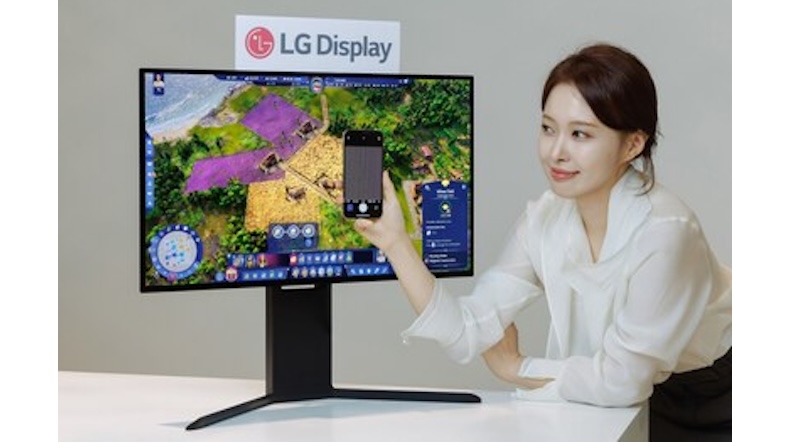
SEOUL: In the eternal battle between gamers demanding lightning-fast refresh rates and professionals craving pixel-perfect clarity, LG Display reckons it has found détente. The South Korean display titan is unveiling the world’s first 27-inch 4K OLED monitor panel that marries an RGB stripe structure with a blistering 240Hz refresh rate—a combination previously thought incompatible, like oil and water or fashion and function.
The breakthrough lies in how the pixels are arranged. RGB stripe structure lines up red, green and blue subpixels in neat rows, banishing the colour bleeding and fringing that plague lesser screens when you park your nose close to the display. It is the difference between reading crisp text and squinting at a rainbow-tinged mess. OLED panels using this method existed before, but they topped out at a sluggish 60Hz—fine for spreadsheets, useless for fragging opponents in first-person shooters.
LG Display’s engineering wizardry changes the game. By cranking the refresh rate to 240Hz whilst maintaining that pristine RGB stripe layout, the company has produced a panel that works equally well for colour-critical design work and twitchy gaming sessions. Better still, the panel incorporates Dynamic Frequency & Resolution technology, letting users toggle between ultra-high-definition at 240Hz and full-HD at a frankly ludicrous 480Hz. That is fast enough to make your eyeballs sweat.
The specs are suitably impressive: 160 pixels per inch for exceptional detail, optimised performance for Windows and font-rendering engines, and colour accuracy that should please the Photoshop brigade. LG Display achieved this by boosting the aperture ratio—the percentage of each pixel that actually emits light—and applying what it coyly describes as “various new technologies.” Translation: years of R&D and probably some sleepless nights.
Existing high-end gaming OLED monitors have relied on RGWB structures (which add a white subpixel) or triangular RGB arrangements. Both work, but neither delivers the sharpness that professionals demand. LG Display’s new stripe pattern is tailored specifically for monitor use, a recognition that staring at a screen from two feet away demands different engineering than watching telly from across the room.
The company is betting big on this technology, targeting the high-end monitor market where it already commands roughly 30 per cent of global OLED panel production. Among gaming OLED panels in mass production, LG Display claims world-leading specs across refresh rate, response time and resolution—a trifecta that sounds like marketing bluster until you check the numbers.
“Technology is the foundation of leadership in the rapidly growing OLED monitor market,” says LG Display head of the large display business unit Lee Hyun-woo. He promises to keep pushing “differentiated technologies compared to competitors”—corporate-speak for staying ahead of Chinese rivals snapping at LG’s heels.
The new panel will debut at CES 2026 in Las Vegas, where LG Display plans to woo customers and expand its lineup. Initial rollout targets high-end gaming and professional monitors, the sweet spot where people actually pay premiums for superior screens rather than settling for whatever came with their laptop.
Whether this technology reshapes the monitor market or remains a niche luxury depends on two things: pricing and production scale. But for now, LG Display has pulled off something rare—a genuine technical leap that solves a real problem. Gamers get their speed, designers get their clarity, and LG gets bragging rights. In the cutthroat world of display tech, that counts as a win.






