News Broadcasting
Subscription revenues to be linked to content post-CAS – SSB


MUMBAI: Solomon Smith Barney (SSB) claims that the subscription revenues will eventually be linked to the content quality and the viewership. This will reiterate the fact that “Content is King!” and augur well for the production houses. The report also states that the pricing and the composition of the basic tier could affect the subscription revenues of the networks.
SSB’s report entitled CAS is a reality but let’s await implementation, raises the issue of a future scenario wherein the genres of channels might have to follow their respective leaders, especially if the leaders belong to influential and dominant groups.
For example, if Star Plus were to decide to convert to free to air and be a part of the basic tier, the demand for other Hindi general entertainment channels (Zee and Sony) would suffer. There could also be alternative strategies such as launching two variants – for instance, a free to air Zee TV and a pay Zee TV Premium (with premium content transferred to the same) – could also come into play to manage the transition.

The report claims that the regime of individual pricing for channels, instead of a bouquet pricing strategy, will be based on the pricing for the basic tier of services. However, in all likelihood, the pay-TV channels would need to revise their channel rates downward. Pricing power on the subscription rates would also rest with the numero uno channel in each genre.
Additionally, the report states that a high basic tier price (in excess of Rs 60 per month) could negatively impact the pay-TV broadcasters.
The report also claims that the propensity of the consumer to invest in Set Top Boxes (STBs) would be a key issue. It also states that the entire post-CAS improvement in disclosures through subscriber addressability rests on the take-up of STBs; if the viewers do not aggressively take up STBs, the status quo prevails. Therefore, it is imperative for the banking and finance companies to tie-up with the MSOs or cable operators for attractive funding schemes for the consumers.
The channel reach could decline and advertising revenues could be affected if the transition period for STBs to be installed in metros is less than the estimated six to eight month period. Audit and compliance procedures will have to be implemented to ensure that the law achieves its goal of increased declarations and reduced piracy.
Piracy is a reality of conditional access in every country – developed or underdeveloped. Piracy problems are common to most pay-TV operators across the globe and the estimates of piracy for the Indian markets, while important for earnings estimation, will be a major issue, the report says.
It states that the 40 million Cable and Satellite households (C&S), paying an average of Rs150 per subscriber, could generate annual revenues of around Rs 72 billion. Currently, broadcasters such as Star and Zee have priced their channels on the basis of bouquets. Their subscription revenues are hence a function of the declaration from cable operators and their bouquet price.
For the future financial modeling, the subscriber base will need to be divided into three tiers:
a) metro subscribers (approximately 7 million) who are covered in the first phase of CAS and install STBs – approx 20 per cent or 1.5 million – Payouts from them will be based on the basic tier pricing and their choice of FTA (free-to-air) channels.
b) FTA subscribers in the metros which do not install STBs/get pirated signals – payouts from them will be only the basic tier pricing – cable operators will continue to charge the same rates and pocket the difference.
c) Rest of the country – status quo – Bouquet based pricing regimes will continue and subscription revenues will be a function of negotiation between broadcasters and cable operators until Phase II of implementation of CAS across the country is notified.







News Broadcasting
CNN-News18 to host Fury in the Gulf conclave on West Asia crisis
Three-hour summit to unpack geopolitical fallout and impact on India
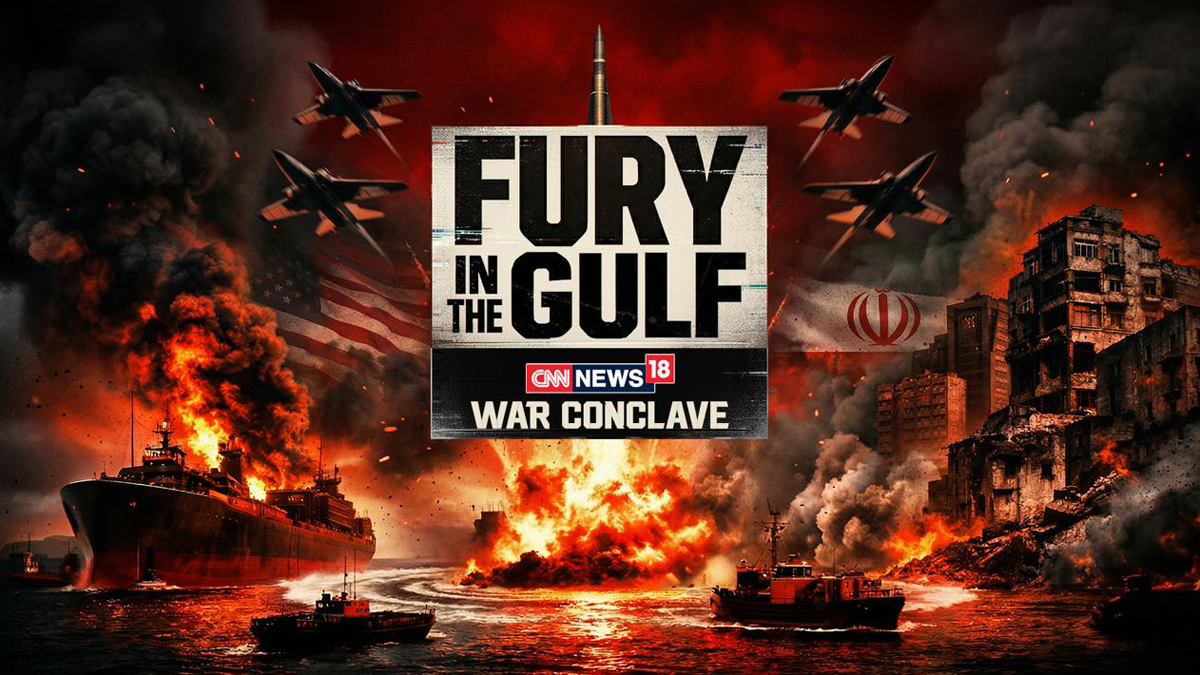
MUMBAI: CNN-News18 is set to host a special three-hour broadcast, Fury in the Gulf – War Conclave, on April 7, aiming to decode the escalating West Asia crisis and its far-reaching implications for India.
Scheduled from 4:00 PM to 7:00 PM, the conclave comes at a time when tensions between Iran and the United States are reshaping global geopolitics and triggering economic uncertainty. With India’s deep energy ties, trade links and large diaspora in the Gulf, the developments carry significant domestic relevance.
Built around the theme ‘Conflict, Consequences, and The Future,’ the programme will feature six curated sessions combining one-on-one interviews and panel discussions. The focus is to cut through the clutter and offer viewers a clearer understanding of the fast-evolving situation.
Key sessions include ‘Diplomacy in Times of War’ featuring Shashi Tharoor, and ‘World After the Iran Conflict’ with voices such as Ram Madhav, Reuven Azar, representatives from the European Union and the Iranian Deputy Envoy. Another session titled ‘Another Dunkirk?’ will bring together K. J. S. Dhillon and Jitin Prasada among others.
CNN-News18 editorial affairs director Rahul Shivshankar said, “In times of war, clarity becomes the most powerful tool. Fury in the Gulf – War Conclave brings together credible voices to address the questions and confusion that arise amid an overwhelming influx of information.”
He added that the initiative is aimed at delivering “facts, perspective, and insight” at a time when misinformation can easily cloud public understanding.
Echoing the sentiment, CNN-News18 CEO– English and business news Smriti Mehra said the conflict marks a defining global moment, with consequences that extend well beyond the region. She noted that the conclave seeks to present the crisis with “depth, nuance and responsibility” so audiences can better grasp its real-world impact.
As geopolitical tensions continue to dominate headlines, the conclave positions itself as an attempt to bring order to the noise, offering viewers a structured, insight-led look at a complex and rapidly shifting global situation.






