News Broadcasting
Subhash Chandra fourth in ‘BS’ Billionaire list

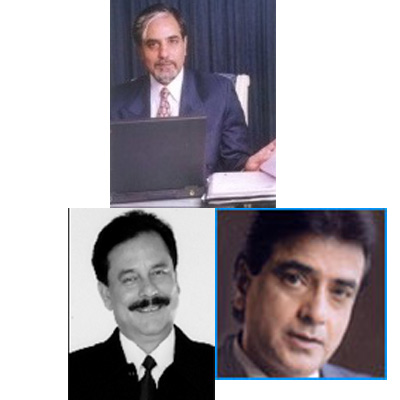
MUMBAI: Zee Group chairman Subhash Chandra may have seen an erosion in his personal wealth this last year but that hasn’t prevented his climbing a place in the richest Indians’ list.
Business Standard’s fourth annual ranking of the richest Indians belonging to the Billionaire Club features Chandra in fourth place with his total wealth estimated at Rs 23.88 billion. Last year, Chandra was in fifth place with Rs 29.52 billion and the net worth of his unlisted companies is placed at Rs 1.72 billion.
Wipro’s CMD Azim Premji tops the list with an estimated wealth of Rs 322.02 billion. The Ambanis of Reliance are placed second with Rs 188.63 billion. The survey was conducted in association with Amity Business School.

Business Standard’s study also shows that the highest climbers in terms of value is the Hinduja family (ranked No 13) whose net worth has increased by Rs 7.11 billion to Rs 15.22 billion.
The study also showed that the entertainment industry is becoming another major moneyspinner.
Subrata Roy
Five billionaires, of whom three are directly linked to television, have a combined value of Rs 31.72 billion. Chandra towers over this pack and is followed by Subrata Roy of Sahara Media with a net worth of Rs 3.2 billion. Also up there is Jeetendra Kapoor through Balaji Telefilms whose net worth was placed at Rs 2.47 billion.
The top corporate earners from media on the list were also
Jeetendra Kapoor
from Zee. RK Singh and the man who replaced him Sandeep Goyal are nowhere in the Zee picture today but as whole time directors on the company board figure in the list. RK Singh had a gross salary of Rs 18 million whereas Goyal had a gross salary of Rs 17.3 million.
The methodology adopted for estimating wealth was based on market value of their holdings in the listed companies. In line with the international practice, the crossholding structure of their stakes was also considered. The net worth of those own unlisted companies has also been taken into consideration. More than 25,000 unlisted companies spread over 100 sectors were considered. The “earning” billionaires or professional managers were also considered.





News Broadcasting
CNN-News18 to host Fury in the Gulf conclave on West Asia crisis
Three-hour summit to unpack geopolitical fallout and impact on India
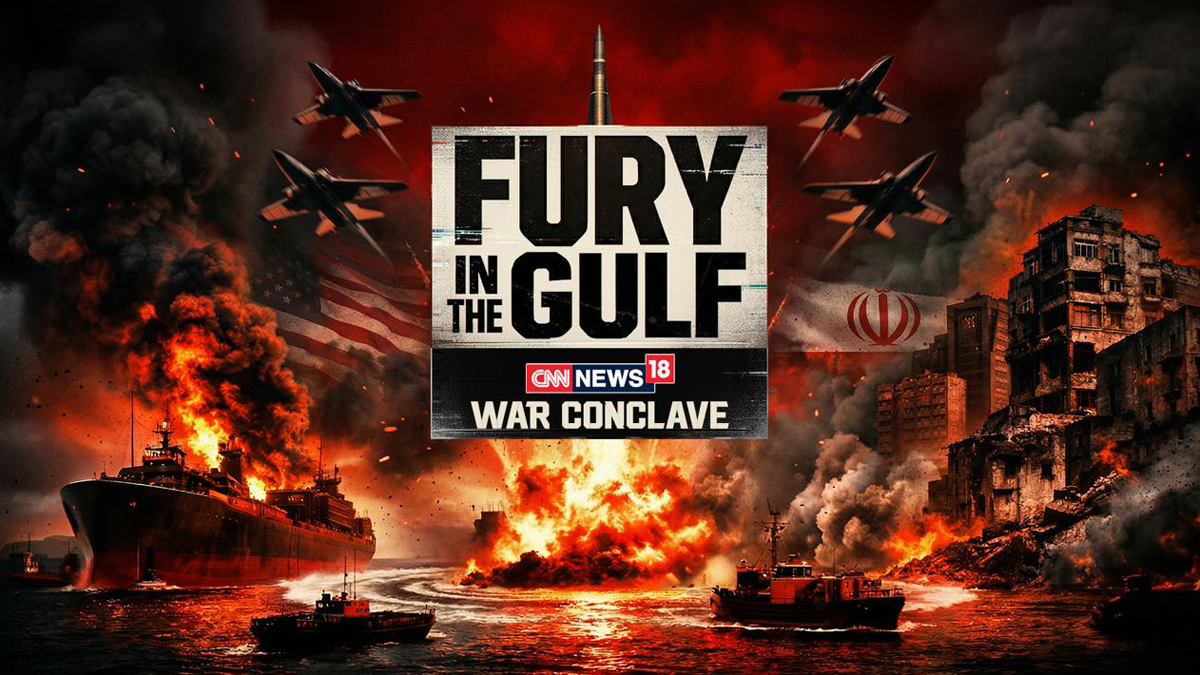
MUMBAI: CNN-News18 is set to host a special three-hour broadcast, Fury in the Gulf – War Conclave, on April 7, aiming to decode the escalating West Asia crisis and its far-reaching implications for India.
Scheduled from 4:00 PM to 7:00 PM, the conclave comes at a time when tensions between Iran and the United States are reshaping global geopolitics and triggering economic uncertainty. With India’s deep energy ties, trade links and large diaspora in the Gulf, the developments carry significant domestic relevance.
Built around the theme ‘Conflict, Consequences, and The Future,’ the programme will feature six curated sessions combining one-on-one interviews and panel discussions. The focus is to cut through the clutter and offer viewers a clearer understanding of the fast-evolving situation.
Key sessions include ‘Diplomacy in Times of War’ featuring Shashi Tharoor, and ‘World After the Iran Conflict’ with voices such as Ram Madhav, Reuven Azar, representatives from the European Union and the Iranian Deputy Envoy. Another session titled ‘Another Dunkirk?’ will bring together K. J. S. Dhillon and Jitin Prasada among others.
CNN-News18 editorial affairs director Rahul Shivshankar said, “In times of war, clarity becomes the most powerful tool. Fury in the Gulf – War Conclave brings together credible voices to address the questions and confusion that arise amid an overwhelming influx of information.”
He added that the initiative is aimed at delivering “facts, perspective, and insight” at a time when misinformation can easily cloud public understanding.
Echoing the sentiment, CNN-News18 CEO– English and business news Smriti Mehra said the conflict marks a defining global moment, with consequences that extend well beyond the region. She noted that the conclave seeks to present the crisis with “depth, nuance and responsibility” so audiences can better grasp its real-world impact.
As geopolitical tensions continue to dominate headlines, the conclave positions itself as an attempt to bring order to the noise, offering viewers a structured, insight-led look at a complex and rapidly shifting global situation.






