News Headline
Study emphasises role of the pubcaster in building social capital


MUMBAI: A new economic rationale for public service broadcasting identifies the value and positive impact broadcasting has on society in the UK.
Producing popular programmes that are watched and talked about should be regarded as a valuable component of public service broadcasting and important to preserving and building the social capital of the UK. These are some of the conclusions of a new report that has been published jointly by the BBC and The Work Foundation.
The report Watching Alone: Social capital and public service broadcasting was done by economist Martin Brookes. It presents a new economic rationale for public service broadcasting based on the positive impact it can have on social capital. This term has been given to the collection of shared values which shape society and provide the basis for trust between people.

One show that was highlighted as boosting social capital was Great Britons. This aired in India as well. The show was able to create ‘water-cooler’ discussions about Britain and its history. The Queen’s Golden Jubilee was another instance of social capital building. Through its programming and nationwide events, the BBC was able to provide both a set of shared experiences and a mirror to the nation to reflect its character and history. Brookes argues that the massive growth in the number of television channels and the consequent fragmentation of audiences will mean fewer shared experiences. Therefore social capital will get reduced. He argues that public service broadcasting has a vital role to play given its continued capacity to generate large audiences.
He said, ” Without it, we risk becoming a nation of viewers who watch alone, consuming specialist channels without being able to share the experience later with friends and colleagues.”
Brookes concluded that the free market in broadcasting, left to its own devices, would not produce the right mix of programming to adequately sustain social capital. In the US the multiplicity of channels and small role of public service television has led to an alarming lack of overlap in the viewing habits of blacks and whites he noted.
A similar study of viewing habits amongst whites and ethnic minorities in Britain shows a much greater overlap. Brookes argues that this is in part due to the public service obligations of the dominant providers to produce programmes which appeal to a range of audiences. The report cites EastEnders as a powerful example of a programme’s ability to build social capital and create shared experiences for all groups of society.
It spans social groups and ages which may otherwise have few common reference points. The report concedes that while audience size is an important factor, large audiences alone are unlikely to maximise social capital. Audience diversity, by age, sex, race and social class; audience engagement with the content, the ‘water-cooler’ effect; and audiences learning about one another are also factors in maximising the social capital of programmes.
The Work Foundation CEO Will Hutton added, “This report is a wake-up call to both the BBC and its critics. It challenges the BBC to consider new and more sophisticated rationales for its existence, and opens up wholly new debates about what it means to serve the public interest in the twenty-first century.
“But more importantly, it tears up the argument of the free marketeers who would destroy public service broadcasting. Media technologies have changed drastically since the BBC was founded, and in the digital era, we can no longer take it as read that broadcasting will provide shared experiences. We need to commit ourselves firmly to ideas of a shared public realm, and this report explains precisely why.”







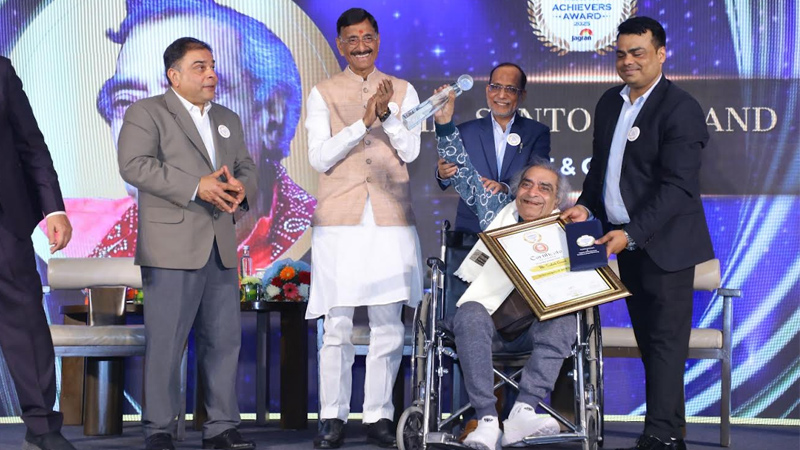
NEW DELHI: Hamdard Laboratories gathered a cross-section of India’s achievers in New Delhi on Friday, handing out the Hakeem Abdul Hameed Excellence Awards to figures who have left their mark across healthcare, education, sport, public service and the arts.
The ceremony, attended by minister of state for defence Sanjay Seth and senior officials from the ministry of Ayush, celebrated individuals whose work blends professional success with a sense of public purpose. It was as much a roll call of achievement as it was a reminder that influence is not measured only in profits or podiums, but in people reached and lives improved.
Among the headline awardees was Alakh Pandey, founder and chief executive of PhysicsWallah, recognised for turning affordable digital learning into a mass movement. On the sporting front, Arjuna Awardee and kabaddi player Sakshi Puniya was honoured for her contribution to the game and for pushing women’s participation onto bigger stages.
The cultural spotlight fell on veteran lyricist and poet Santosh Anand, whose songs have echoed across generations of Hindi cinema. At 97, Anand accepted the honour with characteristic humility, reflecting on a life shaped by perseverance and hope.
Healthcare honours spanned both modern and traditional systems. Manoj N. Nesari was recognised for strengthening Ayurveda’s place in national and global health frameworks. Padma shri Mohammed Abdul Waheed was honoured for his research-backed work in Unani medicine, while padma shri Mohsin Wali received recognition for his long-standing contribution to patient-centred care.
Education and social development also featured prominently. Padma shri Zahir Ishaq Kazi was honoured for decades of work in education, while former Meghalaya superintendent of Police T. C. Chacko was recognised for public service. Goonj founder Anshu Gupta received an award for his dignity-centred rural development initiatives, and the Hunar Shakti Foundation was honoured for empowering women and young girls through skill development.
The Lifetime Achievement Award went to former IAS officer Shailaja Chandra for her long career in public healthcare and governance, particularly in the traditional systems under Ayush.
Speaking at the event, Hamdard chairman Abdul Majeed said the awards were a tribute to those who combine excellence with empathy. “These awardees reflect Hakeem Sahib’s belief that healthcare, education and public service must ultimately serve humanity,” he said.
Minister Seth struck a forward-looking note, saying India’s young population gives the country a unique opportunity to become a global destination for learning, health and wellness by 2047.
The ceremony also featured the trailer launch of Unani Ki Kahaani, an upcoming documentary starring actor Jim Sarbh, set to premiere on Discovery on 11 February.
Instituted in memory of Unani scholar and educationist Hakeem Abdul Hameed, the awards have grown into a national platform that celebrates those building a more inclusive and resilient India. For one evening at least, the spotlight was not just on success, but on service with substance.






