I&B Ministry
Streamline media grievance redressal, SC asks govt


NEW DELHI: Action was taken in 52 cases of television and two of radio in the past three years for violation of the Programme or Advertisement Code of the Government. Minister of state for information and broadcasting Rajyavardhan Rathore said the action in most cases was limited to apology scrolls, or switching off channels for a brief period.
This included in the case of TV 19,15 and 18 cases in 2014, 1015 and 2016, respectively, and one each in the case of FM radio in 2015 and 2016.
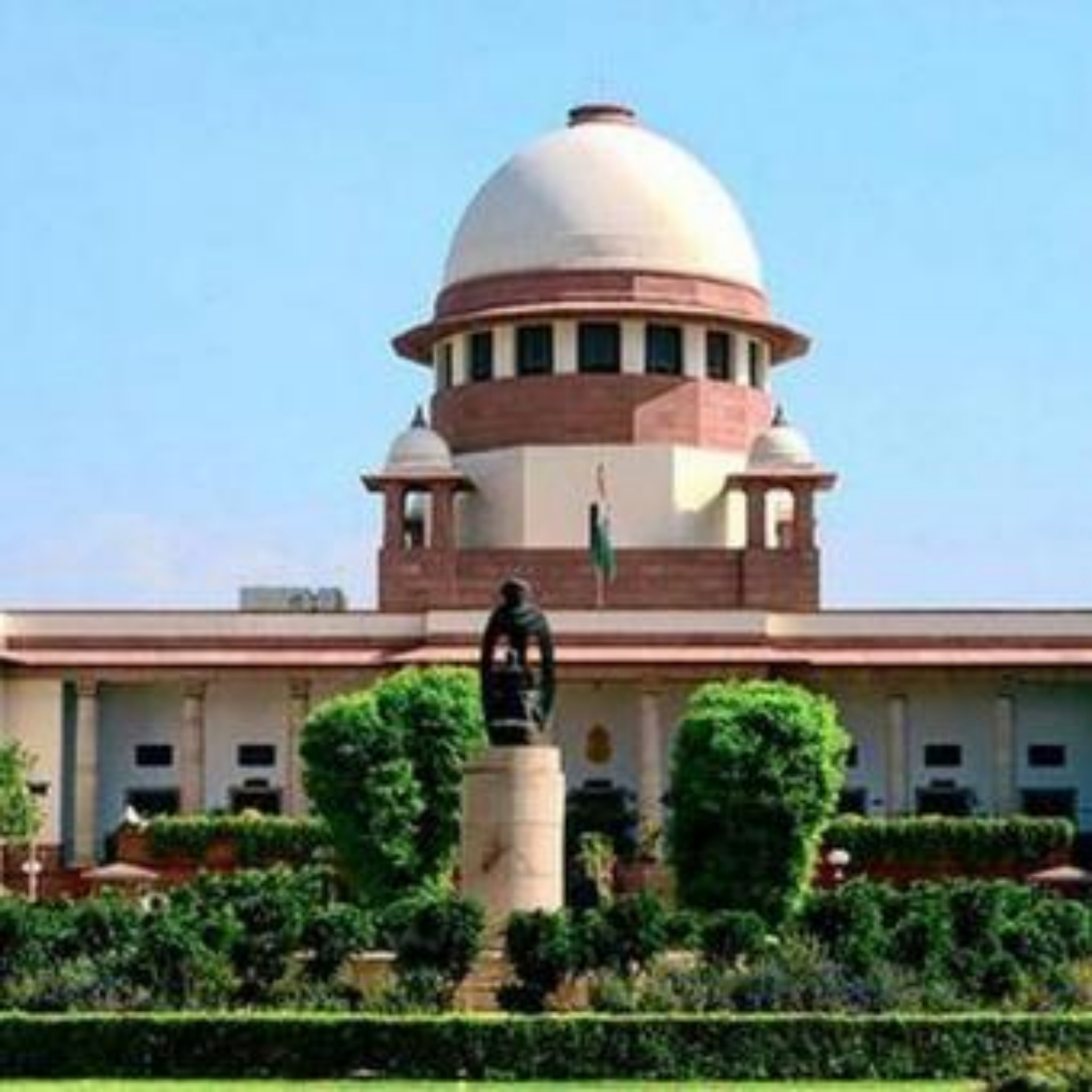
Meanwhile, the minister said the Supreme Court had, on 12 January 2017, advised the Government to formalise the complaint redressal mechanism including the period of limitation within which a complaint can be filed.

The court also said the concerned statutory authority which shall adjudicate upon the same including the appellate and other redressal mechanisms, leading to a final conclusive determination.
At present, an Inter-Ministerial Committee takes action on complaints forwarded to it. In addition, there is self-regulation at the level of the Advertisement Standards Council of India, the Broadcast Content Control Council and the News Broadcast Standards Authority.
The Inter Ministerial Committee (IMC) under Section 20 of the Cable Television Networks (Regulation) Act 1995 comprising officers from Ministries of Home Affairs, Defence, External Affairs, Law & Justice, Women & Child Development, Health & Family Welfare, Consumer Affairs and a representative from Advertising Standards Council of India, to take cognizance suo moto or to look into specific complaints regarding content on private TV channels on any platform including FM Radio channels.
As and when there is a prima facie case of violation by private satellite TV channels and private FM channels regarding content aired by them, the matter is placed before the IMC for its consideration/recommendations. Thus, IMC functions in a recommendatory capacity. The final decision is taken on the basis of the recommendations of IMC by the Ministry after which action is taken such as issuing warnings or advisories to the channels or asking them to run apology scrolls on their channels or directing the channels to be taken off air for a limited period depending on the gravity of the violation.
Apart from this, the Ministry has also issued directions to States to set up District level and State level Monitoring Committees to regulate content telecast of local TV channels carried on Cable TV Networks.
Also Read:
SC to MIB: Get mechanism to deal with complaints on TV, radio shows
MIB urgently seeks pending 78 channels’ equipment details
Govt warning to TV channels on b’cast norms breach
Mittal wants self-regulation for new media, Rathore says IT Act adequate



I&B Ministry
CBFC speeds up film certification; average approval time cut to 22 days
Over 71,900 films cleared in five years as digital system shortens approval timelines

MUMBAI: The Central Board of Film Certification (CBFC) has significantly reduced the time taken to certify films, with the average approval timeline now down to 22 working days for feature films and just three days for short films.
Operating under the Ministry of Information and Broadcasting, the statutory body certifies films for public exhibition in line with the Cinematograph Act, 1952 and the Cinematograph (Certification) Rules, 2024. The rules prescribe a maximum certification period of 48 working days, though the adoption of the Online Certification System has sharply accelerated the process.
Over the past five years, from 2020-21 to 2024-25, the board certified a total of 71,963 films across formats. Of these, the majority fell under the U category with 41,817 titles, followed by UA with 28,268 films and A with 1,878 films. No films were certified under the S category during the period.
Film approvals have also steadily risen in recent years. The CBFC cleared 8,299 films in 2020-21, a figure that peaked at 18,070 in 2022-23 before settling at 15,444 films in 2024-25. During the same period, 11,064 films were certified with cuts or modifications.
Despite the high volume of certifications, outright refusals remain rare. Only three films were denied certification over the last five years, with one refusal recorded in 2022-23 and two in 2024-25.
The board may recommend cuts or modifications if a film violates statutory parameters relating to the sovereignty and integrity of India, security of the state, friendly relations with foreign states, public order, decency or morality, defamation, contempt of court or incitement to an offence.
Filmmakers can challenge CBFC decisions in court. Data shows that such disputes remain limited but have seen some fluctuation. Between 2021 and 2025, a total of 21 certification decisions were challenged before High Courts, with the number rising to 10 cases in 2025.
Responding to a question in the Rajya Sabha, minister of state for information and broadcasting L. Murugan shared the data. The question was raised by Mallikarjun Kharge.
With faster timelines and a largely digital workflow, the certification process appears to be moving at a far brisker pace, signalling a shift towards quicker clearances for India’s growing film output.