iWorld
Streaming music competition ramping up, as COVID-19 lockdown alters consumption habits


MUMBAI: Streaming subscriptions remain the number one growth driver in the global music market, accounting for more than 70 per cent of spend on music last year. Yet, as measures to halt the spread of COVID-19 begin to reshape the lives of consumers, music streaming is experiencing a temporary drop in consumption.
“We may have expected to see an uptake in the use of streaming music services, as people become confined in their homes,” says Alexandre Jornod, market analyst at Futuresource Consulting. “However, that’s not the case, with early indicators showing the contrary. Streaming consumption in countries in lockdown appeared to have dropped between 15 per cent to 20 per cent. This is linked to consumers adjusting to new confinement rules, which have removed key music listening situations like the daily commute, as well as office and gym time.”
Music a shared pastime

With families spending time at home together, music consumption is also becoming more of a shared activity. Whereas before the outbreak, people were using separate accounts to play different music throughout the day; smart speakers are now likely to be increasingly used and with a single account used to play music in the household. In the same way, radio has seen an increase in consumption, as listeners seek human curation, live news, friendly voices and companionship. There is also tough competition from gaming in addition to movie and TV show streaming. These activities require a higher level of attention and tend to be favoured when some extra time is freed up as a result of routines being interrupted.
New routines, new opportunities
“Once consumers become accustomed to the situation and establish new routines, we expect streaming music to get back to levels similar to before the crisis, with premium subscriber uptake to show renewed growth, particularly in H2, largely compensating for any slowdown in H1,” says Jornod. “Home listening will dominate, with a shift in the music types and genres as consumers seek out lean-back mood playlists as opposed to searching for specific songs or artists.”
Spotify and Apple flying high
Spotify and Apple continued to lead the way last year, accounting for over 60 per cent of global subscriptions between them, a leadership trend that will continue. Spotify retained the global number one position, though Apple captured the top spot in the USA.
Amazon Music also experienced strong growth with its multiple streaming plans catering to a wide audience, although its subscriptions are closely linked to Echo smart speaker geographies, which skew heavily towards the USA and the UK. YouTube Music, despite lagging behind the competition in terms of subscribers due to its late re-entry to market, has the potential to become a key player thanks to its established YouTube audience. Smaller players like Deezer, Tidal and Napster are focusing instead on strategies such as targeting local markets, serving niche audiences or B2B operations.
“Streaming music subscriptions also benefit from markets where physical media has been historically strong and they are now transitioning to streaming,” says Jornod. “The likes of Germany, Japan and France are experiencing accelerating adoption, whereas maturing markets in North America and Europe are seeing a focus on value-added features as a differentiator. Watch out for a rise in podcasts beginning to exert its influence, as well as enhanced listening experiences such as Hi-Res audio, Dolby Atmos Music and Sony 360 Reality Audio.”





iWorld
Asha Bhosle, the unforgettable voice that sang a thousand emotions
The melody that defined generations has fallen silent, but her songs will echo forever.
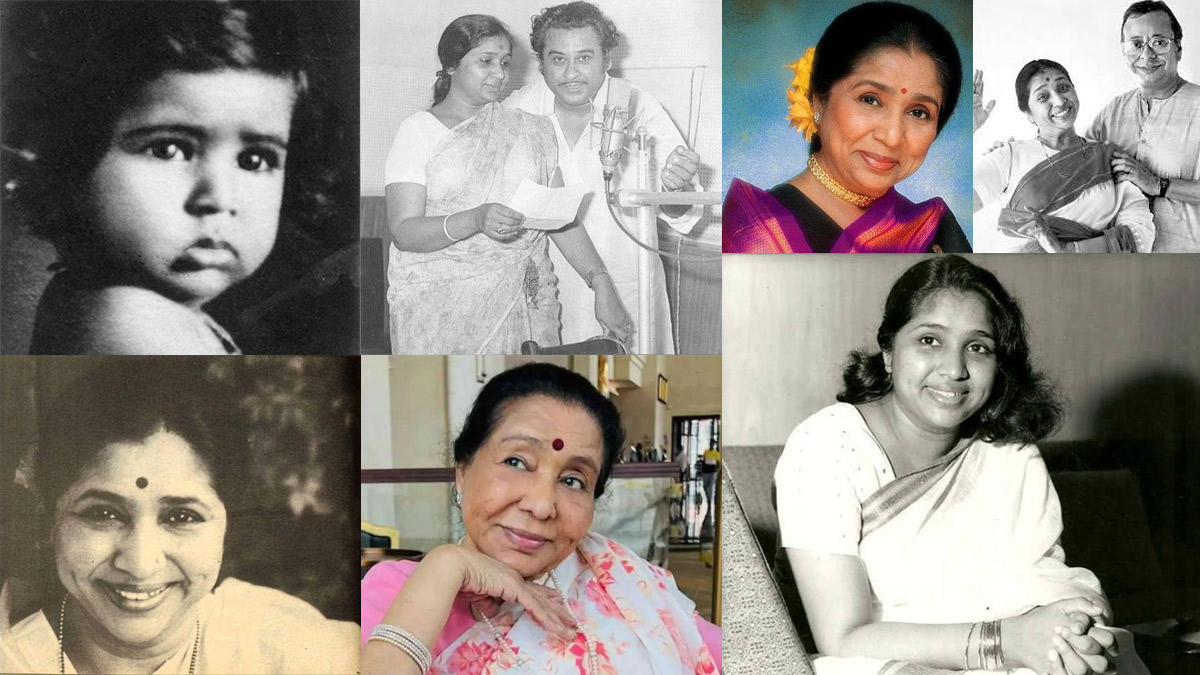
MUMBAI: The voice that once lit up countless silver screens and brought rhythm to millions of hearts has stilled. Legendary singer Asha Bhosle, one of the most versatile and prolific vocalists in Indian film music, passed away at the age of 92 in Mumbai on Sunday. She was admitted to Breach Candy Hospital on Saturday night after suffering cardiac and respiratory issues and had reportedly been unwell for several months.
Her son, Anand Bhosle, confirmed the news on Sunday afternoon. The last rites will be performed on Monday.
Born in 1933 into the illustrious Mangeshkar musical family, Asha began her journey in the golden era of Hindi cinema. She recorded her first film song at the age of nine in 1943 and, by the 1950s, had already carved a distinct space for herself in Bollywood. While her elder sister Lata Mangeshkar often took the more melodic, heroine-centric numbers, Asha quickly became the go-to voice for energetic cabaret tracks, dance numbers, and later, the full spectrum of emotional expression.
The 1950s–60s: Rise of the Cabaret Queen In the early decades, Asha was frequently typecast for “item songs” and Western-style numbers. Yet even within those constraints, she delivered unforgettable hits such as “Aaja Aaja” from Teesri Manzil and “O Haseena Zulfon Wali” from the same film. Her playful, sassy delivery gave these tracks a magnetic energy that still feels fresh today.
The 1970s: Peak Versatility This was the decade that cemented her legendary status. Songs like “Dum Maro Dum” (Hare Rama Hare Krishna), “Piya Tu Ab To Aaja” (Caravan), “Chura Liya Hai Tumne” (Yaadon Ki Baaraat), and “Yeh Mera Dil” (Don) became cultural touchstones. Asha proved she could swing from seductive to soulful with equal ease, working with almost every major composer of the era.
The 1980s: Emotional Depth and Ghazals After marrying composer R.D. Burman in 1980, Asha explored more nuanced, introspective territory. Her National Award-winning performances in Umrao Jaan (“Dil Cheez Kya Hai”) and Ijaazat (“Mera Kuch Saamaan”) showcased a matured, velvety voice capable of profound emotion. These tracks remain among the most cherished ghazals in Indian cinema.
The 1990s–2000s: Global Collaborations and Reinvention Even as newer voices emerged, Asha refused to fade. She collaborated internationally with the Kronos Quartet and released experimental albums. Later in her career, she lent her voice to younger composers and continued performing live, often sharing the stage with her granddaughter Zanai Bhosle.
A Life Beyond the Microphone Asha’s personal journey was as dramatic as her filmography. At 16, she eloped with Ganpatrao Bhosle, her personal secretary. The marriage ended in separation in 1960 after they had three children. In 1980, she married R.D. Burman in a union that faced family opposition but brought creative synergy. RD passed away in 1994.
Throughout her life, Asha remained grounded, often crediting classical music and ghazals for keeping her voice sharp. In a 2023 interview, she admitted she rarely listened to contemporary film songs, preferring the timeless works of Bhimsen Joshi and classic ghazals to stay inspired.
Her seven Filmfare Awards and two National Film Awards are merely numbers; the true measure of her legacy lies in the thousands of songs that still play in homes, cars, and hearts across generations. From the foot-tapping energy of “Dum Maro Dum” to the haunting beauty of “Mera Kuch Saamaan”, Asha Bhosle gave Indian cinema a voice that was simultaneously bold, tender, playful, and profound.
The golden era has lost one of its brightest stars, but the music she created will continue to refresh souls for decades to come. As the final notes of her extraordinary journey fade, India bids farewell to a voice that truly defined an era.







