iWorld
Storytelling in the multiscreen age

Oh, storytelling. So much has changed and then, nothing has.
As someone who started wearing more hats (at times unwittingly) than just the creative type over time, it’s fascinating to see how the graph of storytelling is evolving.
Mobiles. Tablets. Smart TVs. Normal TVs (my parents have one). Laptops. Desktops. How do inches of screens influence the millions spent on storytelling? Let’s look at the different ‘kirdaars’ in the story of storytelling.

The story makers: Thou shalt be versatile.
Cos the audience is as diverse as it is cohorted. And the same person consumes different stories on different screens at different times in a day. One of the critical questions to ask besides others, is where will this story appear? And then nuance it to that screen(s).
The legendary 30-seconder is now 15. Or 6. The ‘long’ 60-seconder is now longer at 3 minutes. It obviously needs a different skill and craft, to do justice to both. And then there is the timing aspect – with moment marketing growing by the moment. There are new storytelling formats available, in varying degrees of maturity. Themed games – which we’ve explored with a lot of success to tell brand stories. AR/VR, metaverse, web series, branded content, blogs… the canvas just keeps getting longer & wider with each screen.
And why should stories happen in isolation? In a multiscreen, non-linear age, why not have more of ‘fluid’ stories. Brands have done it (Volvo’s The Greatest Interception Ever, Burger King + Google Home, Coinbase QR), and it adds to the creative play in a never-before manner.
The story bearers: Thou shalt be collaborative.
The ‘role’ of media, social media, broadcasters and distributors in the story-world is on the rise. And for a reason. As technology and algorithms are dictating (even predicting) more and more of what works and what doesn’t, the magic of media & creative ‘jugalbandi’ is needed more than ever before.
The good old days of jamming together are back. And we need lots more of it. A small new feature of a platform, a tweak in the algo, a new platform altogether… all these can spark a story, or elevate a story. Stories have/can become interactive using multiple senses, turning audience into co-creators.
Innovations are only as good as their use cases. And a story is only as good as how it is told. The story-carriers are and will continue to have a voice in not only telling, but also shaping the story.
The story owners: Thou shalt be open.
It’s difficult to create a good story. It’s more difficult to create a story that exceeds expectations. And it’s impossible to create something that goes viral every time.
Brands and clients who understand this, are the true BFF of storytelling. The origin point of the story resides with them (the need), as does the protagonist (the brand), as does the ownership (the monies). Having and setting clear expectations from a story is a great starting point. However small, define the outcomes. So that the story makers and bearers know what buttons the story must press.
And then, what works on one screen will most likely not work equally well on another. Understand the nuances with partners, prioritize the screen(s) and channel resources accordingly. In the BANI world, it is tough to have a straight-line Brief. So, be open to experimentation and failures. Cos you’re never too far from a blockbuster story.
The story consumers: Thou shalt be spoilt.
Enough said.
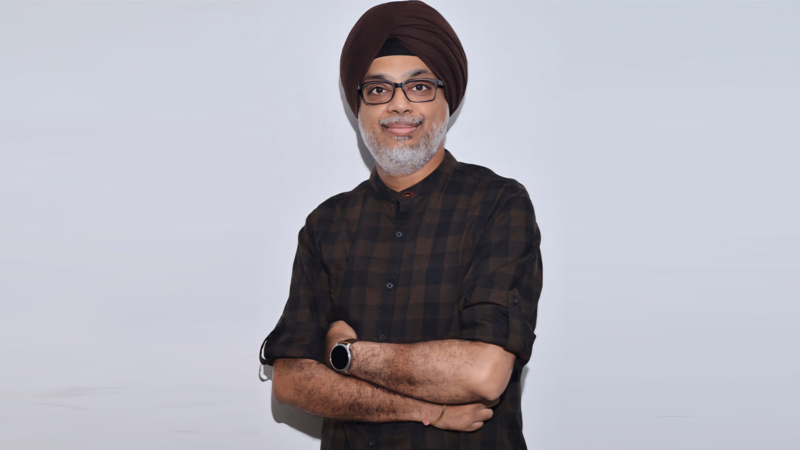
The article has been authored by IdeateLabs chief creative officer Raman R.S. Minhas.






eNews
Piyush Thakur steps down as Inshorts’ chief revenue officer
Former vice president and cro says exit marks a new chapter after close to a decade of building revenue and partnerships at Inshorts Group.

NOIDA: Piyush Thakur has stepped away from Inshorts Group after nearly 10 years with the company, marking the end of a long tenure that culminated in his role as chief revenue officer.
In a farewell note, Thakur said he was “turning a new page” after almost a decade at Inshorts, calling it one of the hardest professional decisions he has made. He added that his exit was not driven by uncertainty about the future, but by reflection on a long association with the company.
Thakur joined Inshorts in October 2016 as vice president and spent around seven years in the role before being elevated to chief revenue officer in April 2024, a position he held until April 2026.
He said his tenure was defined by “thousands of mornings, late nights, product debates and breakthrough moments”, as the company evolved into a large-scale digital news platform used by millions.
In his note, Thakur emphasised that Inshorts’ growth was a collective effort across teams, adding that engineers, designers, sales teams and customer support staff all contributed to building the platform. He said the company’s success was not the result of individuals but of “everyone who stayed, passed through, and left their mark”.
Before Inshorts, Thakur worked across several digital media and business development roles. At ESPN, he served as senior regional manager from October 2015 to October 2016, focusing on growth initiatives, strategic opportunities and video distribution.
At Times Internet, he worked for nearly three years, including as head of business development from April 2015 to September 2015 and chief manager from January 2013 to March 2015. His responsibilities included monetisation of mobile platforms, managing media and developer partnerships, and driving revenue across digital properties such as The Times of India and The Economic Times.
Earlier, he worked at Brandmovers as head of business development from June 2012 to June 2013, handling digital, mobile and social media marketing solutions, client development and strategic consulting. During this period, he also worked on advertising revenue, brand strategy and CRM-based solutions.
At Inshorts, Thakur’s role focused on revenue strategy, mobile and media partnerships, and growth initiatives across platforms. His profile highlights experience in mobile product management, digital business models, partner ecosystems and revenue expansion in high-growth environments.







