News Broadcasting
Star World to air controversial MJ special in April


MUMBAI: Star World is looking to boost its programme profile through the controversial Michael Jackson documentary Living With Michael Jackson. The channel has announced that it will air the show in April.
Documentary filmmaker Martin Bashir, best known for his 1995 interview with Princess Diana in which she first admitted to cheating on her husband, spent eight months as part of the King of Pop’s entourage and has created a documentary that has Michael Jackson furious.
Living With Michael Jackson drew 14 million viewers when it aired in Britain that works out to one in four Britons glued to their television sets.

In the US, ABC, which reportedly bought the documentary for US$5 million, attracted 27.1 million viewers for their Thursday night broadcast, translating into some serious advertising coin for the network.
The fallout from the documentary has been swift and aggressive when Jackson counter-attacked by filing formal complaints with two television watchdog organisations in Britain and then offered footage of Bashir praising his parenting skills to the television networks in the US who have thus far shown no interest in this rebuttal video.
Reacting to the documentary MJ said, “Today I feel more betrayed than perhaps ever before; that someone, who had got to know my children, my staff and me, whom I let into my heart and told the truth, could then sacrifice the trust I placed in him and produce this,” In the US, reaction to the programme has prompted Los Angeles attorney Gloria Allred to ask that Child Welfare Services in Santa Barbara investigate Jackson’s behaviour around child guests at Neverland.
On Living With Michael Jackson viewers can expect dirt on Jackson’s predilection with sleeping with children, baby dangling, and $6 million shopping sprees. Other revelations include Jackson snatching his daughter Paris, placenta and all immediately after she was born as well as his denials about having extensive surgery on his face.
Critics have called for those close to Jackson to step in and help the troubled star. The rest of the world is watching the saga unfold in intrigue and bemusement.






News Broadcasting
CNN-News18 to host Fury in the Gulf conclave on West Asia crisis
Three-hour summit to unpack geopolitical fallout and impact on India
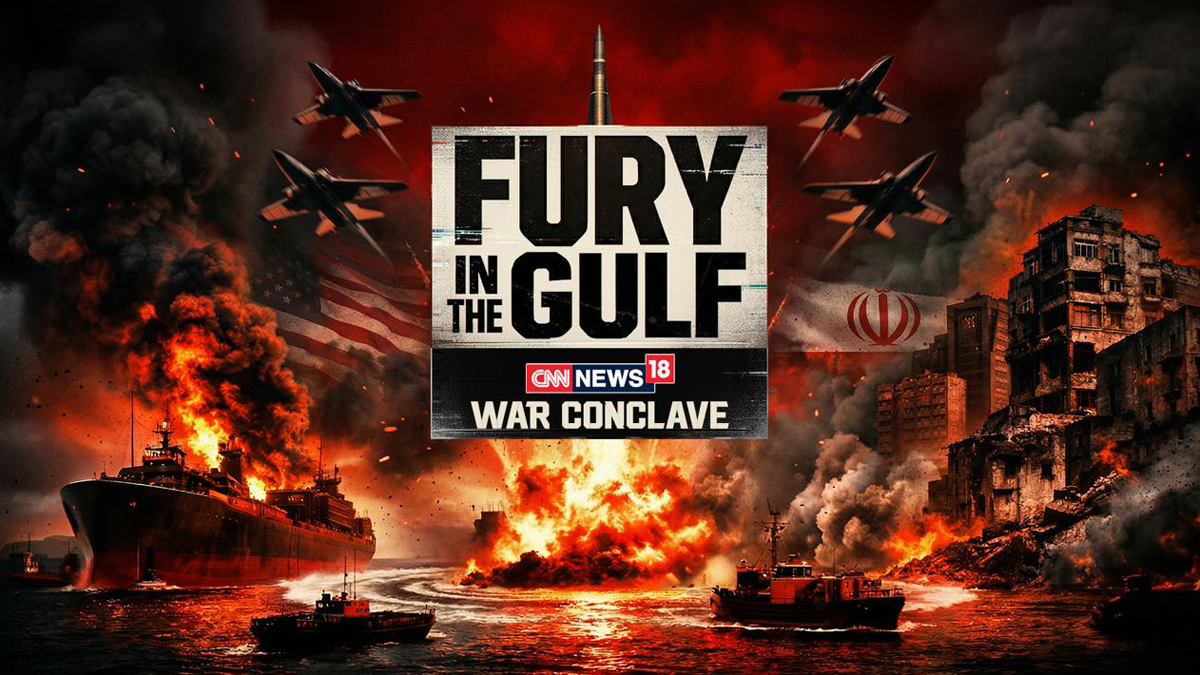
MUMBAI: CNN-News18 is set to host a special three-hour broadcast, Fury in the Gulf – War Conclave, on April 7, aiming to decode the escalating West Asia crisis and its far-reaching implications for India.
Scheduled from 4:00 PM to 7:00 PM, the conclave comes at a time when tensions between Iran and the United States are reshaping global geopolitics and triggering economic uncertainty. With India’s deep energy ties, trade links and large diaspora in the Gulf, the developments carry significant domestic relevance.
Built around the theme ‘Conflict, Consequences, and The Future,’ the programme will feature six curated sessions combining one-on-one interviews and panel discussions. The focus is to cut through the clutter and offer viewers a clearer understanding of the fast-evolving situation.
Key sessions include ‘Diplomacy in Times of War’ featuring Shashi Tharoor, and ‘World After the Iran Conflict’ with voices such as Ram Madhav, Reuven Azar, representatives from the European Union and the Iranian Deputy Envoy. Another session titled ‘Another Dunkirk?’ will bring together K. J. S. Dhillon and Jitin Prasada among others.
CNN-News18 editorial affairs director Rahul Shivshankar said, “In times of war, clarity becomes the most powerful tool. Fury in the Gulf – War Conclave brings together credible voices to address the questions and confusion that arise amid an overwhelming influx of information.”
He added that the initiative is aimed at delivering “facts, perspective, and insight” at a time when misinformation can easily cloud public understanding.
Echoing the sentiment, CNN-News18 CEO– English and business news Smriti Mehra said the conflict marks a defining global moment, with consequences that extend well beyond the region. She noted that the conclave seeks to present the crisis with “depth, nuance and responsibility” so audiences can better grasp its real-world impact.
As geopolitical tensions continue to dominate headlines, the conclave positions itself as an attempt to bring order to the noise, offering viewers a structured, insight-led look at a complex and rapidly shifting global situation.






