GECs
Star Plus’ ‘Yeh Hai Mohabbatein’ gets dual time slot

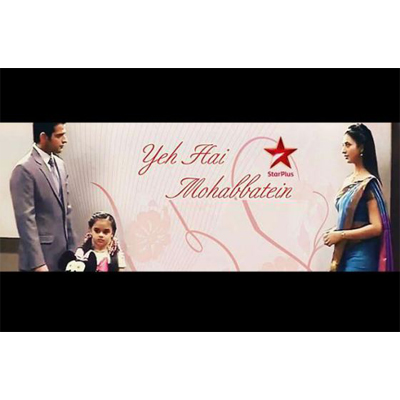
MUMBAI: Star Plus and Balaji Telefilms relationship goes way back. The shows from the production house’s banner captured almost all the slots and made the channel flourish on the TAM TV ratings chart.
Currently, Yeh Hai Mohabbatein (YHM), which was launched on 3 December 2013, had hit the television screens at a dead slot (11 pm) where no other broadcaster dared to experiment.

But the channel decided to take the bold move and was confident that one day the show will succeed. And today, if one goes as per the ratings, it ranks number four on Star Plus leaving behind even the older shows. In the week 37 of TAM TV ratings, it garnered 5,245 TVTs, down from 5,730 TVTs.
From 22 September, the show will occupy a dual time slot and will air six days a week at both 7:30 pm and 11:00 pm. The series will replace Saraswatichandra which has been struggling with low numbers at the ratings chart.
Star Plus SVP marketing Nikhil Madhok explains the reason behind the move. According to him, the move was made after audiences’ feedback that a certain section of viewers found the 11 pm slot too late in night.
He adds, “It has a very loyal audience with the highest time spent on Hindi general entertainment channel (GEC). The show is really popular but a lot of people kept telling us, especially youngsters, that it was too late for them to stay awake and watch considering they have their schools and colleges the next day.”
Madhok believes that prior to this, time slot movements were done by GECs usually when it wanted to shift a non-performing show to a competitive big show or early evenings or afternoons. But this is for the first time a top performer show is being shifted primarily to gain more viewership.
The channel feels that the advantage of doing this is twofold. One, a lot of people who were not able to watch the show at 11 pm can now watch it at 7:30 pm. And secondly, audiences who love YHM get two opportunities to watch the show.
“This was a show where repeat viewing the next day or viewing on online digital medium is very high. So the dual airing will not only help the existing viewers who love the show to watch it twice but also add a whole new set of viewers,” states Madhok.
The channel underwent a research where it stated that at 11:00 pm, the number of people available is far lesser than 7:30 pm and contributes only 60 per cent of the overall audience in the community.
Madhok and the makers are confident that since the content will remain same at both the slots, it will garner good ratings at both time slots. YHM has got India Gate Basmati Rice as its title sponsor.







GECs
Sahara One reports financial results, notes director exit and business realignment
Muted revenues, steady expenses and strategic adjustments shape company’s current phase
MUMBAI: In a tale where the sands seem to be slipping faster than they can be gathered, Sahara One Media and Entertainment Limited has reported another quarter of wafer-thin income and widening losses, even as a boardroom exit adds to the unease.
The company informed the Bombay Stock Exchange that its board, in a meeting held on April 4, approved its unaudited financial results for the quarter ended September 30, 2025. The numbers paint a stark picture. Total income for the quarter stood at just Rs 0.13 lakh, unchanged sequentially and sharply down from Rs 0.26 lakh a year earlier.
Losses, meanwhile, deepened. The company posted a net loss of Rs 24.16 lakh for the quarter, compared to Rs 18.81 lakh in the June quarter and Rs 39.69 lakh in the same period last year. For the six months ended September 2025, the cumulative loss stood at Rs 39.69 lakh, while the full-year loss for FY25 was reported at Rs 60.72 lakh.
Expenses continued to outweigh income by a wide margin. Total expenses for the quarter came in at Rs 24.30 lakh, led by employee benefit costs of Rs 6.51 lakh and other expenses of Rs 17.78 lakh. Earnings per share remained in the red at Rs (0.11) for the quarter.
The balance sheet reflects a company with significant assets on paper but limited operational momentum. Total assets stood at Rs 23,065.57 lakh as of September 30, 2025, broadly unchanged from March 2025. Equity share capital remained steady at Rs 2,152.50 lakh, while total equity was reported at Rs 18,004.85 lakh.
Cash and cash equivalents saw a modest uptick to Rs 6.75 lakh from Rs 4.68 lakh earlier, supported by a positive operating cash flow of Rs 180.01 lakh for the period.
Yet, beneath these numbers lies a more complex narrative. The company’s auditors flagged their inability to obtain sufficient evidence to form a conclusion on the financial statements, citing lack of access to records. They also raised concerns over the company’s ability to continue as a going concern, pointing to insufficient funds, delayed recoveries, and stalled content investments.
Adding to the governance overhang, the company disclosed that Rana Zia has resigned as whole-time director, effective October 16, 2025, citing other professional commitments. The resignation, noted and accepted by the board, also brings an end to her role across company committees.
Regulatory pressures continue to loom large. The Securities and Exchange Board of India has already initiated penal actions for non-compliance with listing norms, with trading in the company’s shares remaining suspended. There is also a risk of promoter demat accounts being frozen.
Legacy legal issues remain unresolved. A substantial deposit of Rs 694,027.88 thousand linked to the long-running OFCD dispute involving Sahara group entities is still under the purview of the Supreme Court of India. Restrictions on asset disposal continue to weigh on the company’s financial flexibility.
Operationally, challenges persist across multiple fronts. Advances worth Rs 1,92,916 thousand given for film content remain stuck, with delays in project completion and uncertain recoverability. The company’s YouTube channel, despite being operational, has generated no revenue for over three years due to compliance lapses. In a further twist, management has indicated that revenues may have been fraudulently diverted through unauthorised changes to its AdSense account, with a police complaint in the works.
There are also missed revenue opportunities. Television content rights continue to be used by a related party despite the expiry of the licence agreement, with fresh negotiations still underway.
For now, Sahara One Media and Entertainment Limited appears caught between legacy disputes and present-day operational hurdles. As losses linger and governance questions mount, the road to recovery looks less like a sprint and more like a slow trudge through shifting sands.






