GECs
Star India rev growth offset by incremental rights expense, weakness in ad rev: Disney management


MUMBAI: The purchase of 21st Century Fox, which was aimed at helping Walt Disney Company's future plans, is causing initial pain to the Bob Iger-led media conglomerate. In its fiscal third quarter result for 2019, Disney missed earnings expectations partly because of the worse-than-expected performance of Fox assets. Star India, the newly acquired premium property of Disney after the completion of the merger, was not able to live up to expectations.
“We estimate Star generated about $150 million of operating income in the third quarter last year. Star's results this quarter came in well below our expectations and were driven primarily by a meaningful step-up in rights cost for the quadrennial Cricket World Cup and the Indian Premier League as revenue growth was more than offset by the incremental rights expense,” Disney Senior EVP and CFO Christine McCarthy said.
Despite the initial challenges, Disney CEO Bob Iger highlighted the benefits of the deal such as the addition of Star and Hotstar to the Disney portfolio giving a significant presence in India. He added that it is a huge market with interesting dynamics notably, a rapidly rising middle class with a strong and growing appetite for media, especially sports. He also noted that Hotstar’s broad array of premium sports rights will serve it well over the next five years especially as it expands the service into markets across Southeast Asia.

“It was the quadrennial Cricket World Cup, of course. They have their Indian Premier League, which is ongoing, but this is once every four years for the World Cup. There were a couple of significant games that were rained out. They have insurance coverage for some of those, but any proceeds would be in future periods. And there was also some weakness in advertising revenue that was related to the local advertising market,” Iger commented on Star’s performance in India.
Disney also continued to spend big on streaming services such as Disney+, ESPN+, the platforms where it sees its future. Moreover, the firm also took full operational control of streaming platform Hulu, which further affected the balance sheet.
Disney’s earnings per share (EPS) for the quarter decreased 28 per cent to $1.35 from $1.87 in the prior-year quarter where it was expected $1.74 by the analysts. Total revenue stood at $20.2 billion against the consensus estimate for $21.4 billion.







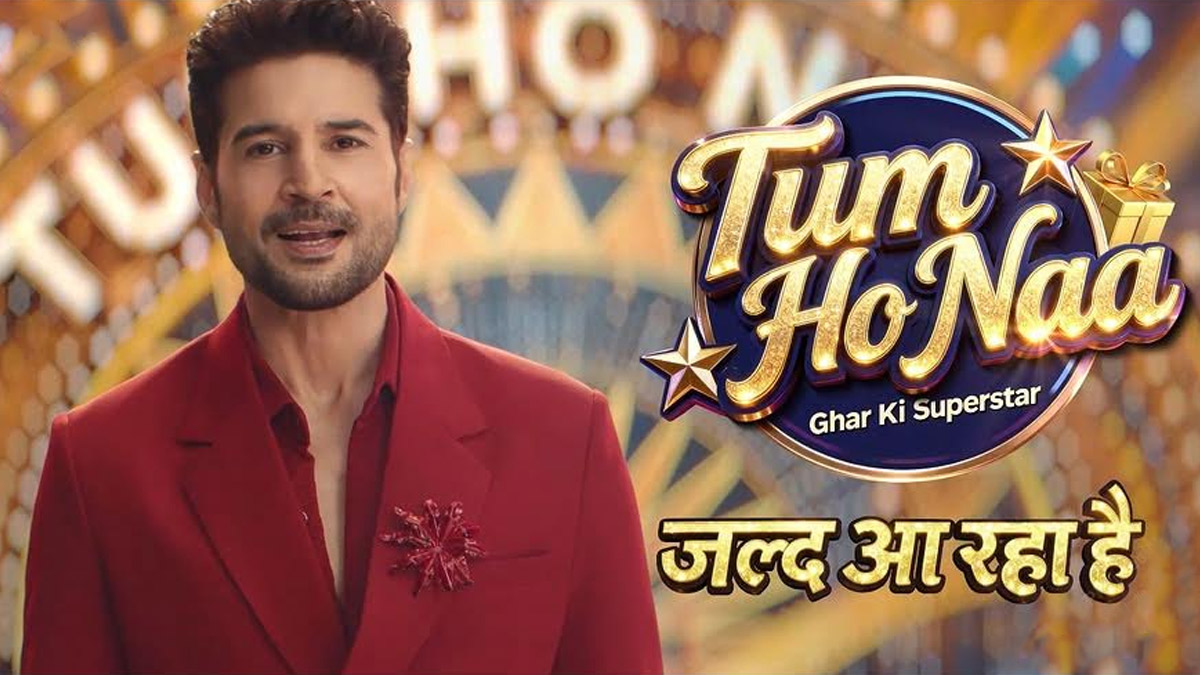
MUMBAI: Lights, camera… connection because this time, the game isn’t just about winning, it’s about who’s with you. Sony Pictures Networks India is gearing up to launch a new reality game show, Tum Ho Naa, expanding its unscripted slate with a format that promises both emotion and engagement.
The show will premiere soon on Sony Entertainment Television and stream on Sony LIV, with Rajeev Khandelwal stepping in as host. Known for his measured screen presence and selective choices, Khandelwal’s return to television adds a layer of familiarity and credibility to the upcoming format.
While specific details of the gameplay remain under wraps, the positioning suggests a reality format that leans as much on emotional resonance as it does on competition, an increasingly popular blend in Indian television, where audiences are gravitating towards content that offers both stakes and storytelling.
Khandelwal, reflecting on his return, noted that his choices have often been guided by instinct rather than convention, describing Tum Ho Naa as a project that feels “close to the heart”. His association also signals Sony’s continued focus on anchoring new formats with recognisable faces who bring both relatability and depth.
The launch comes at a time when broadcasters are doubling down on original non-fiction formats to drive appointment viewing, even as digital platforms expand parallel reach. By placing the show across both linear television and OTT, Sony appears to be aiming for a dual-audience strategy capturing traditional viewers while engaging digital-first consumers.
As the countdown to premiere begins, Tum Ho Naa positions itself not just as another game show, but as a reminder that sometimes, the biggest prize on screen isn’t the jackpot, it’s the journey shared along the way.






