News Headline
Sports rights issue befuddles FCC

|
NEW DELHI: The Indian government, being criticized by private sports broadcasters for trying to mandate a legislation on content sharing with the pubcaster, has found an ally in the US regulator. “Sports rights have created a level of complexities for regulators, which had not been envisaged,” Federal Communications Commission (FCC)’s Kathleen Q. Abernathy today admitted at the inaugural session of the first Indian Television Summit here being organized by Indiantelevision.com and the Hong Kong-based Media Partners Asia (MPA). |
||||
In a way highlighting the dilemma of the Indian government and the sports broadcasters on sharing sports content by private broadcasters with Doordarshan, Abernathy frankly observed, “I don’t have answers for sports… it’s definitely a challenge.” According to Abernathy, “The issue (of sports software acquisition and the associated high cost) has created market distortions, which we had not envisaged.”  She added, in the presence of information and broadcasting secretary SK Arora and a distinguished audience comprising who’s who of the media industry, FCC would look forward to what India does in this regard. Earlier, presenting the FCC viewpoint of regulation and media legislation, Abernathy, who’s responsible for representing the public interest in each of the policy areas under the Commission’s jurisdiction, said that it’s always a challenge to have regulations when the digital technology is evolving. |
||||
“What should be an appropriate role of a regulator in an evolving scenario? This is a question that’s always asked,” Abernathy said, adding it’s not necessary that what has worked in the US would also work elsewhere. Pointing out that all regulators round the world face challenges, she said, however, the basic aim should be — as that of the FCC — to create an environment conducive for investment, adoption and development of new technologies and promote competition without sacrificing the interest of consumers. “Regulation should provide incentive to broadcasters and (space) to adjust to the converging environment,” the FCC commissioner said. Dwelling on regulators in general, Abernathy said that one has to allow “markets to develop” even while keeping in mind that there is a difference between what could be seen by children or not as far as content is concerned. According to Abernathy, a regulator should “appreciate the competition” and educate the consumer on various aspects of the industry. On regulatory authority’s role in controlling prices — as has been done by Indian regulator Trai — for the benefit of consumers, Abernathy said, “We need to protect consumers against high prices. I hope, we (FCC) don’t have to micro-manage prices.” In an erudite address, Arora, sharing the dais with Abernathy, enlisted the initiatives taken by the government, even while doing a SWOT analysis of the Indian media industry. Refraining from handing out any numbers, Arora, however, said that the government’s perspective is that the industry has witnessed a “very healthy” growth in the last five years and offers a “very positive outlook” for the next five years. The government official also identified the “porous and open” foreign investments norms in India as one of the threats to the domestic media companies.
“This (increasing number of foreign-controlled channels being available in India) can be a threat to domestic companies. We need to recognize the fact and address the issue,” Arora said, hinting that the government is unlikely to increase foreign investment caps in segments like the DTH and FM radio in a hurry. However, Arora felt that India offers an extremely dynamic and positive foreign investment climate where media companies have various technical options available to reach out to consumers. On content regulation, he said that the government has set up a panel, comprising representatives from the industry, social and consumer activists and government officials, to expand and define the censorship rules for films and content pertaining to radio and TV. Pointing out that the government believes in self-regulation by the industry, Arora said the new panel’s agenda would be to consolidate and compile existing executive decisions to give them more teeth. His message to the industry: the government recognizes the apprehensions of the industry stakeholders and is open to suggestions. In the beginning, Indiantelevision.com CEO Anil Wanvari and MPA executive director Vivek Couto made a comprehensive presentation on market trends in India and abroad. |






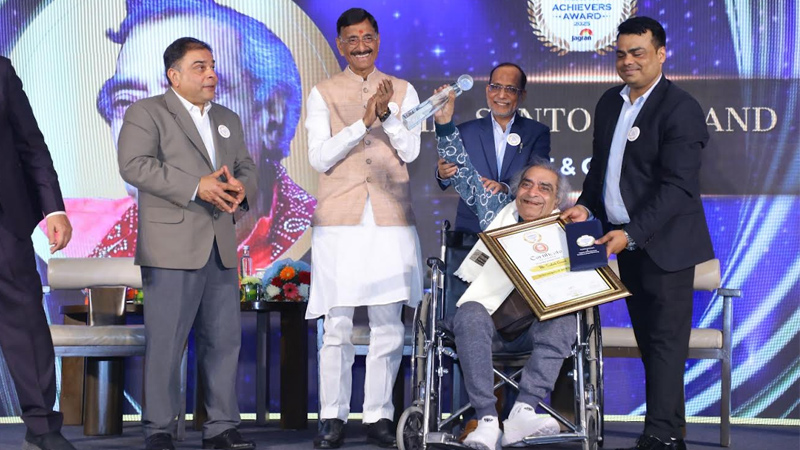
NEW DELHI: Hamdard Laboratories gathered a cross-section of India’s achievers in New Delhi on Friday, handing out the Hakeem Abdul Hameed Excellence Awards to figures who have left their mark across healthcare, education, sport, public service and the arts.
The ceremony, attended by minister of state for defence Sanjay Seth and senior officials from the ministry of Ayush, celebrated individuals whose work blends professional success with a sense of public purpose. It was as much a roll call of achievement as it was a reminder that influence is not measured only in profits or podiums, but in people reached and lives improved.
Among the headline awardees was Alakh Pandey, founder and chief executive of PhysicsWallah, recognised for turning affordable digital learning into a mass movement. On the sporting front, Arjuna Awardee and kabaddi player Sakshi Puniya was honoured for her contribution to the game and for pushing women’s participation onto bigger stages.
The cultural spotlight fell on veteran lyricist and poet Santosh Anand, whose songs have echoed across generations of Hindi cinema. At 97, Anand accepted the honour with characteristic humility, reflecting on a life shaped by perseverance and hope.
Healthcare honours spanned both modern and traditional systems. Manoj N. Nesari was recognised for strengthening Ayurveda’s place in national and global health frameworks. Padma shri Mohammed Abdul Waheed was honoured for his research-backed work in Unani medicine, while padma shri Mohsin Wali received recognition for his long-standing contribution to patient-centred care.
Education and social development also featured prominently. Padma shri Zahir Ishaq Kazi was honoured for decades of work in education, while former Meghalaya superintendent of Police T. C. Chacko was recognised for public service. Goonj founder Anshu Gupta received an award for his dignity-centred rural development initiatives, and the Hunar Shakti Foundation was honoured for empowering women and young girls through skill development.
The Lifetime Achievement Award went to former IAS officer Shailaja Chandra for her long career in public healthcare and governance, particularly in the traditional systems under Ayush.
Speaking at the event, Hamdard chairman Abdul Majeed said the awards were a tribute to those who combine excellence with empathy. “These awardees reflect Hakeem Sahib’s belief that healthcare, education and public service must ultimately serve humanity,” he said.
Minister Seth struck a forward-looking note, saying India’s young population gives the country a unique opportunity to become a global destination for learning, health and wellness by 2047.
The ceremony also featured the trailer launch of Unani Ki Kahaani, an upcoming documentary starring actor Jim Sarbh, set to premiere on Discovery on 11 February.
Instituted in memory of Unani scholar and educationist Hakeem Abdul Hameed, the awards have grown into a national platform that celebrates those building a more inclusive and resilient India. For one evening at least, the spotlight was not just on success, but on service with substance.