iWorld
Spain to ban social media for under-16s to protect young users

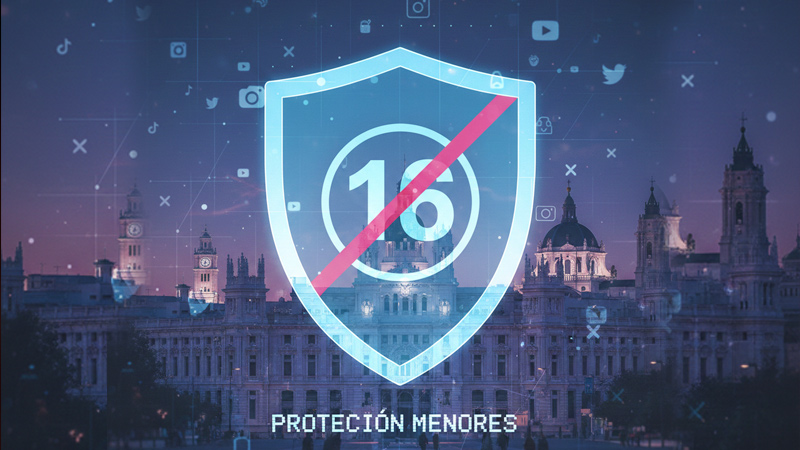
MADRID: The Spanish government is preparing to hit the block button on social media for anyone under the age of 16. In a move that has sent shockwaves through Silicon Valley, prime minister Pedro Sánchez announced today that Spain is finished with the “Digital wild west” and is ready to enforce some strict digital discipline.
The proposed law aims to transform the way teenagers interact with the internet. Rather than simply ticking a box to pinky-promise they are old enough, young users will face “real barriers” to entry. This means tech giants will be forced to implement robust age-verification systems, likely involving digital IDs or facial scanning, to ensure that 13-year-olds aren’t scrolling through TikTok until the early hours.
While the ban itself is a headline-grabber, the real sting is in the tail for tech moguls. Under this new legislation, social media executives could face personal criminal liability. If a platform persistently fails to scrub illegal content or uses “addictive” algorithms to hook kids, the bosses themselves could be looking at more than just a PR crisis; they could be looking at a prison cell.

Sánchez argued that the current system is a “failed state” where minors are exposed to everything from body-image issues to non-consensual deepfakes. By making tech titans legally responsible for the “digital toxicity” they host, Spain hopes to force a total reboot of how these apps are designed.
Spain isn’t acting as a lone wolf. They are leading a group of six European nations, nicknamed the “Coalition of the digitally willing,” to create a unified front against big tech. With France and Denmark already eyeing similar age caps, the era of the “unrestricted scroll” for European youngsters appears to be reaching its final chapter.
The legislation is expected to move through the Spanish Parliament as early as next week. While teenagers across the country may be mourning their disappearing follower counts, the government is betting that a little less screen time will lead to a lot more peace of mind.







iWorld
Meta warns 200 users after fake Whatsapp spyware attack
Italy-targeted campaign used unofficial app to deploy surveillance spyware.

MUMBAI: It looked like a message, but it behaved like a mole. Meta has warned around 200 users most of them in Italy after uncovering a targeted spyware campaign that weaponised a fake version of WhatsApp to infiltrate devices. The attack, first reported by Agenzia Nazionale Stampa Associata, relied on classic social engineering with a modern twist: persuading users to download an unofficial WhatsApp clone embedded with surveillance software. The malicious application, believed to be developed by Italian firm SIO through its subsidiary ASIGINT, was designed to mimic the real app closely enough to bypass suspicion.
Meta’s security teams identified roughly 200 individuals who may have installed the compromised version, triggering immediate countermeasures. Affected users were logged out of their accounts and issued alerts warning of potential privacy breaches, with the company describing the incident as a “targeted social engineering attempt” aimed at gaining device-level access.
The malicious app was not distributed via official app stores but circulated through third-party channels, where it was presented as a legitimate WhatsApp alternative. Once installed, it reportedly allowed external operators to access sensitive data stored on the device turning a simple download into a potential surveillance gateway.
According to Techcrunch, Meta is now preparing legal action against the spyware developers to curb further misuse. The company, however, has not disclosed details about the specific individuals targeted or the extent of data compromised.
A Whatsapp spokesperson reiterated that user safety remains the top priority, particularly for those misled into installing the fake iOS application. Meanwhile, reports from La Repubblica suggest the spyware may be linked to “Spyrtacus”, a strain previously associated with Android-based attacks that could intercept calls, activate microphones and even access cameras.
The episode underscores a growing reality in the digital age, the threat is no longer just what you download, but where you download it from. As unofficial apps become increasingly convincing, the line between communication tool and covert surveillance is getting harder to spot and far easier to exploit.






