News Broadcasting
South Indian producers intensify stir against DD

MUMBAI: Independent producers affiliated to Doordarshan (DD) kendras in Thiruvanthapuram, Hyderabad and Chennai are scheduled to join the stir started by the Bangalore producers – who have bought airtime and are involved in marketing programmes on Doordarshan (DD) Bangalore – ten days ago.
While the Banglore producers stopped providing content to DD since 12 September, their counterparts in Thiruvanthapuram, Hyderabad and Chennai plan to join the strike from Thursday, Friday and next Monday respectively.
The stir is being spearheaded by the South Indian DD Producers Association. According to the association’s spokesperson Shivanandan, a delegation had met the Prasar Bharati CEO KS Sarma last fortnight and given a charter of demands.

Their demands were as follows:
* Prasar Bharati should take a decision to sort out the issue of service tax. At present, Prasar Bharati is insisting that the producers should pay the same as most of the major clients have declined to pay the tax.
* Prasar Bharati’s marketing division should stop selling slots on programmes that have already been allocated to the private independent producers. There have been cases wherein the Prasar Bharati marketing team has directly given special rates to major clients like Life Insurance Corporation of India for programmes that have been marketed by private producers.
* Prasar Bharati and DD officials must smoothen the process of extensions for dailies and weeklies. The present system of three-month or six-month extensions, should be replaced by one-year extensions.
* DD should allow all independent producers to ‘bank the seconds’ of programmes that aren’t doing too well on those programmes that are doing well.
* Lastly, there should be clarity on DD-Metro turning into DD News.
According to Shivanandan, Sarma has not concede to any of the five demands. Speaking to indiantelevision.com, Shivanandan said, “We have made up our mind to continue the stir indefinitely – till our demands are fulfilled. We are also trying to meet the central union minister of urban development Anant Kumar on Wednesday and the Karnataka CM SM Krishna on Thursday to discuss our demands.”
Shivanandan was resolute that unless the government complies, they won’t air their shows on DD and not allow any other producer to do so.
However, DD Bangalore director Venkatesh Sherval, said, “The present status is that the producers have discontinued their programmes. But we have not yet taken a decision regarding their demands.”
In Mumbai, Universal Communications’ MD Padmakar Nandekar confirmed that he was part of the delegation that met Sarma and other officials earlier this month.
“We feel that the issue should be sorted out amicably as it would be in the best interests of the national broadcaster and the independent producers who always supported DD,” Nandekar added, while claiming that he is heading to Tiruvanandapuram to address a meeting of the South Indian producers.






News Broadcasting
CNN-News18 to host Fury in the Gulf conclave on West Asia crisis
Three-hour summit to unpack geopolitical fallout and impact on India
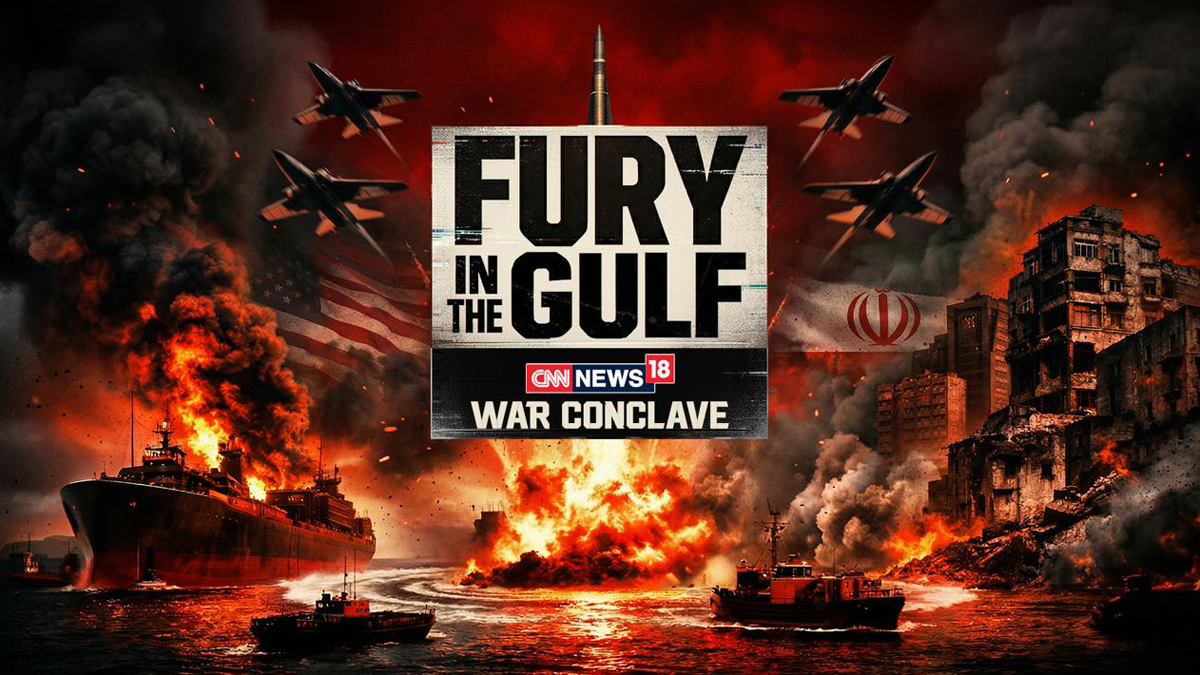
MUMBAI: CNN-News18 is set to host a special three-hour broadcast, Fury in the Gulf – War Conclave, on April 7, aiming to decode the escalating West Asia crisis and its far-reaching implications for India.
Scheduled from 4:00 PM to 7:00 PM, the conclave comes at a time when tensions between Iran and the United States are reshaping global geopolitics and triggering economic uncertainty. With India’s deep energy ties, trade links and large diaspora in the Gulf, the developments carry significant domestic relevance.
Built around the theme ‘Conflict, Consequences, and The Future,’ the programme will feature six curated sessions combining one-on-one interviews and panel discussions. The focus is to cut through the clutter and offer viewers a clearer understanding of the fast-evolving situation.
Key sessions include ‘Diplomacy in Times of War’ featuring Shashi Tharoor, and ‘World After the Iran Conflict’ with voices such as Ram Madhav, Reuven Azar, representatives from the European Union and the Iranian Deputy Envoy. Another session titled ‘Another Dunkirk?’ will bring together K. J. S. Dhillon and Jitin Prasada among others.
CNN-News18 editorial affairs director Rahul Shivshankar said, “In times of war, clarity becomes the most powerful tool. Fury in the Gulf – War Conclave brings together credible voices to address the questions and confusion that arise amid an overwhelming influx of information.”
He added that the initiative is aimed at delivering “facts, perspective, and insight” at a time when misinformation can easily cloud public understanding.
Echoing the sentiment, CNN-News18 CEO– English and business news Smriti Mehra said the conflict marks a defining global moment, with consequences that extend well beyond the region. She noted that the conclave seeks to present the crisis with “depth, nuance and responsibility” so audiences can better grasp its real-world impact.
As geopolitical tensions continue to dominate headlines, the conclave positions itself as an attempt to bring order to the noise, offering viewers a structured, insight-led look at a complex and rapidly shifting global situation.






