News Headline
Sony-Zee merger marks the start of consolidation in the TV industry: Ashish Bhasin


Mumbai: Recently, the shareholders of Zee Entertainment Enterprises (ZEEL) gave their approval for the proposed merger with Sony. RD&X Network co-founder & chairman Ashish Bhasin feels that this is the first step of consolidation in the TV industry.
“I think that in the coming three to five years you will see more major players being born through consolidation with deeper pockets and more muscle. They will join Disney-Star India, Sony-Zee, Warner Bros. Discovery and others. On OTT as well, there will certainly be consolidation. OTT will run through a similar cycle to TV. TV saw lots of smaller players. Now consolidation is happening. In OTT, I expect something similar, though, with a lag in the timeline. Furthermore, as 5G expands and consumers begin to cut the cord, the line between what is TV and what is OTT will blur. I am certain that consolidation will be the rule. All the big players will look for more and more consolidation opportunities.”
He further pointed out that mediums that do not go in for consolidation will always struggle. He gives the outdoor industry as an example. “The strength to invest is not there. Bettering the quality of the medium will not happen till there are fewer but larger, consolidated players, with a longer-term vision. Not consolidating will be a handicap for the medium. Print is reasonably consolidated in some ways. And print is slightly different as many organisations have a long history. Some were set up before our independence. It plays a role that is beyond commercial. So the journey there will be different. But apart from print, consolidation will be important moving forward in every medium.”

Talking about the ramifications of the Sony-Zee merger, he noted that this is the beginning of consolidation in the Indian TV industry. “There will be fewer, bigger, consolidated players. The reason for this is that content is becoming more and more expensive in games. Distribution does not come easy and cheap. The Sony-Zee merger is probably the first step towards that. Consolidation will happen across genres and languages.” He added that there are many regional channels and smaller channels that may be acquired. Also, with OTT becoming important, there is scope for better consolidation there and with digital in general.
A larger player means more content investment, which will have a positive impact on ad revenue growth. “A very strong entity will be created. Between the two of them, excluding sports, they have a market share of closer to 25 per cent. That gives them the opportunity to get better content. This will also result in better distribution. If that happens, viewership will improve and so will ad revenues. Ultimately, ad revenues are a function of supply and demand. If they create stickiness through better content, then ad revenues will also go up. Zee and Sony are very experienced players. So together they will become an even more formidable combination.”
He agrees that they will get better bargaining power both on the content side and the advertising side. Furthermore, they can engage in more innovations and experiments. “But it is not just about power. There will be a combination of many benefits. They will be able to do better, bigger packages, deals across genres.” He also noted that stronger consolidated players can result in better deals and gave the example of cricket rights being sold for a huge upside (IPL, ICC).
On the OTT front, he believes that the merger provides the entity with a greater opportunity to acquire better content. “A merger of this size will give clout in multiple areas, not just in one silo.” In terms of cultural synergy, he noted that in any merger and acquisition, one of the key targets is how do you integrate? Culture is a key part. “Acquiring organisations are geared up to make sure that this area is addressed. Each organisation has a different DNA. The challenge of the leadership is retaining the essence of the DNA while at the same time getting them to work in one direction. This is an on-going exercise. I am sure that Sony-Zee have already thought of it and they already have a plan.”
Speaking about the Warner Bros.-Discovery merger, he said that it is important to measure potential impact not against the universe but within the niche that it is playing within. “Every merger handled well has a positive impact. If an advertiser only targets kids and the merger creates a big leader, say in kids, then it is a very different scenario for both the entity and that advertiser.”






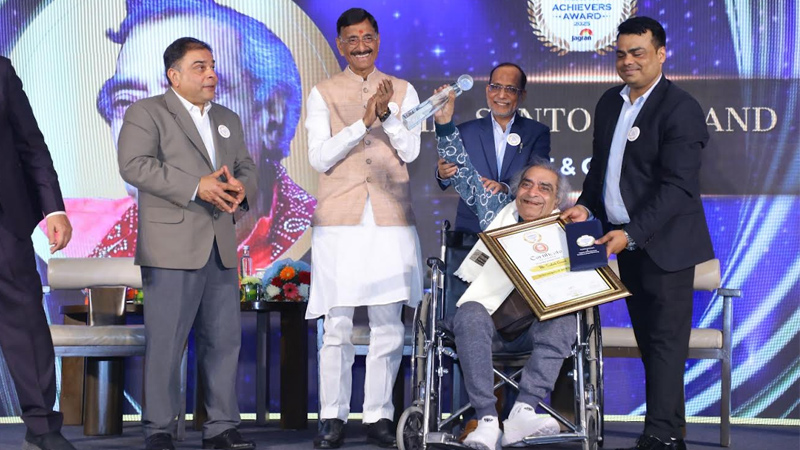
NEW DELHI: Hamdard Laboratories gathered a cross-section of India’s achievers in New Delhi on Friday, handing out the Hakeem Abdul Hameed Excellence Awards to figures who have left their mark across healthcare, education, sport, public service and the arts.
The ceremony, attended by minister of state for defence Sanjay Seth and senior officials from the ministry of Ayush, celebrated individuals whose work blends professional success with a sense of public purpose. It was as much a roll call of achievement as it was a reminder that influence is not measured only in profits or podiums, but in people reached and lives improved.
Among the headline awardees was Alakh Pandey, founder and chief executive of PhysicsWallah, recognised for turning affordable digital learning into a mass movement. On the sporting front, Arjuna Awardee and kabaddi player Sakshi Puniya was honoured for her contribution to the game and for pushing women’s participation onto bigger stages.
The cultural spotlight fell on veteran lyricist and poet Santosh Anand, whose songs have echoed across generations of Hindi cinema. At 97, Anand accepted the honour with characteristic humility, reflecting on a life shaped by perseverance and hope.
Healthcare honours spanned both modern and traditional systems. Manoj N. Nesari was recognised for strengthening Ayurveda’s place in national and global health frameworks. Padma shri Mohammed Abdul Waheed was honoured for his research-backed work in Unani medicine, while padma shri Mohsin Wali received recognition for his long-standing contribution to patient-centred care.
Education and social development also featured prominently. Padma shri Zahir Ishaq Kazi was honoured for decades of work in education, while former Meghalaya superintendent of Police T. C. Chacko was recognised for public service. Goonj founder Anshu Gupta received an award for his dignity-centred rural development initiatives, and the Hunar Shakti Foundation was honoured for empowering women and young girls through skill development.
The Lifetime Achievement Award went to former IAS officer Shailaja Chandra for her long career in public healthcare and governance, particularly in the traditional systems under Ayush.
Speaking at the event, Hamdard chairman Abdul Majeed said the awards were a tribute to those who combine excellence with empathy. “These awardees reflect Hakeem Sahib’s belief that healthcare, education and public service must ultimately serve humanity,” he said.
Minister Seth struck a forward-looking note, saying India’s young population gives the country a unique opportunity to become a global destination for learning, health and wellness by 2047.
The ceremony also featured the trailer launch of Unani Ki Kahaani, an upcoming documentary starring actor Jim Sarbh, set to premiere on Discovery on 11 February.
Instituted in memory of Unani scholar and educationist Hakeem Abdul Hameed, the awards have grown into a national platform that celebrates those building a more inclusive and resilient India. For one evening at least, the spotlight was not just on success, but on service with substance.






