Cable TV
Sony shakes up domestic, intl TV ops


MUMBAI: As Sony prepares to seal the deal on its $4.8 billion acquisition of MGM, Sony Pictures Entertainment (SPE) has realigned its domestic and international television operations.
This sector is expected to become more important to the studio as it seeks to mine the wealth of its vastly expanded film library of 7,500-plus titles.
The restructuring will be done under Sony Pictures Television (SPT) president Steve Mosko and Sony Pictures Television International (SPTI) president Michael Grindon. Both report to SPE chairmann and CEO Michael Lynton, and SPE Motion Picture Group chairman Amy Pascal.

Mosko will continue to lead domestic TV production and distribution for network, cable and syndication markets. He will take on the added responsibilities for domestic pay TV. Grindon will continue to lead all international distribution for network, cable, pay and on-demand markets and will direct the company’s efforts in local-language TV production and international channels.
Lynton said, “By structuring our operations along these lines, it will allow both Steve and Michael to concentrate on the unique set of issues facing the TV market both here and abroad. Steve has done a tremendous job turning our domestic organisation around over the past several years. He has just signed a new three-year contract and adding pay TV to his portfolio only makes sense.
“On the international side, Michael has grown SPTI into a leader in international licensing, local language production and our worldwide TV networks, which continue to be key strategies in the company’s long-range commitment to the global marketplace. Michael will also lead SPE’s efforts in exploring new TV business and investment opportunities outside the US.”
Sony’s pay TV sales activities, including deals for pay-per-view and video-on-demand services, traditionally had been handled by the studio’s international TV division. Under the realignment, domestic pay TV activities will shift to the domestic Sony Pictures Television division headed by Mosko, while international pay TV sales will remain with SPTI under the direction of Grindon.
Mosko said, “We have spent the last three years taking this company from a point at which everyone was saying that Sony was getting out of the TV business entirely to now having (pilots) at every network this year. We are continuing to be aggressive in developing original programming for cable, and we’re committed to the first-run (syndication) business.
” It took time to get our house in order, but now, as the last independent studio left and with a wealth of great content, we’re going to be in a leadership position in terms of where this industry is going in the next 5-10 years.”







Cable TV
Hathway Cable appoints Gurjeev Singh Kapoor as CEO
Leadership change comes as cable TV faces shrinking subscriber base and modest earnings pressure
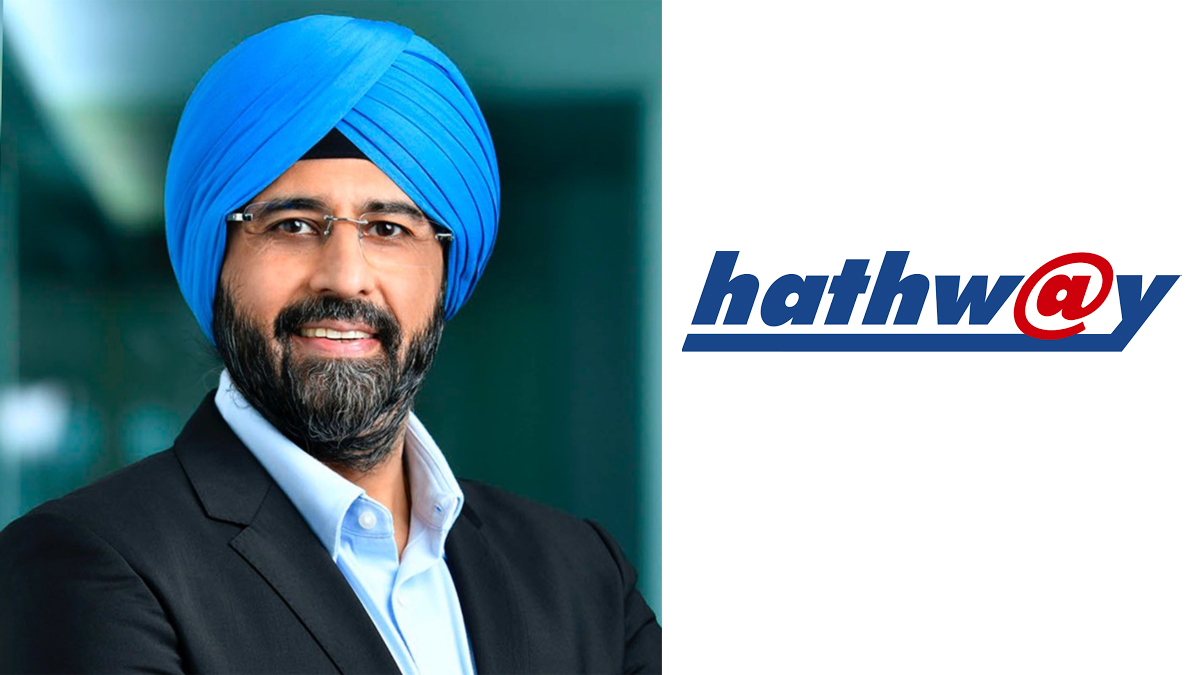
MUMBAI: Hathway Cable and Datacom has tapped industry veteran Gurjeev Singh Kapoor as chief executive officer, marking a leadership pivot at a time when India’s cable television business is under mounting strain.
Kapoor will take over from Tavinderjit Singh Panesar, who is set to retire in August after a long innings with the company. Panesar, chief executive since 2023, has held multiple leadership roles at Hathway, including his latest stint beginning in 2022.
Kapoor brings more than three decades of experience in media and entertainment. He most recently led distribution at The Walt Disney Company’s Star India business, now part of JioStar. His career spans television distribution and affiliate partnerships, with stints at Sony Pictures Networks India, Discovery Communications and Zee Entertainment.
Panesar, with over three decades in the industry, has worked across strategic planning, distribution and business development in media, broadcasting and manufacturing. His past associations include ESPN Star Sports, Star India, Apollo Tyres and JK Industries.
The transition lands as the cable sector grapples with structural disruption. Traditional operators are losing ground to streaming platforms, while telecom and broadband players tighten the squeeze with bundled offerings.
An EY report estimates India’s pay-TV base could shrink by a further 30 to 40 million households by 2030, taking the total down to 71 to 81 million. The slide follows a loss of nearly 40 million homes between 2018 and 2024, a contraction that has already wiped out more than 37,000 jobs in the local cable operator ecosystem.
Hathway’s numbers reflect the strain. The company reported a consolidated net profit of Rs 93 crore for FY25, down from Rs 99 crore a year earlier. Revenue inched up to Rs 2,040 crore from Rs 1,981 crore. As of December 2025, it had about 4.7 million cable TV subscribers and roughly 1.02 million broadband users.
Kapoor steps in with a familiar brief but a shrinking playbook. In a market where viewers are cutting cords faster than companies can reinvent them, the new chief executive inherits a business fighting to stay plugged in.






