Hindi
Sony releases 2012 line-up


MUMBAI: After ending 2011 on an encouraging note with the success of The Adventures of Tintin, Sony Pictures has announced the line-up for next year with five major franchises being brought back along with awaited films from directors of the likes of David Fincher and Quentin Tarantino.
The year begins with the already critically acclaimed and award-nominated The Girl with the Dragon Tattoo, the first of a trilogy starring Daniel Craig and Rooney Mara on 6 January, and ends with Quentin Tarantino‘s Django Unchained starring Leonardo DiCaprio on 28 December.
Said Sony Pictures India managing director Kercy Daruwala, “After completing 75 years as a studio in India, and ending this past year on a high with the tremendous success of The Adventures of Tintin, I can say without a doubt that the best is yet to come. 2012 has a dream line-up with five major franchises coming back. Together these franchises have made over Rs. 261 crore at the box office in India.”

The line-up includes the Will Smith and Tommy Lee Jones-starrer Men in Black 3 in 3D that will releases in May, The Amazing Spider-Man in 3D in July, Skyfall, the next film in the Bond franchise in November.
Also releasing would be the Kate Beckinsale-starrer Underworld: Awakening, the fourth installment of the Underworld series in 3D in January and Milla Jovovich‘s Resident Evil: Retribution in 3D in September.
Also in the line-up are a remake of 1991 blockbuster Total Recall (releasing worldwide in August), Adam Sandler‘s comedy I Hate You Dad, Premium Rush starring Joseph Gordon Levitt, The Vow starring Rachel McAdams, claymation comedy The Pirates! Band of Misfits, 3D animated film Hotel Transylvania and 21 Jump Streeti, a revival of the cult 80‘s TV serie,s now as a major motion picture.







Hindi
Zee5 and Applause Entertainment team up for whodunnit ‘Everybody Loves Sohrab Handa’
Rajat Kapoor directs star-studded murder mystery streaming from 10 April.
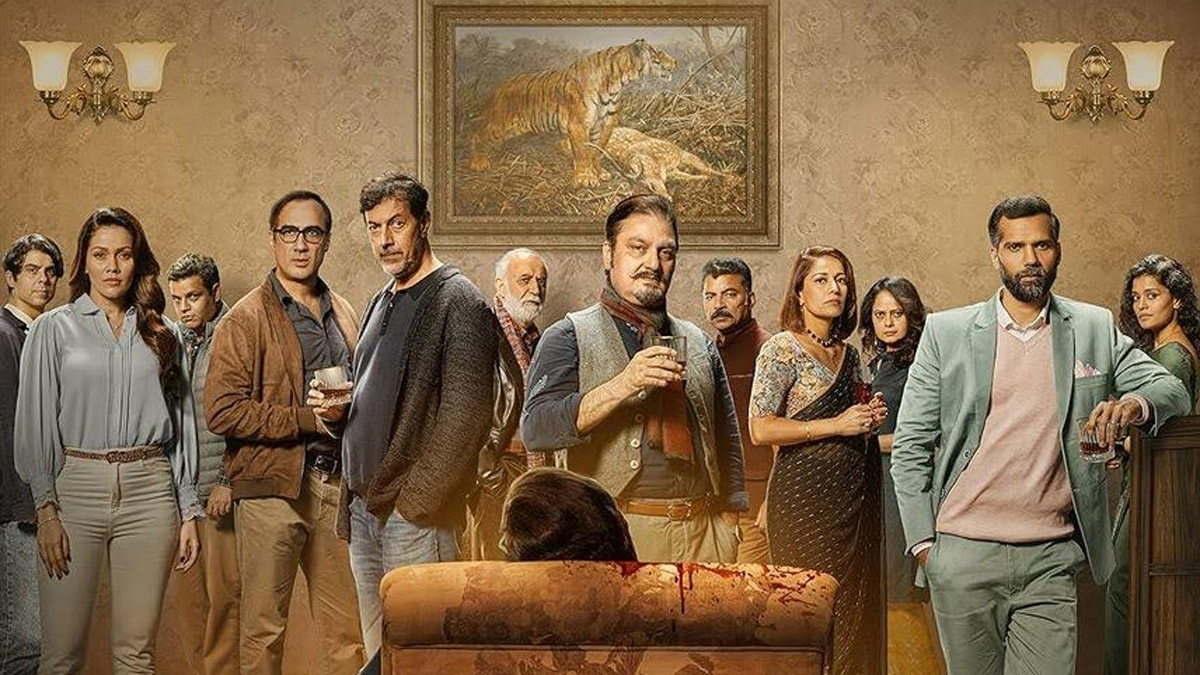
MUMBAI: Zee5 is serving up another killer collaboration and this time, the murder mystery comes with a generous side of dark humour and family dysfunction. The streaming platform has partnered with Applause Entertainment and Mithya Talkies to bring Everybody Loves Sohrab Handa, a fresh, twisted whodunnit written and directed by acclaimed filmmaker and actor Rajat Kapoor. The film will stream exclusively on Hindi Zee5 from 10 April.
The movie reimagines the classic murder mystery genre with a contemporary, darkly comic edge. It revolves around a group of friends and family who smile, drink, and celebrate together until the silence snaps and long-buried secrets spill out. The stellar ensemble cast includes Vinay Pathak, Ranvir Shorey, Waluscha De Sousa, Saurabh Shukla, Chandrachoor Rai, Neil Bhoopalam, Koel Purie, Palomi Ghosh, and Rajat Kapoor himself.
This latest offering continues the successful partnership between Zee5 and Applause Entertainment, which has previously delivered diverse hits such as Mithya, Bloody Brothers, and Jab Khuli Kitaab.
&TV Business Head of hindi Zee5 and chief channel officer Kaveri Das said, “Our collaboration with Applause Entertainment has consistently delivered distinct, high-impact storytelling. Everybody Loves Sohrab Handa is a natural progression, reinforcing our focus on genre-led content with a compelling whodunnit premise and a strong ensemble cast.”
Applause Entertainment business head for movies Sunil Chainani added, “This film adds yet another compelling layer to our slate with Rajat Kapoor’s unmistakable voice.”
Rajat Kapoor shared, “What interested me was not just the mechanics of a whodunnit, but the emotional violence that precedes physical violence. These are people who smile at each other, but there’s so much that is not said.”
The film promises razor-sharp writing, layered performances, and simmering tension, inviting viewers not just to solve the crime but to unravel the complex relationships at its heart.
If you love a good murder mystery served with wit and emotional depth, Everybody Loves Sohrab Handa looks set to be your next addictive watch. Mark your calendars, the whodunnit drops on Hindi Zee5 from 10 April.






