Hollywood
Sony & CFC partner for Chinese remake of ‘My Best Friend’s Wedding’


MUMBAI: Sony Pictures and China Film Co. (CFC) have joined hands to co-produce the Chinese remake of My Best Friend’s Wedding.
The film, slated for release in China on Valentine’s Day 2016, features Shu Qi, Feng Shaofen, Song Qian aka Chinese singer and actress Victoria Song and Ye Qing.

Sony’s original film, which released in 1997, starred Julia Roberts, Cameron Diaz, Dermot Mulroney and Rupert Everett.
Shooting will begin in late July this year in London, Italy and Beijing.
Alexi Tan will direct and produce the Chinese remake his company, Play Productions.
In the film, Journalists Gu Jia and Lin Ran have grown up together as best friends. One day, Lin Ran calls Gu Jia from the UK telling her that he is getting married to someone he only just met, a wealthy Chinese girl who has been studying in the UK, and asks Gu Jia to be his “best man.” Gu Jia finally realizes that she loves him, not just as a friend, and sets out for London a few days before the wedding determined to win him back.
Hong Jiu, Fu Linran and Alexi Tan wrote the script. Jiu has published several popular online novels including We Live Together.
“We are delighted to be collaborating with Columbia Pictures on this exciting remake of what has become an international comedy classic,” said China Film Co., Ltd executive Ling Hong.
Sony Pictures China head of production and strategic development Dede Nickerson added, “We are thrilled to be working with our partner China Film, Alexi and this incredible cast to create what is sure to be a hilarious and touching film for the Chinese audience.”
Columbia Pictures is also currently in post-production on director Chen Kaige’s dark comedy Monk Comes Down the Mountain starring Wang Baoqiang, Aaron Kwok, Chang Chen, Chiling Lin, VanNess Wu and Fan Wei, based on the novel of the same name by Xu Haofeng. The film is currently in post-production and scheduled for release on 3 July, 2015.
Sony has previously co-produced Kung Fu Hustle (2004) and Ang Lee’s Crouching Tiger, Hidden Dragon (2000).







Hollywood
Paramount eyes $24bn Gulf support to fund Warner Bros Discovery merger: Reports
Sovereign funds line up funding as media giants chase streaming scale
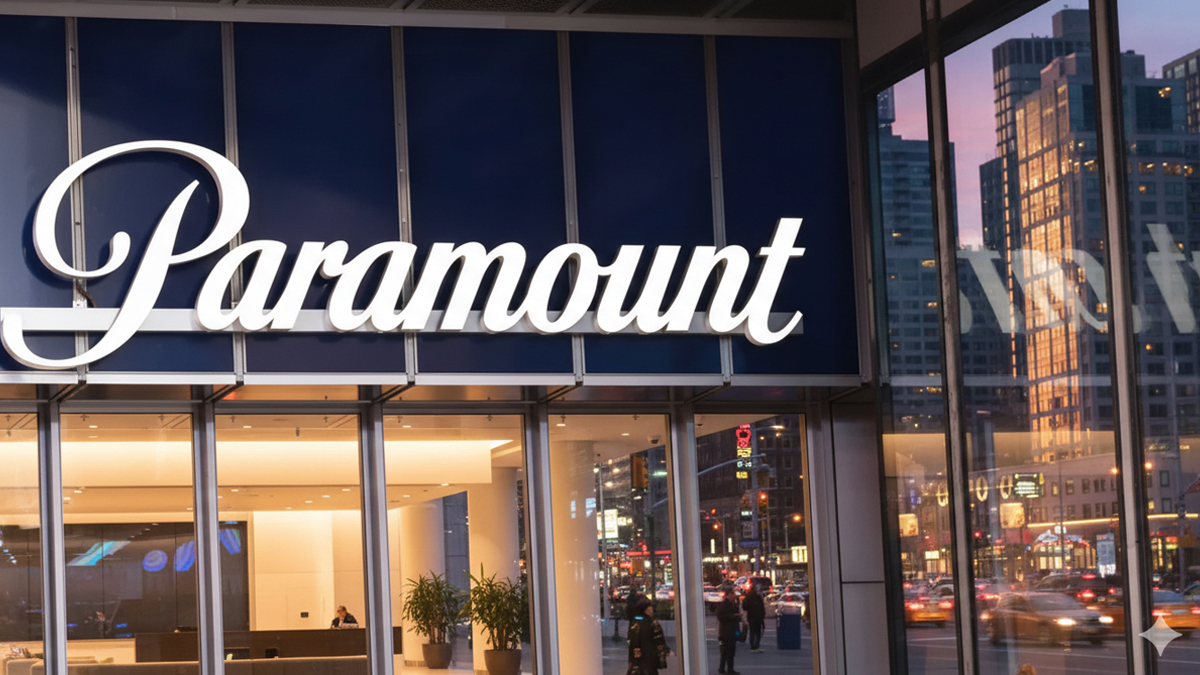
NEW YORK: Paramount Skydance is in talks to secure nearly $24 billion in equity commitments from Gulf sovereign wealth funds to support its planned takeover of Warner Bros. Discovery, according to a WSJ report.
The funding push comes as Paramount Skydance advances its proposed $110 billion deal for Warner Bros. Discovery, which carries an equity valuation of $81 billion and is expected to close in the third quarter of 2026.
At the heart of the financing plan are three major Gulf investors. Saudi Arabia’s Public Investment Fund is expected to contribute roughly $10 billion, while the Qatar Investment Authority and Abu Dhabi-based L’imad Holding are likely to make up the remainder.
Crucially, the proposed investments are structured as non-voting stakes. This means the Gulf backers would not have direct control in the combined entity, a move designed to ease regulatory concerns in the United States. Paramount executives reportedly do not expect the deal to trigger scrutiny from bodies such as the Committee on Foreign Investment in the United States or the Federal Communications Commission.
If completed, the merger would bring together a formidable portfolio of entertainment and news assets, including CNN and CBS. The combined entity aims to better compete in a fast-evolving media landscape where streaming platforms are steadily pulling audiences away from traditional television.
The deal reflects a broader shift in global media, where scale is increasingly seen as essential to survive the streaming wars. By pooling content libraries, technology and distribution, Paramount Skydance and Warner Bros. Discovery are betting on size and synergy to drive future growth.
The involvement of deep-pocketed Gulf investors also underscores the growing role of sovereign wealth in shaping global media consolidation, particularly at a time when high-value deals demand equally large financial backing.
With shareholder votes and regulatory milestones still ahead, the proposed tie-up remains one of the most closely watched media deals of the year. If it clears the final hurdles, it could redraw the competitive map of the global entertainment industry.






