News Broadcasting
Sony BBC Earth premieres ‘Seven Worlds, One Planet’ on 20 Jan


MUMBAI: India’s premium infotainment channel Sony BBC Earth is all set to premiere the much-anticipated series on biodiversity across the seven distinct continents – Seven Worlds, One Planet – on 20 January at 9PM. Narrated by the Godfather of Natural History – Sir David Attenborough – and set to a beautiful musical score by Hans Zimmer, the series will take viewers on an incredible 7-part journey revealing how each distinct continent has shaped the extraordinary animal behavior and biodiversity found there.
‘Seven Worlds, One Planet’ will premiere in English, Hindi, Tamil and Telugu and has attracted marquee advertisers including TATA Intra as the Co-presenting sponsor and Suhana and BYJU’S as the co-presenting sponsors. By telling unknown, unseen and unexpected wildlife stories, the series is set to uncover the fundamental truth about what makes each one of our seven worlds unique.
Rated 9.5 on IMDB and from the makers of Planet Earth II, ‘Seven Worlds, One Planet’ is shot over 4 years in 38 countries by a crew of over 1500 people worldwide and is the first time BBC Studio has explored all the planet’s continents in a single series. It not only celebrates the diversity of life on each of these continents, but also features the many challenges faced by animals in a modern world dominated by humanity.

Given the spectacular prowess of the content, the premiere was supported by an engaging and extensive on-ground and social media plan. Starting with the global premiere at the Royal Opera House, Mumbai, this was the first time that Sony BBC Earth was a part of a one-of-a-kind global launch. Over 400 students from select schools got a chance to be the first few in the world to not only witness the first episode of this much awaited series, but also interact with the talented crew including Sir David Attenborough.
While Royal Opera House screening was on invitation basis, Sony BBC Earth also hosted ‘open to all’ screenings of select episodes at various consumer touchpoints, to create excitement and chatter, leading to the big television premiere. In a category first move, the channel partnered with The Lil Flea, Mumbai – the city’s biggest flea market – and screened two episodes at the festival, creating a cozy, family-viewing experience. Additionally, The Lil Flea housed a thought-provoking art gallery with breath-taking visuals from each continent supported by the unheard stories that explain the diversity behind each continent.
The channel also joined hands with India Habitat Centre in Delhi and SOCIAL in Mumbai, Delhi, Bangalore and Pune to screen South America and Asia episodes for the patrons, before the Indian Television Premiere. SOCIAL event curated a special menu inspired from the seven continents which will be available across 23 outlets in 5 cities. The idea behind the menu is to celebrate the diversity of our world in one meal.
On social media, a robust 4-week promotion plan kickstarts with a LIVE interaction with Fredi Devas – Producer of the first episode: Antarctica, on the day of the episode premiere. Also, there’s something exciting planned for the premiere of each episode on 7 continents. Additionally, SPNI’s digital arm, Sony LIV will support the premiere by promoting it and premiering it on the app, same time as Sony BBC Earth premiere.



News Broadcasting
News18 India launches Command Centre war explainer with Arya
New show shifts from debates to decoding global conflicts and impacts
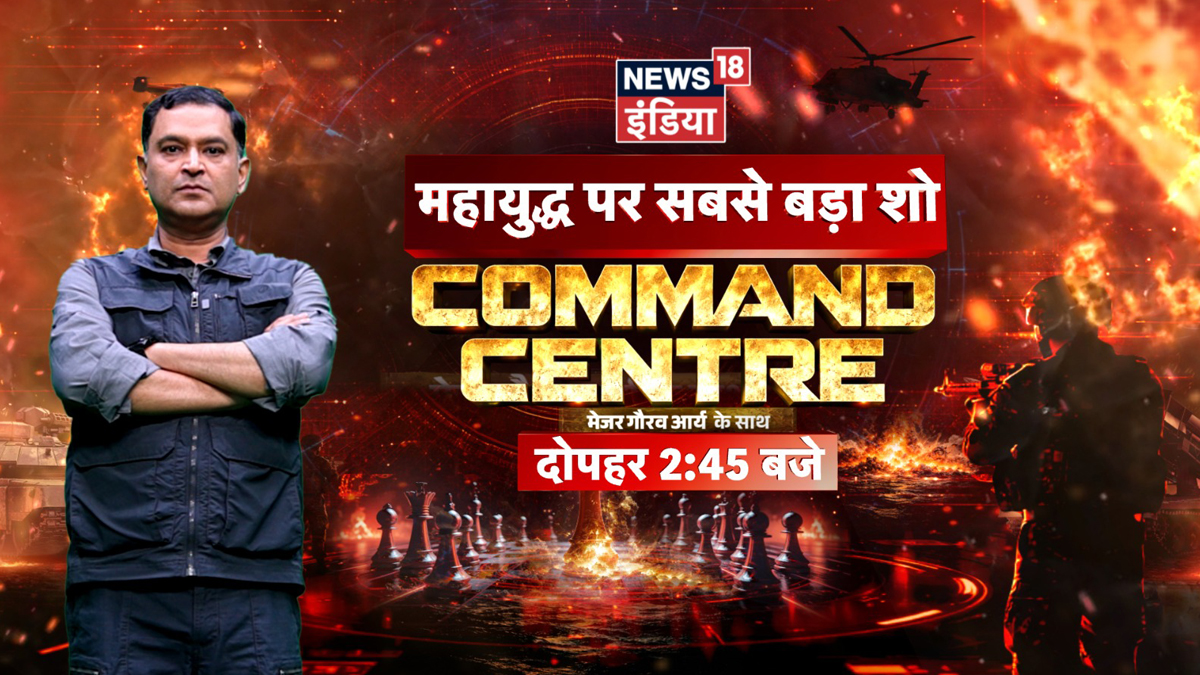
MUMBAI: News18 India has rolled out a new war-focused programme, Command Centre, featuring Gaurav Arya, as it looks to offer viewers a sharper, more grounded take on global conflicts amid rising tensions in West Asia.
Positioned as an “insider war room”, the show moves away from conventional panel debates and instead focuses on explaining military developments, decoding strategy and connecting global events to their everyday impact, from fuel prices to economic shifts.
The format leans heavily on visuals and data. The studio has been designed like a command hub, complete with large LED war maps, real-time graphics and an alert system to track developments as they unfold.
At the centre of it all is Arya, who brings his military background to simplify complex war strategies for viewers. His signature line, “Seedhi baat samjhiye”, anchors the show’s promise of clarity over noise.
News18 India managing editor Jyoti Kamal said, “Command Centre, featuring Major Gaurav Arya is designed to deliver accurate insights and a clear perspective on how evolving conflicts impact everyday life, from household budgets to national security. With expert voices analysing every development in real time, the show goes beyond headlines to decode what’s happening now, what it means, and what could come next.”
Echoing the intent, Gaurav Arya added, “In times of war, confusion is the biggest threat. With News18 India’s Command Centre, we are bringing viewers inside the war room, decoding strategies, tracking every escalation, and explaining, in the simplest terms, what it means for India and for every household. Seedhi baat samjhiye, this is where you understand not just what is happening, but what happens next.”
The weekday show will air in the afternoon slot and will also feature Gaurav Shukla, adding to its editorial depth.
With its mix of analysis, visuals and a clear focus on impact, the show reflects a broader shift in news consumption. Viewers are no longer just watching events unfold, they are looking to understand what those events mean for them.






