News Headline
Soccer World Cup viewing in Germany up 51 per cent


MUMBAI: Soccer’s governing body Fifa’s marketing agency Infront has been collating data for television audiences for the ongoing 2006 Fifa World Cup in Germany. And, it looks as if they are heading for the record books.
It is clear that Germany’s quest for a fourth Fifa World Cup title has glued the host nation to the television, with viewing figures ‘at home’ up 51 per cent percent on average over the previous tournament in 2002.
Meanwhile, from ‘overnight’ audience research in 45 key markets, a positive picture is emerging, with some surprising and significant trends. They are being collated by Sponsorship Intelligence, a UK-based research driven consultancy.

Germany’s first four matches scored a combined TV audience on German public service broadcasters ZDF and ARD of 87.6 million, which gives an average of 21.9 million per match, according to data provided by Sponsorship Intelligence. This compares with an average 14.5 million viewers who followed each of the first four matches in 2002. It is also up on France 1998 – staged in Europe in the same time zone – which makes a fairer comparison.
In 1998, the first four German games attracted a cumulative audience of 85.5 million, on average half a million viewers fewer per match than in 2006. Taking into consideration that huge public viewing is a feature of the 2006 event and not yet taken into account in these early figures, the total audience is likely to be much higher.
In Berlin, for example, police estimated that up to one million fans converged on the official Fan Fest public viewing venue in front of the Brandenburger Tor on Saturday to watch the host nation beat Sweden for a quarterfinal berth.
Also in Europe, the television rating for the live coverage of the Netherlands vs. Argentina match broadcast on NL2 was the highest of any broadcast so far. It achieved a rating of 52.5 per cent (TVR), an audience of 7.2 million viewers and a market share of 80.3 per cent.
In England, 16.3 million UK television viewers watched England’s first “sudden death” match against Ecuador, broadcast live by the BBC. The figure equated to a 79 per cent audience share. The game was the second-highest-rated match of the World Cup thus far in the UK after ITV’s coverage of the England vs. Sweden tie last Tuesday, which averaged 18.8 million viewers and peaked at 20.9 million.
Elsewhere, the international appeal of the tournament was illustrated by the fact that more people in China tuned into the England vs. Paraguay game than the entire populations of England and Paraguay. The match was broadcast in China on CCTV-5 at 9 pm in the evening, attracting 62.9 million viewers, with 22.3 per cent of China’s television viewers at that time choosing to watch the match.
In South Korea, the France vs. Korean Republic match was watched by 11.2 million in Korea, a TVR of 24.9 per cent, which is good considering the match was shown at 4 am. The rating is only 7.3 points behind the rating of 32.2 per cent by TF1 in France.
Brazil’s two opening matches attracted 60.5 million and 54.5 million respectively, both achieving a market share in the region of 90 per cent. The audience for Brazil’s match against Croatia was only 0.4 rating points short of the audience of 2002’s final match.
16.8 million Argentinean viewers watched the Argentina vs. Ivory Coast game, a market share of 93.6 per cent.
In the US, the Argentina-Mexico match broadcast on Univision was the most-watched sports telecast in the history of US Spanish-language television, with an average of 6.7 million viewers.







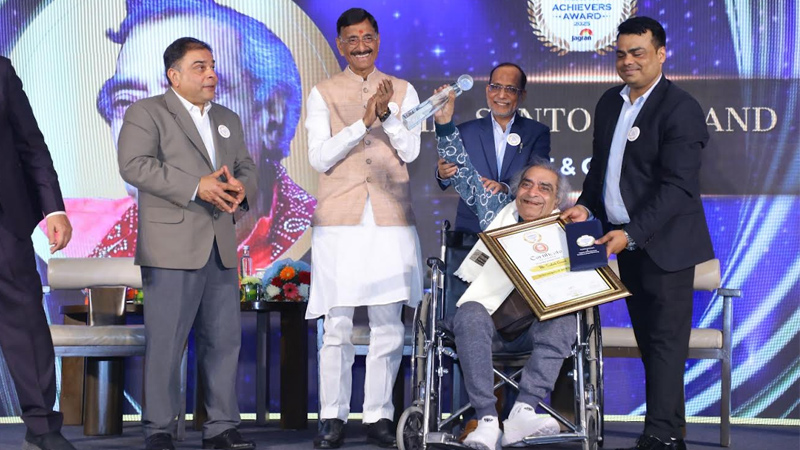
NEW DELHI: Hamdard Laboratories gathered a cross-section of India’s achievers in New Delhi on Friday, handing out the Hakeem Abdul Hameed Excellence Awards to figures who have left their mark across healthcare, education, sport, public service and the arts.
The ceremony, attended by minister of state for defence Sanjay Seth and senior officials from the ministry of Ayush, celebrated individuals whose work blends professional success with a sense of public purpose. It was as much a roll call of achievement as it was a reminder that influence is not measured only in profits or podiums, but in people reached and lives improved.
Among the headline awardees was Alakh Pandey, founder and chief executive of PhysicsWallah, recognised for turning affordable digital learning into a mass movement. On the sporting front, Arjuna Awardee and kabaddi player Sakshi Puniya was honoured for her contribution to the game and for pushing women’s participation onto bigger stages.
The cultural spotlight fell on veteran lyricist and poet Santosh Anand, whose songs have echoed across generations of Hindi cinema. At 97, Anand accepted the honour with characteristic humility, reflecting on a life shaped by perseverance and hope.
Healthcare honours spanned both modern and traditional systems. Manoj N. Nesari was recognised for strengthening Ayurveda’s place in national and global health frameworks. Padma shri Mohammed Abdul Waheed was honoured for his research-backed work in Unani medicine, while padma shri Mohsin Wali received recognition for his long-standing contribution to patient-centred care.
Education and social development also featured prominently. Padma shri Zahir Ishaq Kazi was honoured for decades of work in education, while former Meghalaya superintendent of Police T. C. Chacko was recognised for public service. Goonj founder Anshu Gupta received an award for his dignity-centred rural development initiatives, and the Hunar Shakti Foundation was honoured for empowering women and young girls through skill development.
The Lifetime Achievement Award went to former IAS officer Shailaja Chandra for her long career in public healthcare and governance, particularly in the traditional systems under Ayush.
Speaking at the event, Hamdard chairman Abdul Majeed said the awards were a tribute to those who combine excellence with empathy. “These awardees reflect Hakeem Sahib’s belief that healthcare, education and public service must ultimately serve humanity,” he said.
Minister Seth struck a forward-looking note, saying India’s young population gives the country a unique opportunity to become a global destination for learning, health and wellness by 2047.
The ceremony also featured the trailer launch of Unani Ki Kahaani, an upcoming documentary starring actor Jim Sarbh, set to premiere on Discovery on 11 February.
Instituted in memory of Unani scholar and educationist Hakeem Abdul Hameed, the awards have grown into a national platform that celebrates those building a more inclusive and resilient India. For one evening at least, the spotlight was not just on success, but on service with substance.






