Hollywood
Sixteen new European films at European Panorama festival in New York

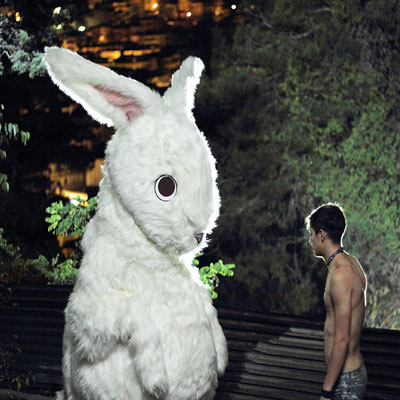
NEW DELHI: Sixteen new feature films are being screened at the ongoing Panorama Europe 2015 in New York, the seventh edition of new European cinema (formerly known as Disappearing Act).
Presented by Museum of the Moving Image and the European Union National Institutes for Culture (EUNIC), the Festival commenced at the Museum and the Bohemian National Hall on 29 May and will conclude on 14 June.

The festival includes films from Austria, Belgium, Croatia, Czech Republic, Estonia, France, Germany, Greece, Hungary, Lithuania, Slovenia, and Spain.
The Closing Night film is Bas Devos’s award-winning VioIet (Belgium, 2014), which is screened as part of this year’s New Directors/New Films series. The screening will be preceded by live music by the Flemish band St. Grandson in the Museum’s courtyard and followed by a reception.
“This year’s Panorama Europe lineup is exceptional,” said Chief Curator David Schwartz, who programmed the festival. “Many of the films are fascinated with questions of identity and history, on both personal and national levels. And this year, many films use humor, often dark, to explore their subjects.”
The festival continues its mission of showcasing the best in European filmmaking by introducing a wide-ranging selection of contemporary cinema in varying genres that cover many current social and cultural themes. Panorama Europe offers New York audiences what may be their only chance to see these acclaimed films on the big screen.
Some of the highlights of this year’s edition include Petr Václav’s 2015 Czech Lion best film The Way Out, Panos H. Koutras’s multiple award-winning Xenia (Greece), Virág Zomborácz’s Afterlife (Hungary), Ignas Jonynas’s The Gambler (Lithuania), with star Oona Mekas attending, and Breathe (Respire) (France), the sophomore feature directed by the actress Mélanie Laurent (Inglorious Basterds, Beginners).
The festival Board, headed by Kristýna Milde and chaired by the Czech Center, is comprised of the Austrian Cultural Forum, the Czech Center, the Delegation of the European Union to the United Nations, the Cultural Services of the French Embassy, Goethe-Institut New York, the Hungarian Cultural Center, the Italian Cultural Institute, the Onassis Foundation (USA) and Consulate General of Greece, and the Polish Cultural Institute New York.
Additionally, festival partners include the Albanian Institute, the Arte Institute, the Consulate General of the Republic of Croatia and Croatian Audiovisual Centre, the Consulate General of Estonia, the Consulate General of Spain, the Embassy of the Republic of Lithuania, the General Representation of the Government of Flanders to the U.S., the Embassy of the Republic of Slovenia and Slovenian Film Centre, and Instituto Cervantes.

Hollywood
Remembering Chuck Norris: the man, the myth, the legend at 86
From martial arts legend to internet folklore, fans honour his final level up
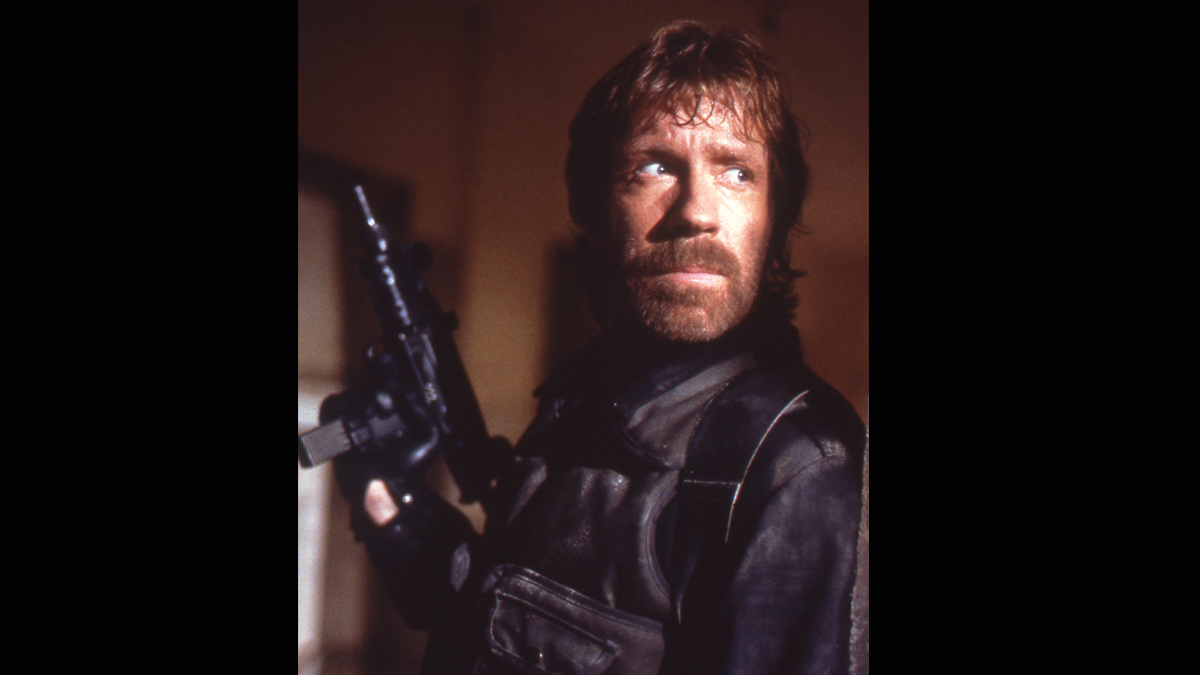
KAUAI: The world lost a legend on 19 March 2026, when Chuck Norris died aged 86. For a man long treated as immortal in internet folklore, the news felt almost unreal. Yet in true Norris fashion, the farewell has been less about mourning and more about myth-making.
Just days before his passing, on his 86th birthday, Norris shared a video from Kauaʻi, Hawaii, showing him sparring under the sun. His caption was characteristically wry: “I don’t age. I level up.” It now reads like a final wink to fans who had spent years elevating him to near-superhuman status.
His death followed a sudden medical emergency while on holiday. He passed away peacefully, surrounded by family, who described him not just as a global symbol of strength, but as a devoted husband, father and grandfather.
Online, grief quickly gave way to tribute in the language Norris helped popularise. Social media filled with one last wave of “Chuck Norris Facts”, the tongue-in-cheek myths that turned him into a digital demigod. The jokes wrote themselves, as always. Death did not take Norris, it finally dared to meet him.
Behind the humour, however, lies a formidable real-world legacy.
Long before the memes, Norris was Carlos Ray Norris, a decorated martial artist. After serving in the US Air Force, he rose to become a six-time world professional middleweight karate champion. His on-screen duel with Bruce Lee in Way of the Dragon remains one of cinema’s most iconic fight sequences.
Through the 1980s, he became the face of action cinema with films such as Missing in Action and The Delta Force, embodying a stoic, no-nonsense hero. In the 1990s, he reached living rooms worldwide as Cordell Walker in Walker, Texas Ranger, blending Western grit with martial arts flair.
Off-screen, his work carried equal weight. His foundation, Kickstart Kids, continues to teach martial arts to at-risk youth, focusing on discipline and self-worth. He also founded Chun Kuk Do, a martial arts system that trained thousands.
What made Norris unique was not just his strength, but his willingness to laugh at it. When the internet transformed him into an exaggerated symbol of invincibility, he embraced the joke. In doing so, he bridged generations, from cinema-goers to meme-makers.
His passing marks more than the loss of an action star. It signals the fading of a rare cultural crossover, where genuine athletic prowess met Hollywood heroism and early internet humour.
For many, remembering Chuck Norris means recalling a time when heroes were simple, punches were decisive and the internet still felt like a playground of shared jokes.
And if the myths are to be believed, this is not quite the end. It is simply Chuck Norris moving on to his next level.