News Headline
Similarities in urban rural consumer behaviour discussed at seminar

MUMBAI: One of the sessions at the ongoing Rural Marketing Summit being organised by Ficci looked at rural consumer behaviour. The session shed light on the fact that rural folk are not that different from their urban counterparts when it comes ot choice of products.
P&G India chairman Bharat Patel who chaired the
session argued that the rural consumer should not be
treated as someone quite different from his urban
counterpart. “For instance television is just as effective an advertising means to reach them as it is in the
cities. The notion that rural people watch Aamchi
Mathi Aamchi Manse (a DD show) is wrong. What
marketers should also understand is that the wholesale
system can be very effective in reaching the rural
consumer.
“However one difference is that in rural areas men
have more power in purchase decisions. Also they buy much more on a daily basis on account of their daily wages.”

Pepsico India director Westen region Praveen Someshwar too spoke about the power of television as a marketing vehicle. “40 per cent of the rural population spends their leisure time in front of the TV. They watch films on TV once a week. Also the recall for brand ambassadors is as high in rural areas as it is in Urban. Amitabh Bhachchan has a recall of 83 per cent.
“Sachin has a recall value of 80 per cent. When we
launched our 200 ml product we used hoardings and
banners to get the message across. This was supported by TVCs. The result was a shift in perception about cold drinks. From being an expensive value proposition our product as seen as being reasonably priced.
AC Nielsen ORG Marg India executive director – retail measurement service Sujit Dasmunshi pointed out that in one out of four rural households the child is the most educated member. Therefore marketers would do well to keep an eye on the upcoming generation, which will harbour aspirational needs.
Quoting NRS data he said that 30 per cent of rural households have television. Out of this 36 per cent have access to cable and satellite.
“When you look at the population base this is a huge
number. Also cricket is a great platform for
advertisers to reach the rural masses especially in
the North and West.”
According to him one of the myths surrounding rural
marketing is the fact that only sachets do well. “Jams
have a range from 12 grams to one kilo. In fact
sachets no longer are the biggest contributor to the
kitty of FMCGs. However that is not to say that sachets are passe. Also our research shows that national brands can do well in local areas. There are some categories where the share of the local brand is negligible.
“Products that are faring really well in rural areas
are Parle G, Lifebuoy, Lux, Nirma and Ghari. There is not much difference in product importance between
urban and rural areas. Toilet soaps come out on top in
both regions. Another myth is that attempting to reach
the rural population directly does not pay off. In the
case of Stay Free Sanitary ware they managed to
increase their share from 41-60 per cent by making
marginal improvements in the dealer network.”
Another session last evening dealt with how companies go about developing products for the rural market. Tata AIG Life Insurance director alternative channels Sudershan Banerjee said that the company used mobile vans to spread the message about their microinsurance services. “Our scheme focusses on livelihood generation through community enterprises. We created a film showing how a married woman benfits. 50,000 people have bought our scheme. We are trying to get women to spread the message.”



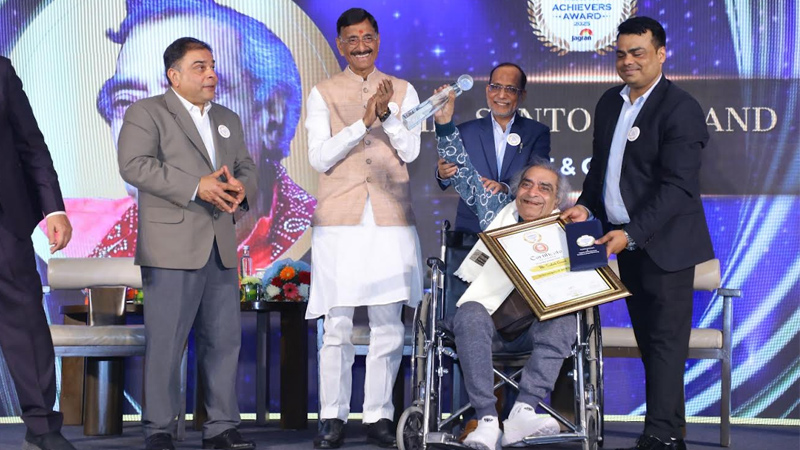
NEW DELHI: Hamdard Laboratories gathered a cross-section of India’s achievers in New Delhi on Friday, handing out the Hakeem Abdul Hameed Excellence Awards to figures who have left their mark across healthcare, education, sport, public service and the arts.
The ceremony, attended by minister of state for defence Sanjay Seth and senior officials from the ministry of Ayush, celebrated individuals whose work blends professional success with a sense of public purpose. It was as much a roll call of achievement as it was a reminder that influence is not measured only in profits or podiums, but in people reached and lives improved.
Among the headline awardees was Alakh Pandey, founder and chief executive of PhysicsWallah, recognised for turning affordable digital learning into a mass movement. On the sporting front, Arjuna Awardee and kabaddi player Sakshi Puniya was honoured for her contribution to the game and for pushing women’s participation onto bigger stages.
The cultural spotlight fell on veteran lyricist and poet Santosh Anand, whose songs have echoed across generations of Hindi cinema. At 97, Anand accepted the honour with characteristic humility, reflecting on a life shaped by perseverance and hope.
Healthcare honours spanned both modern and traditional systems. Manoj N. Nesari was recognised for strengthening Ayurveda’s place in national and global health frameworks. Padma shri Mohammed Abdul Waheed was honoured for his research-backed work in Unani medicine, while padma shri Mohsin Wali received recognition for his long-standing contribution to patient-centred care.
Education and social development also featured prominently. Padma shri Zahir Ishaq Kazi was honoured for decades of work in education, while former Meghalaya superintendent of Police T. C. Chacko was recognised for public service. Goonj founder Anshu Gupta received an award for his dignity-centred rural development initiatives, and the Hunar Shakti Foundation was honoured for empowering women and young girls through skill development.
The Lifetime Achievement Award went to former IAS officer Shailaja Chandra for her long career in public healthcare and governance, particularly in the traditional systems under Ayush.
Speaking at the event, Hamdard chairman Abdul Majeed said the awards were a tribute to those who combine excellence with empathy. “These awardees reflect Hakeem Sahib’s belief that healthcare, education and public service must ultimately serve humanity,” he said.
Minister Seth struck a forward-looking note, saying India’s young population gives the country a unique opportunity to become a global destination for learning, health and wellness by 2047.
The ceremony also featured the trailer launch of Unani Ki Kahaani, an upcoming documentary starring actor Jim Sarbh, set to premiere on Discovery on 11 February.
Instituted in memory of Unani scholar and educationist Hakeem Abdul Hameed, the awards have grown into a national platform that celebrates those building a more inclusive and resilient India. For one evening at least, the spotlight was not just on success, but on service with substance.