News Broadcasting
Sibal says some nations are indulging in cybercrime

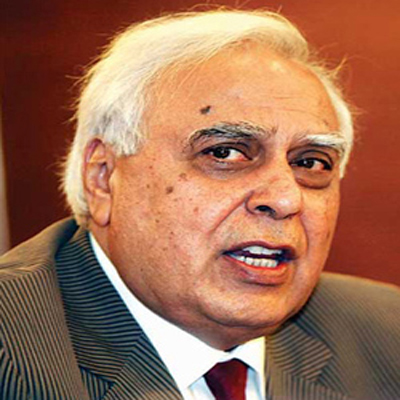
NEW DELHI: Communications and IT Minister Kapil Sibal says some nations are found to be indulging in cybercrime, or are employing individuals who are not directly linked to them for carrying out such practices.
Sibal said: “Now, what is happening today is that we know for a fact that nations have organised themselves to indulge in cyber crime. We know for a fact that they work sometimes through individuals far removed from them and from spaces that may not be even cited in their own country and part of the attack may come from somewhere else.”

Speaking at an IT-ITeS body Nasscom event here, the minister said that there is a need to create a global standard to fight cybercrime. “Now, the internet world today does not allow us to find where the attack came from and who attacked us, nor does it allow us to disclose the identity of the attackers. We need to develop global rules for that. We need a global accord for that and we then need a system of cyber justice,” he added.
Sibal said it is important to evolve rules so that internet freedom does not deteriorate into lawlessness. “So in that situation how do we evolve rules to deal with those issues? If we don’t do that we will have lawlessness. Freedom and lawlessness are two sides of the same coin. If freedom is not exercised with a sense of responsibility, then it results in lawlessness. So, freedom becomes its own enemy in the absence of accountability. It is a very dangerous proposition and we can’t let that happen,” he added.




News Broadcasting
Network18 channels lead YouTube news viewership in March 2026
CNN-News18, News18 India and CNBC channels top categories with record views

MUMBAI: When the world hit refresh on breaking news, Network18’s channels were already streaming ahead. As geopolitical tensions and war-driven headlines fuelled a surge in global news consumption, the network’s digital playbook delivered big clocking record Youtube viewership across English, Hindi and business news categories in March 2026.
At the forefront was CNN-News18, which emerged as the clear leader in the English news segment with 130 million live and video-on-demand views. The channel edged past competitors such as Times of India (126.5 million), Times Now (101.1 million), India Today (88.2 million) and NDTV (77.5 million), according to Databeings data for March.
In the Hindi news arena, News18 India delivered a commanding performance, racking up a staggering 3,297 million views on YouTube. The channel comfortably outpaced NDTV India, which recorded 3,119 million views, underlining its deep reach and consistent engagement with mass audiences, as per Playboard data.
The network’s dominance wasn’t confined to general news. In the Hindi business segment, CNBC Awaaz topped the charts with 92 million views, narrowly ahead of Zee Business (90 million) and well ahead of ET Now Swadesh (57 million). Meanwhile, its English counterpart CNBC-TV18 posted a strong 58 million views, reinforcing the network’s cross-category strength.
The spike in viewership reflects a broader shift in audience behaviour, with viewers increasingly turning to digital platforms particularly Youtube for real-time updates and in-depth coverage during high-intensity news cycles. For Network18, the numbers signal more than just scale; they underline the effectiveness of a multi-platform strategy that blends speed, credibility and continuous coverage.
In a month where the news never paused, it seems viewers chose to stay tuned where the stream never stopped.






