News Headline
Shringar Cinemas launches alternative programming at Fame Multiplex; on expansion mode

MUMBAI: For multiplexes starved of new releases in the September, October period each year innovation is the name of the game. Shringar Cinemas, which runs Fame Multiplexes in Mumbai, has announced a month of alternative programming, which is not to be confused with alternative cinema.
The company has announced that the initiative will see an array of content that includes Fame Classics where golden oldies will be shown, Fame Silver Screen stage where plays will be staged as well as a week of Tamil films. The initiative will take place at Fame Malad and Fame Kandivali in the evenings.
Speaking on this Shringar Cinemas MD Shravan Shroff says, “The multiplex business goes through a period of peaks and troughs. When Diwali season kicks off there will be an improvement. In the meantime we decided to tackle the issue of new films not being released before Diwali in an innovative manner. We will showcase films of yesteryear like Chalti Ka Naam Gaadi, China Town, Bandi and Devar. These are films that have gone from the public memory but which a lot of people will have seen. These have been digitally remastered. We will be charging a premium price of Rs. 130-150 for these films. We will also be coming out with film posters, which will be sold.

“In addition we will also running the 0110 Digital Film Festival 2005 from 29 September – 1 October 2005. Ten digital films from across the world will be showcased. There will be a competition to judge which one was the best. Actress Tabu will be on the panel. We are also staging three plays including God And I with Tom Alter. I remember that when we staged The Vagina Monologues a couple of years ago we got an 85 per cent occupancy rate at a ticket price of Rs 200. It is important to give people a reason to buy a ticket. Empty seats mean a gain of zero. We are hoping for an occupancy rate of 25 per cent for the alternative programming initiative. On an average on a good season we have a 50 per cent occupancy rate. I include Monday morning and Sunday night here. ”
The digital initiative will be held at Fame Malad as there is only one digital projector. Basically at Orbit Mall where the multiplex is located the company is looking to take advantage of the footfalls. The hope is that the initiative for Fame classics will appeal to people who while not frequenting the cinema often appreciate classic films. Youngsters too will have heard songs from these films on the radio while they may not have seen these films. It will also air Tamil films like Vasoolraja MBBS for a week. To create awareness the company has tied up with Radio City. It has also tied up with Mumbai Mirror and Cine Blitz.
The company is also looking to tie up with some stars and production people of yesteryear who will talk about their experiences making these classics at the multiplexes. To push the digital initiative it has tied up with Time Out.
The company will spend around Rs 2 million marketing the initiative. Shroff adds that the government should look at deregulating the industry as it will offer multiplexes more flexibility as far as ticket pricing is concerned. “Yield management will go a long way in helping us improve occupancy. If a film is a flop then say 20 minutes before the film starts I can offer tickets for Rs. 100 instead of Rs. 150. That way some passerbys will be enticed to come. See the effect that deregulation has had on the airline industry in terms of the number of people that are now flying instead of maybe taking the train.”
On An Expansion Spree: Meanwhile Shringar Cinemas is planning to launch more multiplexes across the country. A four screen property will open in Kolkatta on 15 October. In Poona two properties, which will have three screens each will open to coincide with Diwali. Sometime before 15 January 2006 a six screen property will open in Surat and a four screen one will open in Allahabad. The company will enter Aurangabad and Hyderabad before the end of March 2006. The aim is to open seven to eight multiplexes in each fiscal year. This fiscal ending 30 March the company will close with around 45 screens. The aim is to have 128 screens by March 2008. 14 MoUs have been signed for places like Punjab where two screens will eventually come up. Shroff says that it costs around Rs. 70-80 million to set up one property.
In terms of the break-even period is concerned Shroff says that it takes three years in states that provide tax benefits. In states that do not offer these benefits it takes five to five and a half years. Delhi has a tax rate of 30 per cent, Andhra Pradesh has rate of 20 per cent while Tamil Nadu has a rate of 10 per cent. He says that apart from the odd locality like the Mumbai suburb of Andheri there is no danger of over multiplexing anytime soon in India. He however points out that in Gurgaon and Ghaziabaad there is over multiplexing and too many shopping malls on account of the amount of land on offer. He points out that as far as Maharashtra regulations are concerned a multiplex has to play Marathi films for at least four weeks in a year. It should also have the facility to stage a play. However it is not necessary that it actually stages one. Shroff says that the aim of staging plays is to expand the market by trying a product that has not been offered before. In fact the idea came about a couple of years ago when NCPA offered the organisers of The Vagina Monologues only two weekends.




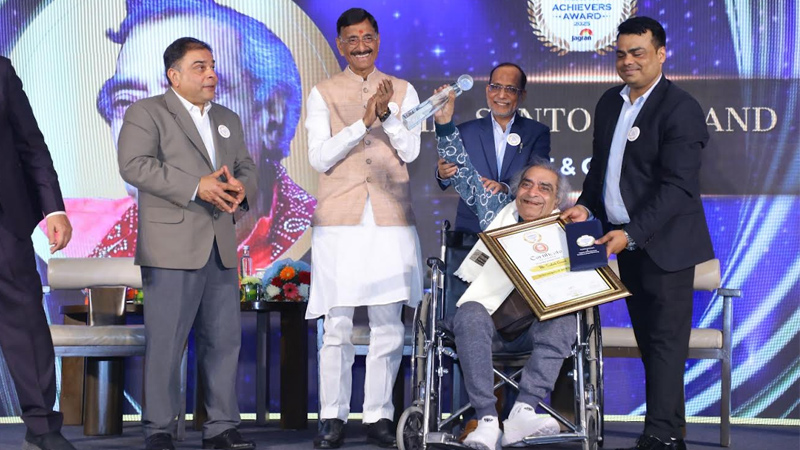
NEW DELHI: Hamdard Laboratories gathered a cross-section of India’s achievers in New Delhi on Friday, handing out the Hakeem Abdul Hameed Excellence Awards to figures who have left their mark across healthcare, education, sport, public service and the arts.
The ceremony, attended by minister of state for defence Sanjay Seth and senior officials from the ministry of Ayush, celebrated individuals whose work blends professional success with a sense of public purpose. It was as much a roll call of achievement as it was a reminder that influence is not measured only in profits or podiums, but in people reached and lives improved.
Among the headline awardees was Alakh Pandey, founder and chief executive of PhysicsWallah, recognised for turning affordable digital learning into a mass movement. On the sporting front, Arjuna Awardee and kabaddi player Sakshi Puniya was honoured for her contribution to the game and for pushing women’s participation onto bigger stages.
The cultural spotlight fell on veteran lyricist and poet Santosh Anand, whose songs have echoed across generations of Hindi cinema. At 97, Anand accepted the honour with characteristic humility, reflecting on a life shaped by perseverance and hope.
Healthcare honours spanned both modern and traditional systems. Manoj N. Nesari was recognised for strengthening Ayurveda’s place in national and global health frameworks. Padma shri Mohammed Abdul Waheed was honoured for his research-backed work in Unani medicine, while padma shri Mohsin Wali received recognition for his long-standing contribution to patient-centred care.
Education and social development also featured prominently. Padma shri Zahir Ishaq Kazi was honoured for decades of work in education, while former Meghalaya superintendent of Police T. C. Chacko was recognised for public service. Goonj founder Anshu Gupta received an award for his dignity-centred rural development initiatives, and the Hunar Shakti Foundation was honoured for empowering women and young girls through skill development.
The Lifetime Achievement Award went to former IAS officer Shailaja Chandra for her long career in public healthcare and governance, particularly in the traditional systems under Ayush.
Speaking at the event, Hamdard chairman Abdul Majeed said the awards were a tribute to those who combine excellence with empathy. “These awardees reflect Hakeem Sahib’s belief that healthcare, education and public service must ultimately serve humanity,” he said.
Minister Seth struck a forward-looking note, saying India’s young population gives the country a unique opportunity to become a global destination for learning, health and wellness by 2047.
The ceremony also featured the trailer launch of Unani Ki Kahaani, an upcoming documentary starring actor Jim Sarbh, set to premiere on Discovery on 11 February.
Instituted in memory of Unani scholar and educationist Hakeem Abdul Hameed, the awards have grown into a national platform that celebrates those building a more inclusive and resilient India. For one evening at least, the spotlight was not just on success, but on service with substance.








