News Broadcasting
Should the Press Council govern TV and Internet?

MUMBAI: Is there a need to create a Media Council of India? We already have the Broadcast Complaints Council of India (BCCI) and the News Broadcasters Association and the Broadcast Editors Association (BEA) which act as the conscience keepers of the entertainment channels and of the news broadcasters respectively.
But CK Prasad chief of the nearly 50 year old Press Council of India (PCI) believes its ambit needs to be extended to cover television and the internet.
Speaking on the occasion of National Press Day the retired chief justice today said “It is necessary for society and government to recognise that the noble objectives behind setting up the Council can never fully be realised if its activities are restricted to the print media…. the Council as a body made up of different groups of informed stakeholders, is best placed to play such a regulatory role.”

He added that suggestions to give the PCI more teeth have been made in the past but it has not been followed up with legislative changes. “It must possess the powers to tackle aberrations by the press to ensure that members maintain the highest professional standards. In the absence of such powers, the Council is forced to act more on the basis of moral persuasion than legal persuasion.”
“Our democracy and our media have evolved significantly… legislation has kept pace with developments in other areas vital for the functioning of our democracy such as electoral reforms, attempts to update the Press Council Act to bring it in tune with contemporary realities have until now only been academic exercises,” he pointed out.
He stated that the PCI gets its funding through private sources as annual subscriptions from registered newspaper organisations and as grants from government. This needs to be relooked at. The government’s share of this needs to go down while the print media’s share needs to go up to ensure its autonomy in a new media dynamic.





News Broadcasting
CNN-News18 to host Fury in the Gulf conclave on West Asia crisis
Three-hour summit to unpack geopolitical fallout and impact on India
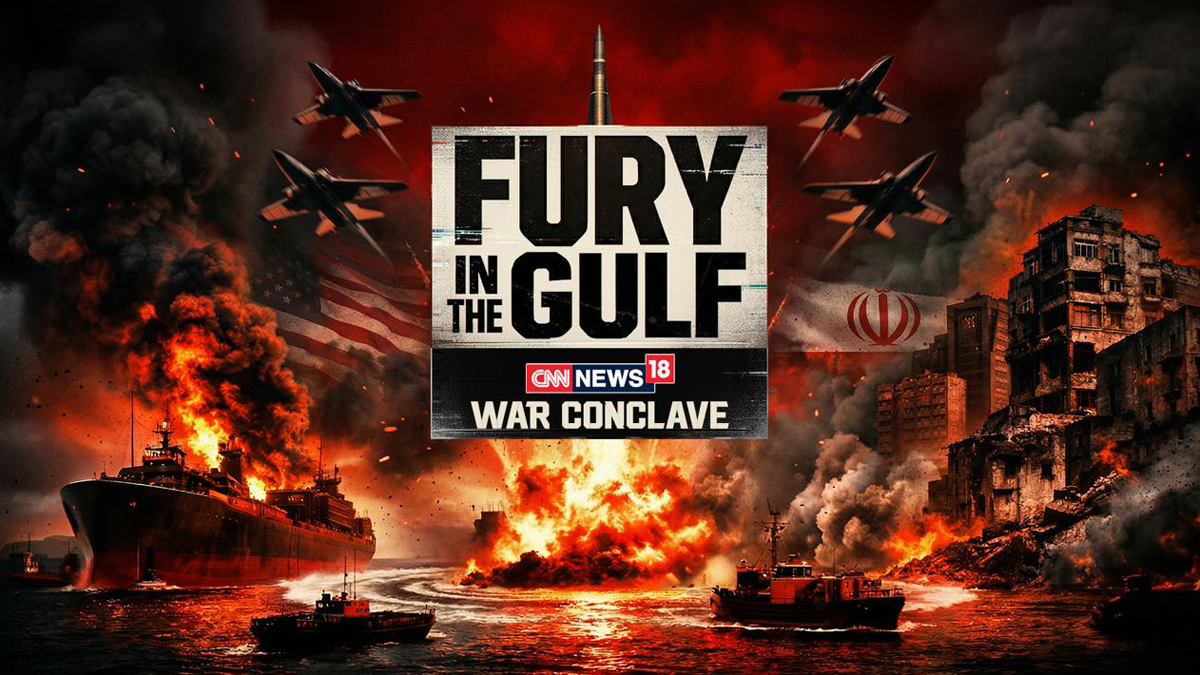
MUMBAI: CNN-News18 is set to host a special three-hour broadcast, Fury in the Gulf – War Conclave, on April 7, aiming to decode the escalating West Asia crisis and its far-reaching implications for India.
Scheduled from 4:00 PM to 7:00 PM, the conclave comes at a time when tensions between Iran and the United States are reshaping global geopolitics and triggering economic uncertainty. With India’s deep energy ties, trade links and large diaspora in the Gulf, the developments carry significant domestic relevance.
Built around the theme ‘Conflict, Consequences, and The Future,’ the programme will feature six curated sessions combining one-on-one interviews and panel discussions. The focus is to cut through the clutter and offer viewers a clearer understanding of the fast-evolving situation.
Key sessions include ‘Diplomacy in Times of War’ featuring Shashi Tharoor, and ‘World After the Iran Conflict’ with voices such as Ram Madhav, Reuven Azar, representatives from the European Union and the Iranian Deputy Envoy. Another session titled ‘Another Dunkirk?’ will bring together K. J. S. Dhillon and Jitin Prasada among others.
CNN-News18 editorial affairs director Rahul Shivshankar said, “In times of war, clarity becomes the most powerful tool. Fury in the Gulf – War Conclave brings together credible voices to address the questions and confusion that arise amid an overwhelming influx of information.”
He added that the initiative is aimed at delivering “facts, perspective, and insight” at a time when misinformation can easily cloud public understanding.
Echoing the sentiment, CNN-News18 CEO– English and business news Smriti Mehra said the conflict marks a defining global moment, with consequences that extend well beyond the region. She noted that the conclave seeks to present the crisis with “depth, nuance and responsibility” so audiences can better grasp its real-world impact.
As geopolitical tensions continue to dominate headlines, the conclave positions itself as an attempt to bring order to the noise, offering viewers a structured, insight-led look at a complex and rapidly shifting global situation.






