Hindi
Shirin Farhad Ki Toh Nikal Padi: Another failed attempt at being ‘different’

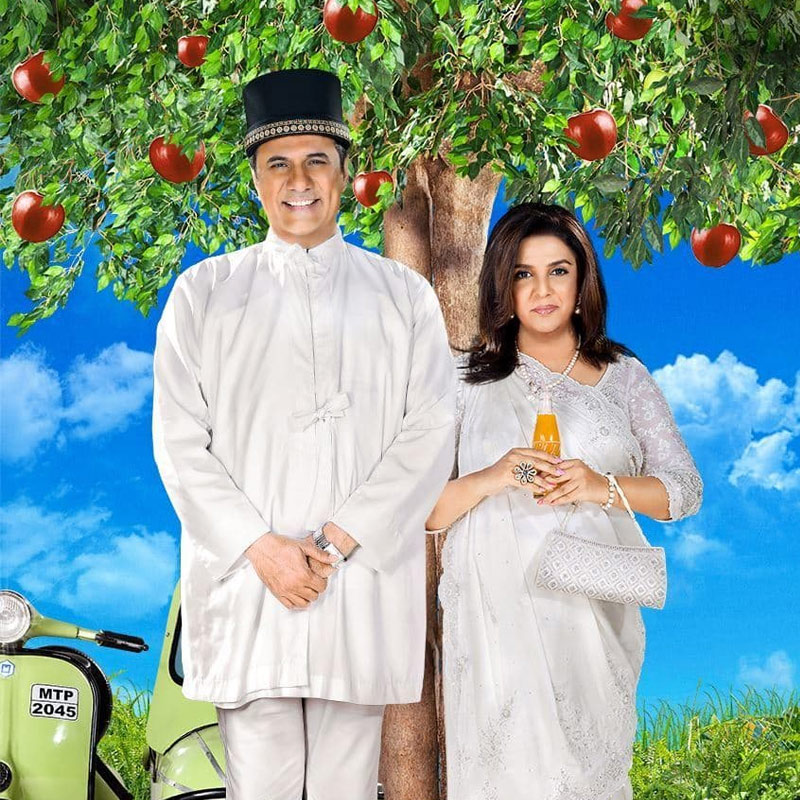
Mumbai: The quest for something different, something that can be made in a limited budget and without big stars continues. As such, Shirin Farhad Ki Toh Nikal Padi is an experiment to that end.
 |
|
Producers: Sanjay Leela Bhansali, Sunil Lulla. |
The casting of Boman Irani and Farah Khan, as well as Bela Bhansali Sehgal directing a film for her brother’s banner, gets the film ample media attention. Parsis are known for marrying late or not marrying at all and that forms the basis of this film.

Farhad (played by Boman Irani) is a 45-year-old bachelor with a dominating mother and loving grandmother. He makes his living working as a salesman at a local lingerie shop. Shirin (Farah Khan) is a single Parsi woman of 40 years. One fine day she walks into the shop where Boman works to buy a bra. She is specific about what she wants and Boman tries to convince her on a different size putting his years of experience to use. The sparks fly and both are drawn to each other. Boman, a pure heart simpleton, and Farah, an aggressive kind, want to meet again and again.
Unknown to both of them, Farah is already enemy of the state as far as Boman’s mother, Daisy Irani, is concerned. As the secretary of the Parsi Trust, she has been responsible for destroying an illegal water storage tank which Daisy Irani’s late husband had lovingly built! Her late husband had done only two worthy things in his life: build that water tank and gave her a son like Boman. So there is no way Farah Khan can be her daughter-in-law. This apart, Boman and Farah keep having their own lovers’ tiffs and misunderstandings too.
As the film makes it to its post interval part, it shreds any notion of being the love story of a middle-aged couple; it tries to incorporate everything that a regular teenage love story would have. The film’s backdrop is the famous Khushrow Baug in South Mumbai and almost all Parsis are made out to be nutty characters and their trust meetings are usually a free for all. What is more, the film concentrates only on the Parsi community with no non-Parsi character around.
There are few characters in the film except when there is a meeting that turns into a free for all, which is made to look inevitable at each gathering. The film rests on the shoulders of Boman, Farha, Daisy Irani and Shammi. Shammi and Daisy Irani still make their presence felt. Boman Irani is his usual self, very natural. Farah carries a smirk all the time as if she was enjoying the experience.
Directorially, Bela Bhansali Sehgal makes her debut but looks like she has a long way to go; the script is patchy and there is little she can do to rise above it. Dialogue is routine. Music wise, songs are well tuned but are out of place in most cases.
Shirin Farhad Ki Toh Nikal Padi promises no box office prospects.





Hindi
Zee5 and Applause Entertainment team up for whodunnit ‘Everybody Loves Sohrab Handa’
Rajat Kapoor directs star-studded murder mystery streaming from 10 April.
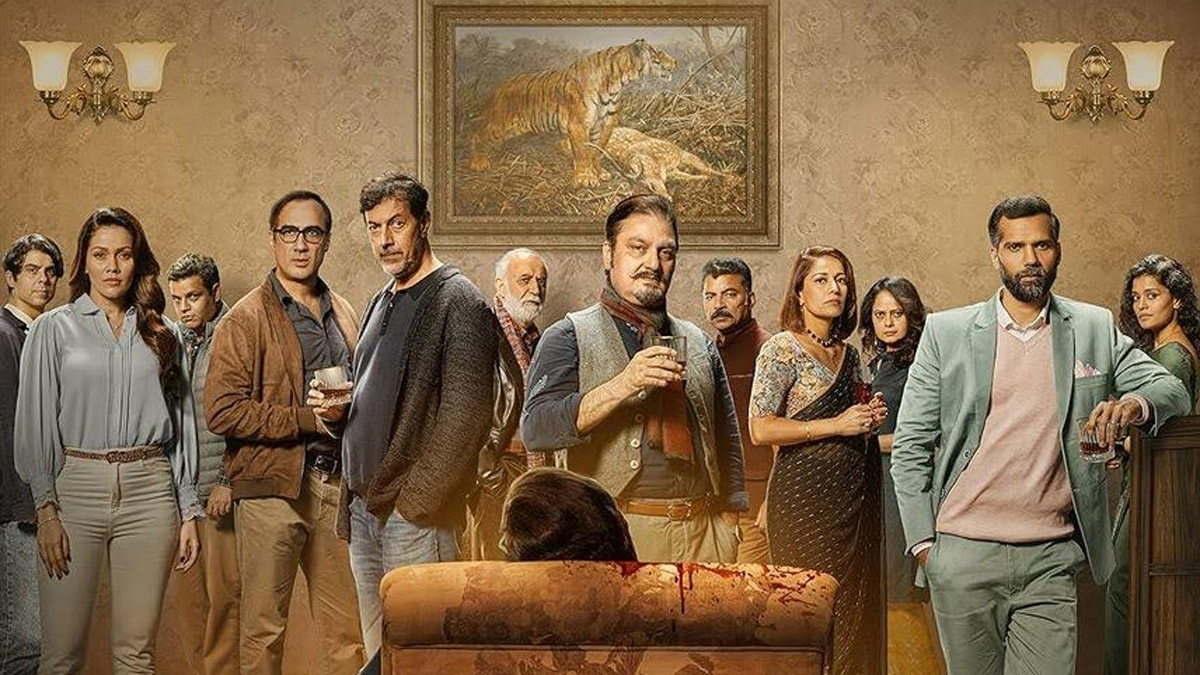
MUMBAI: Zee5 is serving up another killer collaboration and this time, the murder mystery comes with a generous side of dark humour and family dysfunction. The streaming platform has partnered with Applause Entertainment and Mithya Talkies to bring Everybody Loves Sohrab Handa, a fresh, twisted whodunnit written and directed by acclaimed filmmaker and actor Rajat Kapoor. The film will stream exclusively on Hindi Zee5 from 10 April.
The movie reimagines the classic murder mystery genre with a contemporary, darkly comic edge. It revolves around a group of friends and family who smile, drink, and celebrate together until the silence snaps and long-buried secrets spill out. The stellar ensemble cast includes Vinay Pathak, Ranvir Shorey, Waluscha De Sousa, Saurabh Shukla, Chandrachoor Rai, Neil Bhoopalam, Koel Purie, Palomi Ghosh, and Rajat Kapoor himself.
This latest offering continues the successful partnership between Zee5 and Applause Entertainment, which has previously delivered diverse hits such as Mithya, Bloody Brothers, and Jab Khuli Kitaab.
&TV Business Head of hindi Zee5 and chief channel officer Kaveri Das said, “Our collaboration with Applause Entertainment has consistently delivered distinct, high-impact storytelling. Everybody Loves Sohrab Handa is a natural progression, reinforcing our focus on genre-led content with a compelling whodunnit premise and a strong ensemble cast.”
Applause Entertainment business head for movies Sunil Chainani added, “This film adds yet another compelling layer to our slate with Rajat Kapoor’s unmistakable voice.”
Rajat Kapoor shared, “What interested me was not just the mechanics of a whodunnit, but the emotional violence that precedes physical violence. These are people who smile at each other, but there’s so much that is not said.”
The film promises razor-sharp writing, layered performances, and simmering tension, inviting viewers not just to solve the crime but to unravel the complex relationships at its heart.
If you love a good murder mystery served with wit and emotional depth, Everybody Loves Sohrab Handa looks set to be your next addictive watch. Mark your calendars, the whodunnit drops on Hindi Zee5 from 10 April.







