Gaming
Shemaroo & BharatBox sell out Jab We Met Geet digital avatars

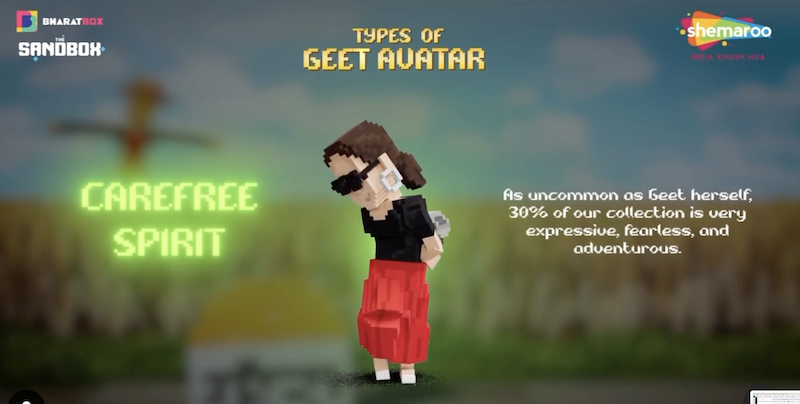
MUMBAI: Just when we thought the digital collectible frenzy was just a passing fad, Shemaroo Entertainment and BharatBox announced that their offer of 3,333 exclusive Jab We Met collectibles based on the character Geet portrayed by Kareena Kapoor in the popular film sold out. The Geet avatars, featured in the Jab We Met themed game on The Sandbox, became an instant favorite among fans.
The partnership not only generated over $40,000 in revenue within just 45 days but also showcased the growing influence of such collaborations on the global stage. The campaign’s success reflects the growing appetite for culturally relevant digital assets in the country today
Following this, the Jab We Met avatars attracted significant global interest, alongside a substantial inflow of buyers from India and across the globe. This solidified Shemaroo Entertainment’s IP on the global stage while amplifying BharatBox’s presence in mainstream entertainment. Notably, the campaign saw strong participation from Indian players, creators, and brands.

The primary participants included nearly 67,000 creators and users. Following the pre-launch, the campaign rolled out for the next few months, with a comprehensive strategy including teaser campaigns, educational content, and allowlist opening alongside early incentivisation through questing.

Additionally, Bharatbox and Shemaroo Entertainment worked with key opinion leaders (KOLs) followed by three Ask-Me-Anything (AMA) Sessions conducted with The Sandbox, gathering over 200,000 tune-ins. Lastly, social media giveaways for questing winners included $SAND as well as physical rewards offered by Shemaroo Entertainment to avatar holders.
The Geet collection reinforced the potential of popular Indian cinema IPs in the metaverse, tapping into India’s strong player-creator community within the blockchain gaming ecosystem. The campaign leveraged BharatBox’s blockchain infrastructure within The Sandbox, utilising no-code tools for creators and play-to-earn (P2E) models to incentivise player engagement. These features democratise access to the metaverse, making it easier for creators to monetize and for players to participate.
“Selling out the Jab We Met collection is a testament to innovation in the metaverse space,” said BharatBox CEO Karan Keswani. “Shemaroo Entertainment and BharatBox are bringing Indian culture to a new generation of digital-first audiences. This milestone reinforces our ability to deliver culturally resonant and commercially successful projects in the metaverse.”

Shemaroo Entertainment chief operating officer Arghya Chakravarty added: “At Shemaroo Entertainment, our mission has always been to innovate and connect with audiences through diverse storytelling. The success of the Jab We Met digital collectibles is a shining example of how Indian cinema’s timeless charm can seamlessly transition into new-age platforms like the metaverse. We are thrilled to see such enthusiastic participation from fans, and this milestone reinforces our commitment to redefining entertainment in the digital era.”
The resounding success of the Jab We Met collection signals the massive growth potential for BharatBox and Shemaroo Entertainment and is part of a broader India story within blockchain gaming, said a press release issued by Shemaroo.
BharatBox continues to lead the metaverse conversation in the country with India emerging as a top market, with an impressive 66,091 creators and an user base doubling from 150,000 to 350,000. This collaboration will pave the way to expand partnerships and forge new pathways for cultural IPs to thrive in a decentralised economy.






Gaming
India’s broadcasters say no to Fifa World Cup 2026
Fifa has slashed its asking price by 65 per cent but India’s broadcasters are still not buying
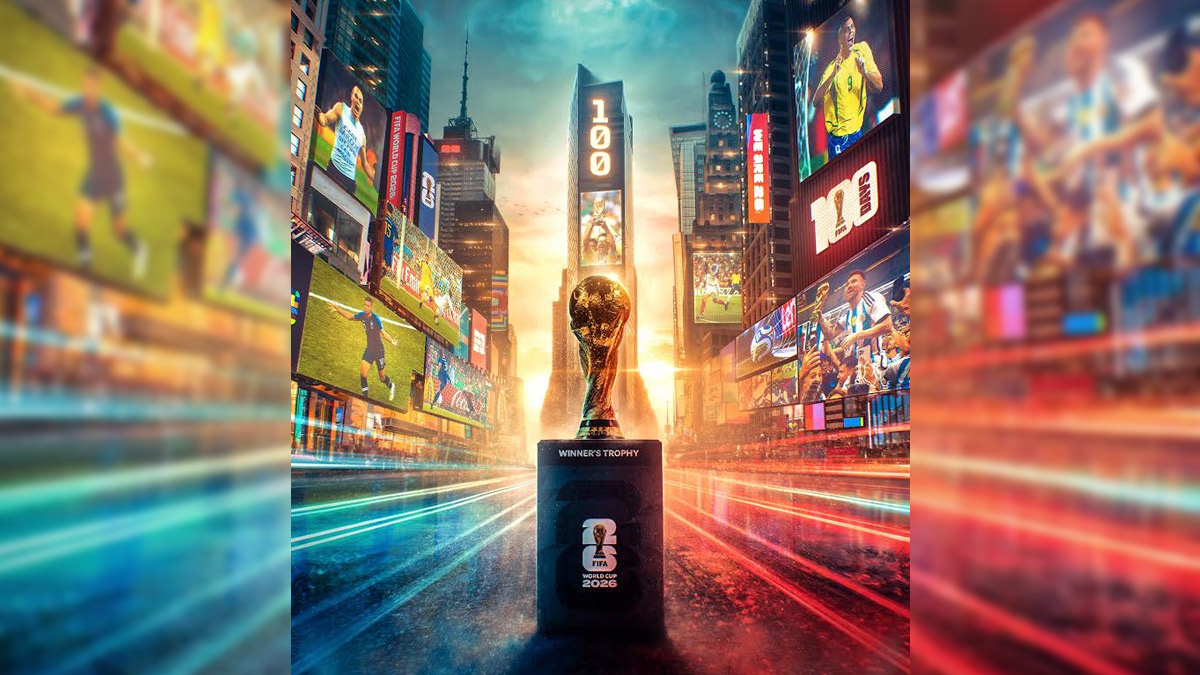
MUMBAI: The world’s biggest sporting event cannot find a single taker in the world’s most sports-mad nation. Fifa’s television rights for the 2026 World Cup remain unsold in India, and the clock is ticking loudly.
To shift the property, world football’s governing body has already swallowed hard and cut its asking price from $100m to $35m, bundling in the 2030 edition as a sweetener. It has not worked. Indian broadcasters have looked at the offer, done the sums and quietly walked away.
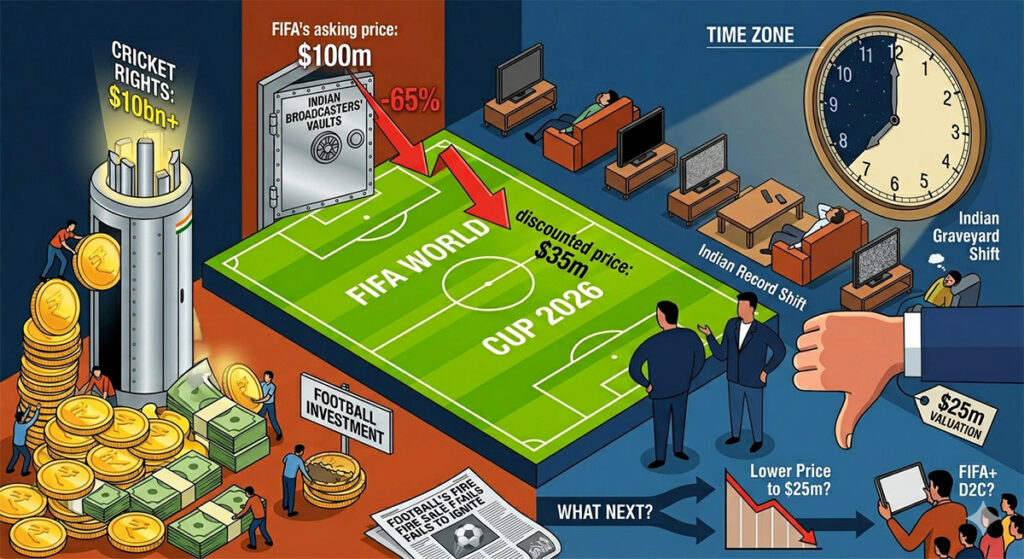
The reasons are brutally simple. The 2026 tournament, co-hosted by the United States, Canada and Mexico, kicks off in a time zone that turns India’s primetime into a graveyard shift. Most matches will air between midnight and 7am IST, a scheduling catastrophe for advertisers chasing mass reach. The 2022 Qatar edition was a gift by comparison, with matches dropping neatly into Indian evenings. North America offers no such luxury.
The market itself has also changed beyond recognition. The merger of Star India and Viacom18 into JioStar has gutted the competitive tension that once sent sports rights prices soaring. Where rival bidders once slugged it out, there is now a single dominant buyer, and it is in no hurry. JioStar has valued the rights at roughly $25m, a full $10m below Fifa’s already-discounted floor price. That gap has so far proved unbridgeable.
Broadcasters are also nursing a ferocious cricket hangover. Between 2022 and 2023, Indian media houses committed well over $10bn to cricket rights alone, covering IPL, ICC events and BCCI domestic fixtures combined. After a binge of that scale, appetite for a football package that delivers a fraction of the ratings, in the dead of night, is close to zero.
The economics of football broadcasting make the maths even harder. Cricket, with its natural breaks every few overs, is an advertiser’s paradise. Football offers a 15-minute halftime and precious little else. Recovering a nine-figure rights fee from a single half-hour ad window is a stretch at the best of times. These are not the best of times: the Indian government’s tightening grip on real-money gaming and gambling advertising has vaporised a category that once underwrote the economics of big sporting events.
Nor is the World Cup an anomaly. Indian Super League valuations have cratered. English Premier League rights have softened across successive cycles. The cooling of football as a broadcast commodity in India is structural, not cyclical.
With the tournament opening on 11th June, Fifa is running out of road. It may yet blink and meet JioStar at $25m. Or it may go direct, streaming the entire tournament on its own platform, Fifa+, or cutting a digital deal with YouTube, and hoping that a generation of Indian football fans finds its way there without a broadcaster to guide them.
Either way, the beautiful game’s Indian chapter is looking decidedly ugly.







