Applications
Sheet happens when teams can’t tell stories with data, finds Canva

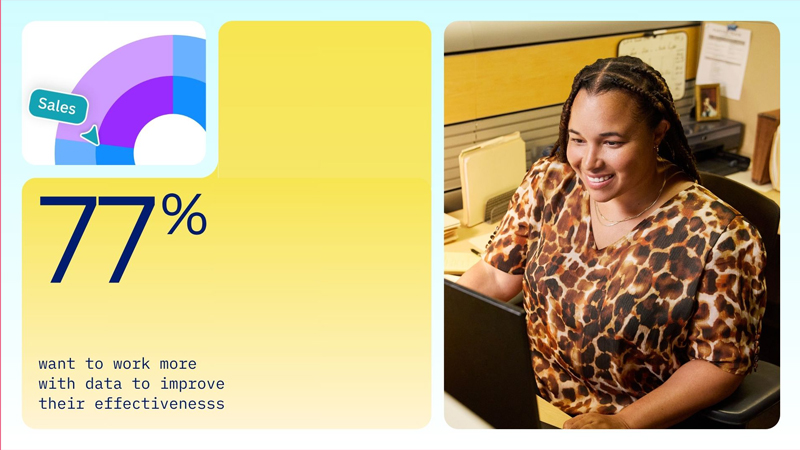
MUMBAI: Not all spreadsheet drama starts with macros. A new report by Canva titled Beyond the Numbers: How Data Storytelling Redefines Communication reveals that while India’s marketing and sales teams claim confidence with data, many fall flat when it comes to transforming numbers into narratives that actually persuade.
Based on a global survey of 2,457 professionals including 313 from India the report spotlights a stark confidence-competence gap. A whopping 96 per cent of Indian respondents say they’re confident working with data, but only 66 per cent feel prepared to begin a data-heavy task. And while 92 per cent feel good about analysing and interpreting data, 74 per cent admit spreadsheet mistakes impact their work.
From formula phobia to interpretation anxiety, it’s clear that data literacy training (offered by 81 per cent of Indian organisations) isn’t fully doing the trick. In fact, 80 per cent still experience data-related stress, and 45 per cent avoid working with data altogether despite recognising its value.

It’s not just a question of skill, it’s one of storytelling. Nearly 97 per cent of Indian respondents work with data weekly, and 95 per cent say data literacy is expected in their role. But 44 per cent still struggle to visualise data effectively even though 96 per cent agree visuals boost credibility and make them more confident when presenting.
The disconnect lies in outdated tools and scattered processes. 58 per cent of Indian respondents find switching between data tools confusing, and 96 per cent are eager for simpler visualisation platforms. 49 per cent are willing to spend up to three hours learning new solutions, while 91 per cent believe AI could help automate tedious tasks and enhance visualisation though scepticism remains about accuracy and creativity.
“Working with data shouldn’t be confined to specialists,” said Canva head of EMEA Duncan Clark. “The goal isn’t to make everyone a data scientist, but to empower teams to turn numbers into compelling stories because data alone doesn’t move people, stories do.”
With decision-making becoming more data-driven across the board 91 per cent say their organisation’s reliance on data has increased in the last two years the need for better storytelling is no longer optional. Canva’s own tools like Canva Sheets and advanced visualisation features aim to bridge this gap, making storytelling as intuitive as a drag-and-drop design.
As teams wrestle with complex spreadsheets and campaign KPIs, one thing’s clear: the next big business differentiator isn’t just data, it’s the story you tell with it.





Applications
With 57 per cent single new users, Ashley Madison rebrands as discreet dating platform
Platform says majority of new members now identify as single

INDIA: Ashley Madison is shedding the “married-dating” label that defined it for two decades, repositioning itself as a platform for discreet dating in what it calls the post-social media age.
The rebrand, unveiled in India on 27 February, 2026, marks a structural shift in business model and identity. Once synonymous with married dating, the company now describes itself as the “premier destination for discreet dating” under a new tagline: Where Desire Meets Discretion.
The pivot is data-driven. Internal figures show that 57 per cent of global sign-ups between 1 January and 31 December, 2025 identified as single: a notable departure from the platform’s married core. The company argues that its community has already evolved beyond its original positioning.
“In an age where our lives have been constantly put on public display, privacy has become the new luxury,” said Ashley Madison chief strategy officer Paul Keable. He framed the platform’s offering as “ethical discretion” for singles, separated, divorced and non-monogamous users seeking private connections.
The shift also taps into wider digital fatigue. A global survey conducted by YouGov for Ashley Madison, covering 13,071 adults across Australia, Brazil, Canada, Germany, India, Italy, Mexico, Spain, Switzerland, the UK and the US, found mounting discomfort with hyper-public online lives.
Among dating app users, 30 per cent cited constant swiping and messaging as a source of fatigue, while 24 per cent pointed to pressure to curate public-facing profiles and early personal disclosure. Some 27 per cent said fears of screenshots or information being shared contributed to exhaustion; an equal share cited unwanted attention.
The retreat from oversharing appears broader. According to the survey, 46 per cent of adults actively try to keep most aspects of their life private online. Only 8 per cent feel comfortable sharing most aspects publicly, while 35 per cent say they are becoming more selective about what they disclose.
Ashley Madison is betting that this cultural recalibration towards controlled visibility can be monetised. By doubling down on privacy infrastructure and reframing itself around discretion rather than infidelity, the company is attempting to convert reputational baggage into a premium proposition.






