News Broadcasting
SET pitches Madhuri show as next big thing after ‘KBC’


NEW DELHI: In a conference hall which had the festive look of a wedding pandaal, including facilities for girls to put on mehndi and an astrologer, Sony Entertainment Television India today announced in Delhi the launch of four new shows led by what the company hopes will be the small screen’s next BIG blockbuster – the Madhuri Dixit-hosted marriage reality show Kahin Naa Kahin Koi Hai.
Such was the hype and excitement around KNKKH, three other big-ticket shows that were announced along with it almost failed to get a nary ripple from the assembled audience. There is the Balaji weekender show – Kya Hadsa Kya Haqeeqat – a thriller series launching 16 August (39 episodes over 13 weeks). Then there is the Indian version of gameshow Russian Roulette – Bachke Rehnaa – with Mohnish Behl in the hot seat. And lastly Kuch Kehti Hai Yeh Dhun – a musical quiz show with Raageshwari hosting.
KNKKH is launching on 29 July and will air four times a week, Monday through to Thursday. With an estimated Rs 200 million already sunk in and around 40 episodes in the can, there is a whole lot riding on the show, which is produced by the Ronnie Screwvallah-promoted UTV.

“Yeh sacche logon ke jazbaat or emotions ki kahani hain (this is the story of true people’s emotions),” Madhuri Dixit, filmstar-hostess and probably the best dancer Bollywood has ever seen, said after emerging from a backdoor on the stage amidst artificial “cloud” and a showering of what looked like rose petals.
As the jampacked hall, full of advertisers, cable operators, corporates and media people, `oohed’ and `aahed’ over the dhak-dhak girl in a crimson red sari, SET India chief executive, Kunal Dasgupta announced that this was not a game show, but India’s biggest reality show.
It was again Madhuri’s turn and she coyly said, “I hope you people like me on television the same way as you liked and appreciated my work on the big screen.”
Clapping over, the journalists got down to some questioning which ranged from why Madhuri is not in the family way to her views on the institution of marriage, to the technical and entry aspects of the programme.
While Madhuri handled even awkward questions with aplomb, Dasgupta added that this was not Sony’s attempt to “commercialise the institution of marriage.”
“We are not commercialising marriage. It has always been part of our commercial entertainment (like in films),” Dasgupta said to a question on whether Sony was trying to exploit commercially the institution of marriage.
Dasgupta also announced the three new programmes and aired an audio visual for which very few had time as everybody wanted to see Madhuri on a “jhoola” where she was, again, accompanied by Dasgupta and not her husband Dr Nene, who, however, sat in the audience quietly and went mostly unnoticed.
Sony’s Madhuri show launching 29 July as ‘Kahin Naa Kahin Koi Hai’






News Broadcasting
CNN-News18 to host Fury in the Gulf conclave on West Asia crisis
Three-hour summit to unpack geopolitical fallout and impact on India
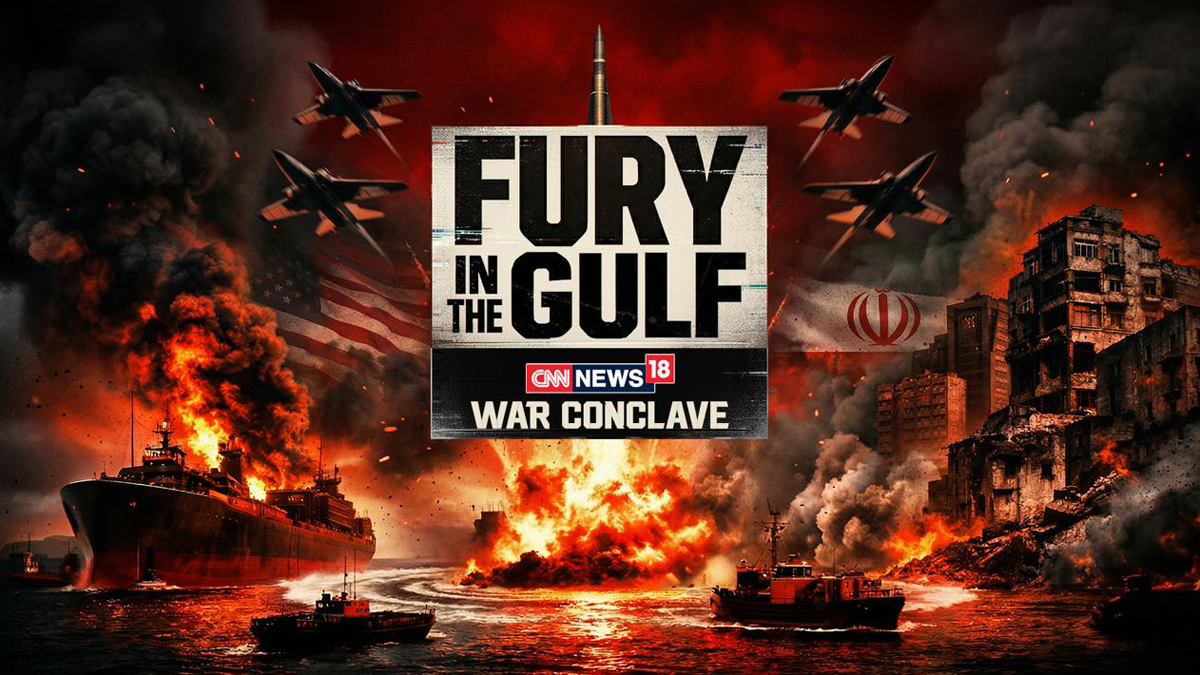
MUMBAI: CNN-News18 is set to host a special three-hour broadcast, Fury in the Gulf – War Conclave, on April 7, aiming to decode the escalating West Asia crisis and its far-reaching implications for India.
Scheduled from 4:00 PM to 7:00 PM, the conclave comes at a time when tensions between Iran and the United States are reshaping global geopolitics and triggering economic uncertainty. With India’s deep energy ties, trade links and large diaspora in the Gulf, the developments carry significant domestic relevance.
Built around the theme ‘Conflict, Consequences, and The Future,’ the programme will feature six curated sessions combining one-on-one interviews and panel discussions. The focus is to cut through the clutter and offer viewers a clearer understanding of the fast-evolving situation.
Key sessions include ‘Diplomacy in Times of War’ featuring Shashi Tharoor, and ‘World After the Iran Conflict’ with voices such as Ram Madhav, Reuven Azar, representatives from the European Union and the Iranian Deputy Envoy. Another session titled ‘Another Dunkirk?’ will bring together K. J. S. Dhillon and Jitin Prasada among others.
CNN-News18 editorial affairs director Rahul Shivshankar said, “In times of war, clarity becomes the most powerful tool. Fury in the Gulf – War Conclave brings together credible voices to address the questions and confusion that arise amid an overwhelming influx of information.”
He added that the initiative is aimed at delivering “facts, perspective, and insight” at a time when misinformation can easily cloud public understanding.
Echoing the sentiment, CNN-News18 CEO– English and business news Smriti Mehra said the conflict marks a defining global moment, with consequences that extend well beyond the region. She noted that the conclave seeks to present the crisis with “depth, nuance and responsibility” so audiences can better grasp its real-world impact.
As geopolitical tensions continue to dominate headlines, the conclave positions itself as an attempt to bring order to the noise, offering viewers a structured, insight-led look at a complex and rapidly shifting global situation.






