News Broadcasting
SERVICE TAX


he multiple levels and multi-point Service Tax imposed on the Entertainment Industry is making survival difficult for the small content producers.
Presently, the Entertainment Industry is paying Service Tax at many different levels and points, such that they end up paying Service Tax on Service Tax on Service tax. The levy is draconian and is making survival difficult for the content producers, who being the weakest link, bear the whole of the burden. The scenario is briefly described as under: –
The subscribers of Cable TV pay Service-tax which is collected and deposited by the Cable Operator.

The advertisers pay service tax to the ad-agencies on all ads booked by them.
The ad-agencies pay service tax on all advertisements aired, which the TV Channels collect and deposit.
The TV Channels are supposed to pay Service Tax to the Content Producers which the Content Producers are supposed to collect and deposit. As of now, none of the Channels, including Doordarshan, is paying this tax and so the Content Producers, even though they do not collect, deposit from their own resources as per law.
The Content producers hire equipment and buy utility services such as Telephone, Electricity, Insurance etc., on which they pay service tax which the equipment owners and utilities companies collect and deposit.
(A graphical representation is attached
Thus, the multi-point and multi-level Service tax levied on the Entertainment Industry is becoming such a burden that Channels, because they are at a bargaining end, refuse to bear and pay (and there is no law empowering the producers to recover the same from the channels) so it is borne by the Producers, and the producers have to pay to the Utilities and Equipment Suppliers as they are not in a position to refuse. Producers, end up paying service tax on their purchases as well as sales.
Doordarshan refuses to pay Service Tax on content that it purchases, although the law says they should pay; but collects Service tax from advertisers on telecast fees charges by it per force. Double faced policy.
The channels refuse to bear, not because they want to cheat, but because they too are forced to bear the Service Tax that the advertising agencies are refusing to pay. The ad-agencies are refusing to pay because they are already paying the tax on one side of their transaction.
The unfairness of the law lies in the fact that most of the players in the Entertainment Industry have to pay Service Tax on their costs as well as their revenues. This is against the concept of fair taxation.
We request that this chain of multi-point taxation be broken by exempting the Producers from Service Tax. The ad-agencies are already collecting and paying the Service Tax on all ads aired on the Channels, and the Cable Operators are also doing the same. Further, the Channels are paying Service Tax on all ads aired by them once again. The last leg of the chain, the Equipment Suppliers and Utilities are also collecting and paying service tax. Exempting the producers will give a great life-line to the Industry by breaking the Chain.





News Broadcasting
CNN-News18 to host Fury in the Gulf conclave on West Asia crisis
Three-hour summit to unpack geopolitical fallout and impact on India
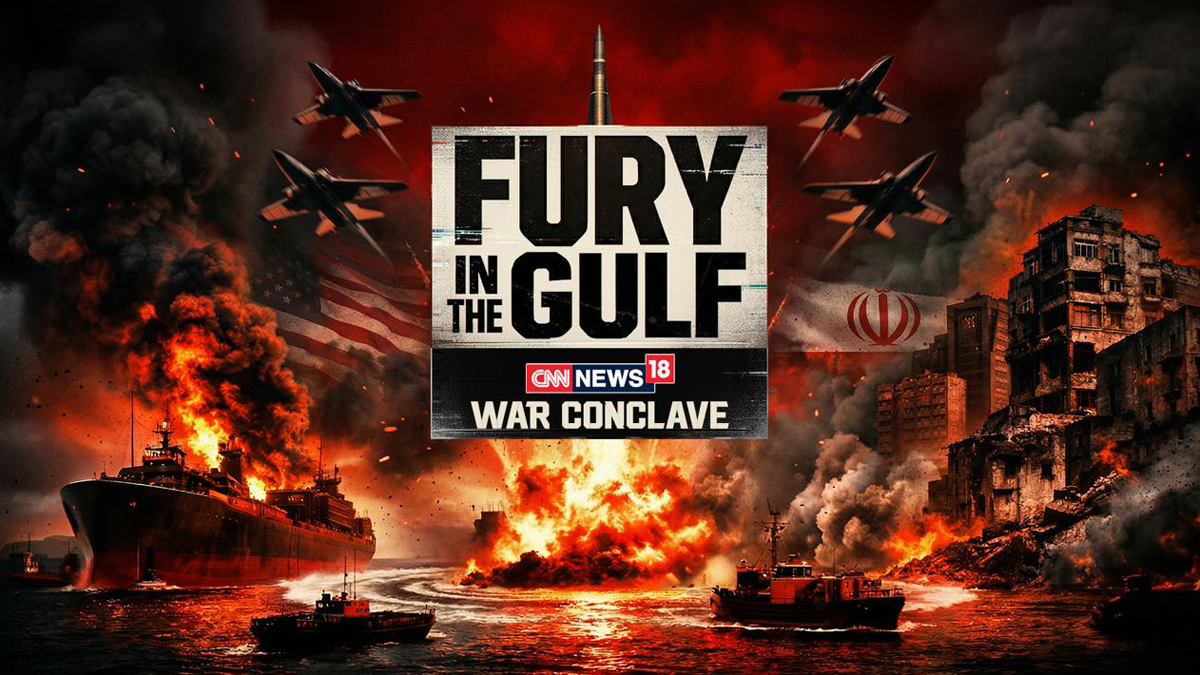
MUMBAI: CNN-News18 is set to host a special three-hour broadcast, Fury in the Gulf – War Conclave, on April 7, aiming to decode the escalating West Asia crisis and its far-reaching implications for India.
Scheduled from 4:00 PM to 7:00 PM, the conclave comes at a time when tensions between Iran and the United States are reshaping global geopolitics and triggering economic uncertainty. With India’s deep energy ties, trade links and large diaspora in the Gulf, the developments carry significant domestic relevance.
Built around the theme ‘Conflict, Consequences, and The Future,’ the programme will feature six curated sessions combining one-on-one interviews and panel discussions. The focus is to cut through the clutter and offer viewers a clearer understanding of the fast-evolving situation.
Key sessions include ‘Diplomacy in Times of War’ featuring Shashi Tharoor, and ‘World After the Iran Conflict’ with voices such as Ram Madhav, Reuven Azar, representatives from the European Union and the Iranian Deputy Envoy. Another session titled ‘Another Dunkirk?’ will bring together K. J. S. Dhillon and Jitin Prasada among others.
CNN-News18 editorial affairs director Rahul Shivshankar said, “In times of war, clarity becomes the most powerful tool. Fury in the Gulf – War Conclave brings together credible voices to address the questions and confusion that arise amid an overwhelming influx of information.”
He added that the initiative is aimed at delivering “facts, perspective, and insight” at a time when misinformation can easily cloud public understanding.
Echoing the sentiment, CNN-News18 CEO– English and business news Smriti Mehra said the conflict marks a defining global moment, with consequences that extend well beyond the region. She noted that the conclave seeks to present the crisis with “depth, nuance and responsibility” so audiences can better grasp its real-world impact.
As geopolitical tensions continue to dominate headlines, the conclave positions itself as an attempt to bring order to the noise, offering viewers a structured, insight-led look at a complex and rapidly shifting global situation.






