News Broadcasting
Sena supremo to address Mumbai LMOs on 7 September


MUMBAI: The tiger roars at CAS again. Shiv Sena supremo Bal Thackeray is slated to meet nearly 1,000 Mumbai-based cable operators on Sunday, 7 September 2003. In all probability, the venue of the meeting is the Rang Sharda auditorium at Bandra Reclamation in suburban Mumbai.
Incidentally, the cable trade (read multi system operators) in Mumbai has got a 10-day grace period from the I&B ministry due to Ganesh Chaturthi and the rollout of CAS is poised to happen only after 11 September, when the festival ends.
Senior Shiv Sena functionaries have confirmed that the Sena supremo will address the last mile operators in Mumbai.

Speaking to indiantelevision.com, Shiv Sena member of Parliament Sanjay Nirupam says: “Most probably, Balasaheb will address a meeting of all the last mile operators and address them on Sunday, 7 September 2003.”
With his clarion call “Humse Panga mat Lo!” (Don’t mess around with us), Nirupam has been one of the most vociferous MP who raised posers about the implementation of CAS in the country in Parliament.
Shiv Sena Vibhag Pramukh and CODA (Cable Operators’ and Distributors’ Association) spokesperson Anil Parab says: “Nothing is confirmed as yet but Balasaheb will meet the last mile operators before the new deadline for CAS implementation.” Parab, himself a cable entrepreneur (who started Dattatray Cable) feels that the way in which CAS is being implemented currently is against the interests of the consumers and the cable operators.
There were unconfirmed reports that senior BJP leaders including the deputy prime minister LK Advani were scheduled to meet Thackeray and obtain his support for CAS in Mumbai.
More importantly, Mumbai is the only city amongst the other metros where the ruling NCP-Congress alliance hasn’t had a say in the CAS rollout – unlike in Delhi where both the BJP (Madan Lal Khurana) and ruling Congress chief minister (Sheila Dixit) have opposed CAS; similarly in West Bengal, the ruling CPI-M has sought clarifications from the central government.
An Enam Securities report titled India Strategy dated 7 August 2003 says that CAS will change the Rs 80 billion pay TV market. It says that in the pre-CAS era, the LMOs used to get Rs 65 billion, multi-system operators (MSOs) used to get Rs 5 billion and broadcasters will get Rs 10 billion. The scenario, says the Enam Securities report, will change post the implementation of CAS. In the new scenario, broadcasters will get Rs 35 billion plus Rs 10 billion; MSOs will get Rs 5 billion and LMOs will get Rs 30 billion.
All eyes on the Sena supremo’s meeting with LMOs.





News Broadcasting
Kamlesh Singh receives Haldi Ghati Award from MMCF
India Today Group editor honoured for three decades of journalism at Udaipur ceremony.
MUMBAI- Kamlesh Singh just turned a lifetime of sharp words into a shiny shield because when journalism wakes up a society, even the Maharana of Mewar wants to pin a medal on it.
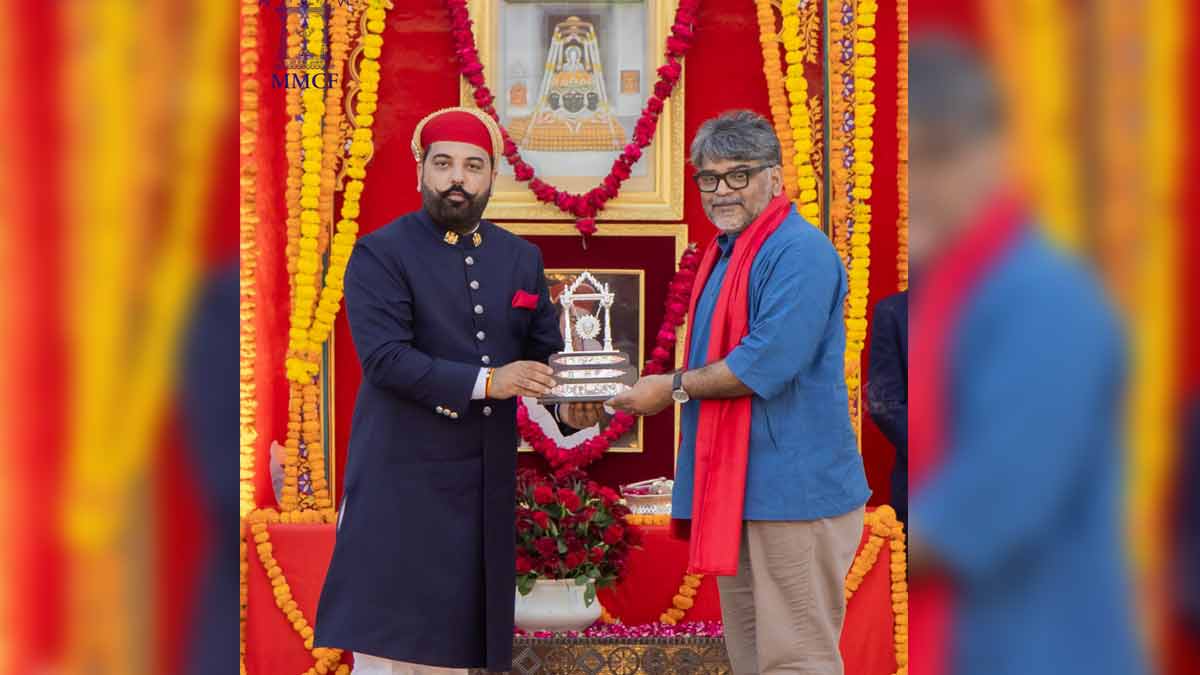
The Maharana of Mewar Charitable Foundation (MMCF) conferred its prestigious Haldi Ghati Award on Kamlesh Singh, a senior editor at the India Today Group, during a ceremony in Udaipur on 15 March 2026. The national award, instituted in 1981-82, recognises “work of permanent value that initiates an awakening in society through the medium of journalism.”
Singh, who leads several editorial initiatives including Aaj Tak Radio, the Teen Taal community and The Lallantop, was presented the honour by Lakshyaraj Singh Mewar, Managing Trustee of MMCF. The citation highlighted his three decades of contributions to Indian media, innovations in digital journalism, mentoring young reporters, and his popular podcast persona “Tau” on Teen Taal, which fosters thoughtful public discourse.
The Haldi Ghati Award, named after the historic Battle of Haldighati symbolising valour and resilience, is one of four national awards given annually by MMCF. Past recipients include Tavleen Singh, Piyush Pandey and Raj Chengappa.
Other honourees this year included Padma Vibhushan Pt Hari Prasad Chaurasia, Vedamurti Devvrat Rekhe, Treeman of India Marimuthu Yoganathan, Vir Chakra Capt Rizwan Malik, and US-based researcher Molly Emma Aitken, who received the Colonel James Tod Award for contributions to understanding Mewar’s spirit and values.
In an era where headlines often shout louder than substance, the MMCF quietly reminded everyone that real journalism isn’t about noise, it’s about the quiet, persistent work that stirs society awake, one thoughtful story at a time.