Hindi
Second Covid wave chokes India; filmmakers eye OTT route for new releases


MUMBAI: After showing signs of flattening the curve, India is once again struggling to leash the deadly virus that has reared its ugly head in the last few weeks. On 13 April, the country recorded more than 1,61,736 Covid2019 positive cases and over 900 related deaths. As the pandemic rages on, several states including Maharashtra and Karnataka are considering a second lockdown.
Like all other sectors, the entertainment industry in India is also facing a setback due to the resurgent virus. Even though the government gave permission to open theatres in November 2020, the footfall in cinema halls was very low, and most screens in Maharashtra witnessed an attendance of just four to five per cent.
Covid brings entertainment industry to its knees

Even though several Bollywood movies including Mumbai Saga hit the big screen, none of these films succeeded in creating an impact at the box-office. Industry experts believe that the only way to revive the exhibition industry is by waiving taxes imposed on cinema halls, and by allowing them to function without restrictions.
"If theatres in Maharashtra remain closed due to lockdown, it could affect Hindi movie releases in all other states as well,” pronounced Cinema Owners and Exhibitors Association of India president Nitin Datar. “Theatres are making sure that all hygiene measures are adopted to combat the spread of the Coronavirus. Even though the attendance in theatres is very low, the expenses incurred by theatres which include electricity bills, taxes (including entertainment and property) remains the same. In Maharashtra alone, theatres incurred loss of Rs 800 crore. We request government to waive the taxes which is very much necessary for the exhibition industry to survive.''
Datar also added that the closure of theatres in Maharashtra could not only affect theatre owners, but will also impact the lives of thousands who are directly or indirectly dependent on cinemas.
"In a theatre, there will be 25 workers. There will be four or five people working in the parking area, and other people working in the canteen area. In the surrounding areas, around the theatres, it will be a market hub depending on people coming to theatres. All the small shops are also dependent on the public who come to see cinemas. Around 1000 or 2000 people used to visit the theatres every day, and these retail shops are running relying these theatre visitors," he pointed out.
Exhibitors are ready to cooperate with whatever call the government takes during the pandemic, said Dadar, but at the same time, they expect help to survive.
Production houses may postpone releases
If a possible lockdown happens in Maharashtra, release of several movies including Sooryavanshi and Salman Khan's Radhe may get postponed. With a power-packed star cast of Ajay Devgan, Akshay Kumar, and Ranveer Singh, Sooryavanshi is scheduled to release on 30 April, but if theatres remain closed, makers may postpone the theatrical hit, and some day, may even opt for an OTT release.
Elara Capital vice president & research analyst (media & consumer discretionary) Karan Taurani hinted that theatres will return to pre-pandemic normalcy only by September 2021, which means several big budget movies may well take the direct to OTT route.
"In January 2021, industry experts believed that theatres will return to pre-pandemic normalcy by May-June 2021. However, due to the second wave and a lockdown scare, things have turned upside down. I personally believe that the process of returning to normalcy will take some time, and I believe things will return to pre-pandemic atmosphere by September 2021. Makers of films like Sooryavanshi may consider OTT release, as the content is getting old," he said.
Taurani also added that OTT releases are inevitable in the current scenario. While films like Sooryavanshi are not made to release on video streaming platforms, the current pandemic situation is compelling production houses to release their films online.
"If filmmakers have the option to release movies in theatres, they will obviously screen in big screens. And personally I believe that production houses will not opt for simultaneous releases in both OTT platforms and theatres on the same day, a practice which is widely followed in Hollywood," he stated. 14apr-Anx-mailer.html






Hindi
Zee5 and Applause Entertainment team up for whodunnit ‘Everybody Loves Sohrab Handa’
Rajat Kapoor directs star-studded murder mystery streaming from 10 April.
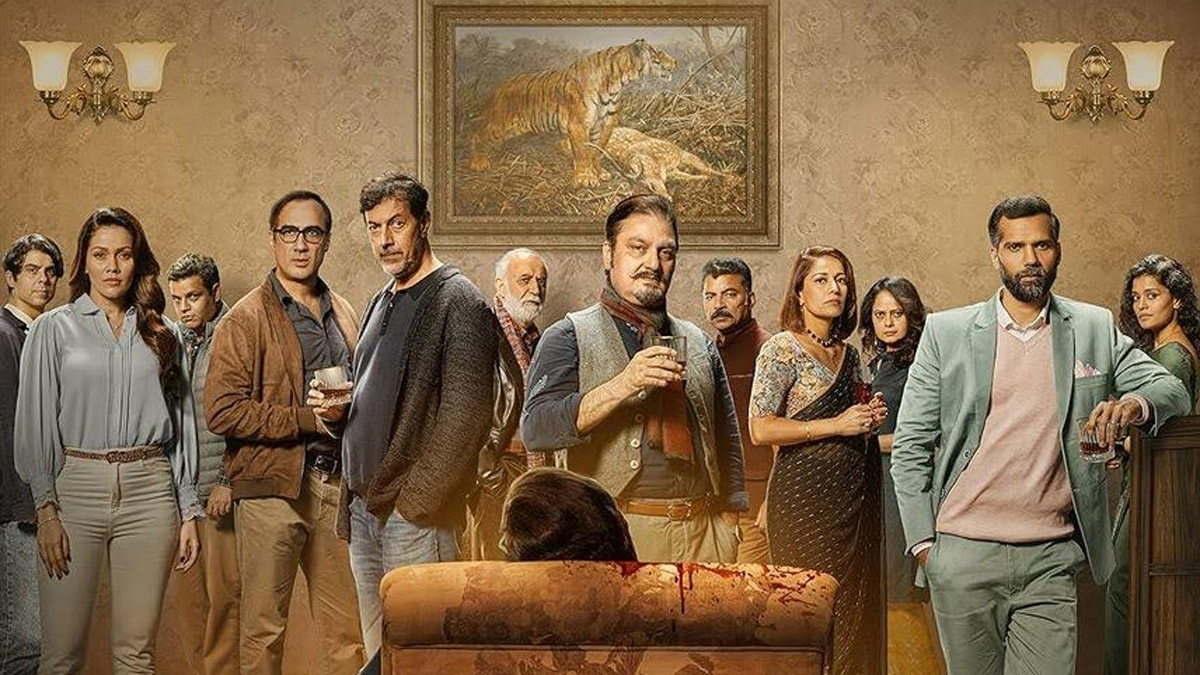
MUMBAI: Zee5 is serving up another killer collaboration and this time, the murder mystery comes with a generous side of dark humour and family dysfunction. The streaming platform has partnered with Applause Entertainment and Mithya Talkies to bring Everybody Loves Sohrab Handa, a fresh, twisted whodunnit written and directed by acclaimed filmmaker and actor Rajat Kapoor. The film will stream exclusively on Hindi Zee5 from 10 April.
The movie reimagines the classic murder mystery genre with a contemporary, darkly comic edge. It revolves around a group of friends and family who smile, drink, and celebrate together until the silence snaps and long-buried secrets spill out. The stellar ensemble cast includes Vinay Pathak, Ranvir Shorey, Waluscha De Sousa, Saurabh Shukla, Chandrachoor Rai, Neil Bhoopalam, Koel Purie, Palomi Ghosh, and Rajat Kapoor himself.
This latest offering continues the successful partnership between Zee5 and Applause Entertainment, which has previously delivered diverse hits such as Mithya, Bloody Brothers, and Jab Khuli Kitaab.
&TV Business Head of hindi Zee5 and chief channel officer Kaveri Das said, “Our collaboration with Applause Entertainment has consistently delivered distinct, high-impact storytelling. Everybody Loves Sohrab Handa is a natural progression, reinforcing our focus on genre-led content with a compelling whodunnit premise and a strong ensemble cast.”
Applause Entertainment business head for movies Sunil Chainani added, “This film adds yet another compelling layer to our slate with Rajat Kapoor’s unmistakable voice.”
Rajat Kapoor shared, “What interested me was not just the mechanics of a whodunnit, but the emotional violence that precedes physical violence. These are people who smile at each other, but there’s so much that is not said.”
The film promises razor-sharp writing, layered performances, and simmering tension, inviting viewers not just to solve the crime but to unravel the complex relationships at its heart.
If you love a good murder mystery served with wit and emotional depth, Everybody Loves Sohrab Handa looks set to be your next addictive watch. Mark your calendars, the whodunnit drops on Hindi Zee5 from 10 April.






