News Headline
Satellite skirmish: TRAI opposes DoT over rural broadband pricing


NEW DELHI: India’s telecom regulator has turned into an immovable object. The Telecom Regulatory Authority of India (TRAI) has stuck to its guns over how to price spectrum for satellite broadband, rebuffing the Department of Telecommunications’ (DoT) attempt to redirect subsidies away from the rural masses towards a handful of hard-to-reach areas.
At the heart of the dispute is a simple question: should satellite operators pay an extra Rs 500 per year for each urban subscriber, with rural users getting a free pass? Or should the surcharge disappear entirely in favour of a five per cent revenue share—with a one per cent discount dangled like a carrot if operators connect at least five per cent of customers in border, hill and island areas?
TRAI, in its response dated 8 December to DoT’s back reference, wasn’t having any of it. The regulator pointed out that rural areas house a whopping 65 per cent of India’s population—some 904 million people—whilst border, hill and island regions account for a mere 5 per cent. “Restricting incentives only to border, hill or island areas would exclude millions of households in rural areas from the incentive, undermining the broader policy goal of inclusive connectivity,” the authority declared with the finality of a judge’s gavel.

The regulator’s plan is elegantly straightforward: charge non-geostationary orbit (NGSO) satellite operators like Starlink four per cent of adjusted gross revenue (AGR) plus Rs 500 annually per urban subscriber, whilst leaving rural subscribers untouched. The reasoning? NGSO satellites—whizzing about in low earth orbit—offer lower latency and better coverage than their geostationary cousins parked 36,000km up. That competitive edge, TRAI reckons, deserves a premium price tag.
DoT had fretted about “implementation challenges” with the rural-urban split. TRAI dismissed this with bureaucratic disdain, noting that telecom operators already submit detailed rural-urban breakdowns in their regular reports. What’s more, draft rules require stationary satellite terminals to be geo-locked to specific premises, making it child’s play to determine whether a connection is in Lutyens’ Delhi or a village in Madhya Pradesh.
The regulator also swatted away DoT’s proposal to continue charging BSNL—the state-owned telecom dinosaur—just one per cent of AGR for its satellite phone services, ostensibly because it serves “strategic purposes”. TRAI called this discriminatory, pointing out that other operators also provide strategic services without special pricing. Level playing field and all that.
On subsidies for satellite terminals—which can cost $200-450 a pop—TRAI doubled down on its recommendation that the government cough up support through the Digital Bharat Nidhi fund. DoT had resisted, citing a Rs 1.73 lakh crore ($20 billion) funding gap. TRAI’s retort was deliciously pointed: the government should “suitably review the allocation of funds between schemes/projects” now that satellite broadband offers a faster, cheaper alternative to fibre in remote areas.
The authority also held firm on giving operators 12 months to install satellite gateways, with a 30-day grace period—mirroring the rollout obligations for terrestrial networks. DoT had worried about consistency; TRAI assured them there was none to worry about.
Throughout its 50-page response, the regulator repeatedly emphasized that satellite internet represents a “ready solution” for underserved areas—available the moment services launch, unlike fibre networks that take years to build. Internet penetration in rural India stands at a paltry 46.73 per cent versus 113.83 per cent in urban areas. Bridging that digital divide, TRAI insists, requires incentivizing operators to look beyond lucrative city markets.
The ball is now back in DoT’s court. Will the department accept TRAI’s reasoning, or will this satellite spectrum saga spawn yet another round of regulatory ping-pong? One thing’s certain: India’s rural millions are watching—assuming they can get a signal.






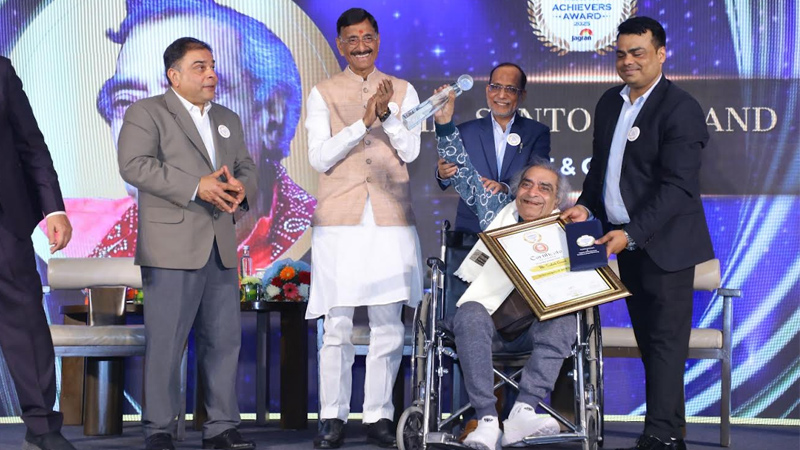
NEW DELHI: Hamdard Laboratories gathered a cross-section of India’s achievers in New Delhi on Friday, handing out the Hakeem Abdul Hameed Excellence Awards to figures who have left their mark across healthcare, education, sport, public service and the arts.
The ceremony, attended by minister of state for defence Sanjay Seth and senior officials from the ministry of Ayush, celebrated individuals whose work blends professional success with a sense of public purpose. It was as much a roll call of achievement as it was a reminder that influence is not measured only in profits or podiums, but in people reached and lives improved.
Among the headline awardees was Alakh Pandey, founder and chief executive of PhysicsWallah, recognised for turning affordable digital learning into a mass movement. On the sporting front, Arjuna Awardee and kabaddi player Sakshi Puniya was honoured for her contribution to the game and for pushing women’s participation onto bigger stages.
The cultural spotlight fell on veteran lyricist and poet Santosh Anand, whose songs have echoed across generations of Hindi cinema. At 97, Anand accepted the honour with characteristic humility, reflecting on a life shaped by perseverance and hope.
Healthcare honours spanned both modern and traditional systems. Manoj N. Nesari was recognised for strengthening Ayurveda’s place in national and global health frameworks. Padma shri Mohammed Abdul Waheed was honoured for his research-backed work in Unani medicine, while padma shri Mohsin Wali received recognition for his long-standing contribution to patient-centred care.
Education and social development also featured prominently. Padma shri Zahir Ishaq Kazi was honoured for decades of work in education, while former Meghalaya superintendent of Police T. C. Chacko was recognised for public service. Goonj founder Anshu Gupta received an award for his dignity-centred rural development initiatives, and the Hunar Shakti Foundation was honoured for empowering women and young girls through skill development.
The Lifetime Achievement Award went to former IAS officer Shailaja Chandra for her long career in public healthcare and governance, particularly in the traditional systems under Ayush.
Speaking at the event, Hamdard chairman Abdul Majeed said the awards were a tribute to those who combine excellence with empathy. “These awardees reflect Hakeem Sahib’s belief that healthcare, education and public service must ultimately serve humanity,” he said.
Minister Seth struck a forward-looking note, saying India’s young population gives the country a unique opportunity to become a global destination for learning, health and wellness by 2047.
The ceremony also featured the trailer launch of Unani Ki Kahaani, an upcoming documentary starring actor Jim Sarbh, set to premiere on Discovery on 11 February.
Instituted in memory of Unani scholar and educationist Hakeem Abdul Hameed, the awards have grown into a national platform that celebrates those building a more inclusive and resilient India. For one evening at least, the spotlight was not just on success, but on service with substance.






