News Broadcasting
Sarma retires in June; govt. yet to move on replacement

NEW DELHI: Indian pubcaster Prasar Bharati would soon be headless unless the government, too busy with other issues like reservation for backward classes in educational institutions, hurries up.
On 30 June 2006, Prasar Bharati CEO KS Sarma retires after serving an over five-year term that can be easily termed a roller-coaster ride.
Following Sarma to the revolving door – sooner rather than later – is director-general of Doordarshan Navin Kumar whose term as a bureaucrat in Delhi ends in August. After that he has to revert to his parent state of Bihar.

Kumar was appointed as the DG of Doordarshan in February of 2005. Prasar Bharati, an autonomous organization, manages pubcasters DD and All India Radio.
While the CEO of Prasar Bharati is selected by a three-member panel headed by the vice-president of India, the DG is shortlisted by the board of Prasar Bharati that includes the chief executive and chairman.
The present chairman of Prasar Bharati, veteran journalist MV Kamath, was appointed during the tenure of previous government, headed by the right-wing Bharatiya Janata Party.
Prasar Bharati sources said that apart from Sarma and Kumar, there were several other senior officials who are on their way out and would have to be replaced.
Meanwhile Sarma, a veteran of Prasar Bharati (he officiated as the DG of Doordarshan when he was a joint secretary in the I&B ministry in the mid to late 1990s) has seen over five ministers at the information and broadcasting ministry, which controls the purse strings for the publicly funded Prasar Bharati.
Despite allegations of nepotism during a time when DD used to outsource marketing of big events, including the money-spinning cricket matches involving India, a wily Sarma has come out unscathed.
It was during Sarma’s tenure as the CEO that DD floated its subscription-free DTH service, which raced ahead of the country’s first pay TV DTH service, Dish TV, in terms of subscribers.
For the financial year ended march 2006, for the first time Prasar Bharati clocked a gross revenue of Rs 12.38 billion with Doordarshan clocking Rs 9.68 billion and All India Radio 2.7 billion that signified a growth of 67.67 per cent.
Some of the achievements during Sarma’s tenure included the following:
1. Increased focus on pro-active in house marketing of properties.
2. Successful execution of media campaigns on behalf of government departments.
3. Rationalization of rate cards to suit the changing market conditions.
4. A strategic shift from Sponsored Programmes to Self Financing Scheme.
5. Introduction of blockbuster Hindi Feature Films on DD National and marketing them in-house.
6. Leveraging AIR’s vast network and unprecedented reach.
7. Narrowcasting programming strategy.
8. Publicity support for programmes to create awareness, especially among C & S audience.
9. Improved billing and housekeeping efforts.





News Broadcasting
CNN-News18 to host Fury in the Gulf conclave on West Asia crisis
Three-hour summit to unpack geopolitical fallout and impact on India
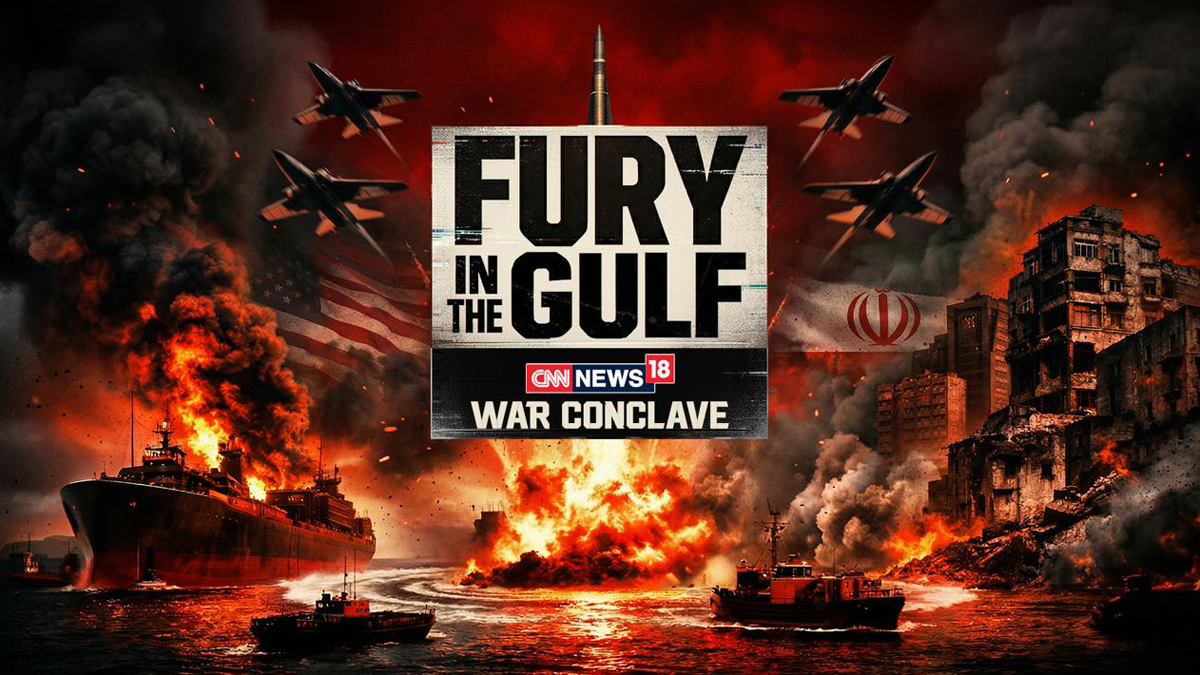
MUMBAI: CNN-News18 is set to host a special three-hour broadcast, Fury in the Gulf – War Conclave, on April 7, aiming to decode the escalating West Asia crisis and its far-reaching implications for India.
Scheduled from 4:00 PM to 7:00 PM, the conclave comes at a time when tensions between Iran and the United States are reshaping global geopolitics and triggering economic uncertainty. With India’s deep energy ties, trade links and large diaspora in the Gulf, the developments carry significant domestic relevance.
Built around the theme ‘Conflict, Consequences, and The Future,’ the programme will feature six curated sessions combining one-on-one interviews and panel discussions. The focus is to cut through the clutter and offer viewers a clearer understanding of the fast-evolving situation.
Key sessions include ‘Diplomacy in Times of War’ featuring Shashi Tharoor, and ‘World After the Iran Conflict’ with voices such as Ram Madhav, Reuven Azar, representatives from the European Union and the Iranian Deputy Envoy. Another session titled ‘Another Dunkirk?’ will bring together K. J. S. Dhillon and Jitin Prasada among others.
CNN-News18 editorial affairs director Rahul Shivshankar said, “In times of war, clarity becomes the most powerful tool. Fury in the Gulf – War Conclave brings together credible voices to address the questions and confusion that arise amid an overwhelming influx of information.”
He added that the initiative is aimed at delivering “facts, perspective, and insight” at a time when misinformation can easily cloud public understanding.
Echoing the sentiment, CNN-News18 CEO– English and business news Smriti Mehra said the conflict marks a defining global moment, with consequences that extend well beyond the region. She noted that the conclave seeks to present the crisis with “depth, nuance and responsibility” so audiences can better grasp its real-world impact.
As geopolitical tensions continue to dominate headlines, the conclave positions itself as an attempt to bring order to the noise, offering viewers a structured, insight-led look at a complex and rapidly shifting global situation.






