News Broadcasting
Samsung’s supreme galaxy series redefines newsroom excellence


MUMBAI: Samsung, the reigning titan of android innovation, has once again set a benchmark, thrilling tech enthusiasts worldwide with its groundbreaking Galaxy Z Series and S24 Ultra devices.
In a move that marries cutting-edge technology with journalistic excellence, Samsung has forged an extraordinary alliance with Republic Media Network, India’s largest news broadcaster. This dynamic partnership goes beyond mere collaboration-it’s a masterstroke that blends the supreme power of Samsung’s android ecosystem with the adrenaline-charged world of real-time news delivery.
Imagine the energy of breaking news powered by the sleek sophistication of the Galaxy Z Series, paired with the unmatched prowess of the S24 Ultra. Together, they promise to reshape how stories are captured, crafted, and delivered across Republic’s English, Hindi, Bangla, and Kannada channels.

With this synergy, the newsroom isn’t just evolving-it’s transforming into a tech-driven powerhouse, rewriting the rules of modern journalism and reaffirming Samsung’s dominance as the leader in the android universe.
The partnership introduces Samsung’s flagship devices into the heart of Republic’s operations—from studios to on-ground reportage—enabling journalists to leverage advanced features like pro-camera capabilities, Galaxy AI tools, and live translation for breaking news and primetime broadcasts. This marks a significant leap in the integration of mobile and AI technology in Indian newsrooms.
The partnership ensures that Republic’s journalists use the Galaxy Z Series/S24 Ultra to improve efficiency, speed, and quality in news delivery. From live-action reporting to high-tech studio segments, the devices will support features like circle to search, photo assist, and interpreter, revolutionising how breaking news and live-action segments are presented. AI-driven tools such as note assist and live translate will also be used for newsroom operations, ensuring lightning-fast information dissemination.
The collaboration will also see Republic’s primetime shows filmed entirely on the Galaxy S24 Ultra, showcasing the device’s diverse shooting modes, motion capture, and light-setting capabilities. This unique approach brings viewers closer to the action while demonstrating the power of mobile technology in broadcasting.
Republic Media Network CEO, Hersh Bhandari highlighted the partnership’s transformative potential, “At Republic Media Network, we believe in the power of innovation to drive progress. Our partnership with Samsung underscores our commitment to embracing cutting-edge technology to enhance the way news is created and delivered. By integrating advanced mobile and AI tools, we are shaping the future of news, making it faster, more efficient, and more impactful for our viewers.”
This partnership signals a paradigm shift in news production, combining Republic’s unparalleled reach with Samsung’s advanced technology. It sets the stage for a new era of content-tech collaborations, enhancing how news is produced and consumed across India’s diverse audience base.




News Broadcasting
BBC to cut up to 2,000 jobs in biggest overhaul in 15 years
Cost pressures and leadership change drive major workforce reduction plan
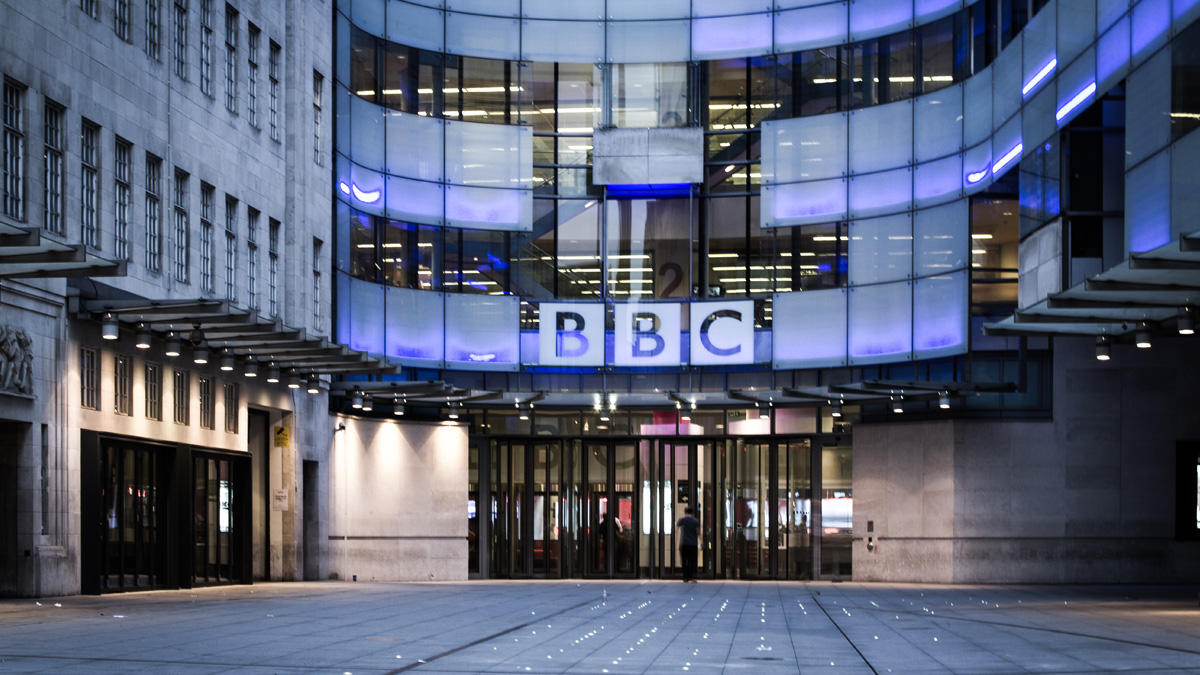
LONDON: BBC has unveiled plans to cut up to 2,000 jobs, roughly 10 per cent of its global workforce, in what marks its biggest downsizing in 15 years.
The announcement was made during an all-staff meeting led by interim director-general Rhodri Talfan Davies, as the broadcaster moves to tackle mounting financial pressures and reshape its operations.
Between 1,800 and 2,000 roles are expected to be eliminated from a workforce of around 21,500. The cuts form part of a broader plan to save £500 million over the next two years, aimed at offsetting rising costs, stagnating licence fee income and weaker commercial revenues.
In a communication to staff, BBC interim director-general Rhodri Talfan Davies said, “I know this creates real uncertainty, but we wanted to be open about the challenge,” acknowledging the impact the move would have across the organisation.
The restructuring comes at a time of leadership transition. Former director-general Tim Davie stepped down earlier this month, with Matt Brittin, a former Google executive, set to take over the role on May 18, 2026.
While some cost-cutting measures are being implemented immediately, the majority of the structural changes are expected to roll out over the next few years, with full savings targeted by the 2027–2028 financial year.
The broadcaster had earlier signalled its intent to reduce its cost base by around 10 per cent over a three-year period, warning of “difficult choices” as it adapts to shifting economic realities and audience expectations.
With operating costs hovering around £6 billion annually, the BBC’s latest move underscores the scale of the financial challenge it faces, as it balances public service commitments with the need for long-term sustainability in an increasingly competitive media landscape.