Hollywood
Russian composer Alexander Zhurbin inks deal with Warner/Chappell Music


MUMBAI: Warner/Chappell Music (WCM), the music publishing arm of Warner Music Group, has signed a global publishing agreement with Russian composer Alexander Zhurbin.
Zhurbin is one of the industry’s most acclaimed and prolific composers, having written four symphonies, four concerti (for piano, violin, cello and viola with orchestra), six operas, and three ballets, as well as more than 40 stage musicals, 60 film and TV scores, and hundreds of popular songs. Effective immediately, Warner/Chappell will administer his works outside of Russia.

“I am happy to write simultaneously all different kinds of music: symphonies for big orchestras, pop songs, string quartets, rock ballets, chamber operas, and film soundtracks. When you turn your brain from one kind of music to another, your view is getting fresher, your ears are hearing better,” said Zhurbin.
“Alexander has built a cherished body of work, as indicated by the fact that it’s been performed by some of the finest ensembles in Russia, Europe, Canada, and the United States. He’s one of today’s most prolific composers and we’re privileged to have him join the Warner/Chappell family,” said Warner/Chappell Music SVP of theatre and catalog development Sean Patrick Flahaven.
Zhurbin’s hit rock-opera, Orpheus and Eurydice, ran for a record-breaking 39 years in Russia and sold over three million albums. His English-language musical, How It Was Done In Odessa, had a sold-out run at the historic Walnut Street Theatre in Philadelphia. His English-language stage musicals in progress include Used and Abused (based on Dostoevsky), The Seagull (based on Chekhov), children’s opera Good Health, Your Majesty, and rock–opera Orpheus and Eurydice.
Zhurbin is also a published author of seven books, including the recent My History of Music. Born in Tashkent, Uzbekistan, Mr. Zhurbin studied music at Tashkent Conservatory, Gnessin Music Academy, and Leningrad Conservatory, earning his PhD.
A major festival, named ’50 Years with the Music of Maestro Alexander Zhurbin’ featuring music Zhurbin composed, will be held in Moscow from October through December, 2015.
It may be recalled that in June 2013, WMG announced the acquisition of Gala Records Group, Russia’s leading independent music company, and subsequently established Warner Music Russia.


Hollywood
Paramount eyes $24bn Gulf support to fund Warner Bros Discovery merger: Reports
Sovereign funds line up funding as media giants chase streaming scale
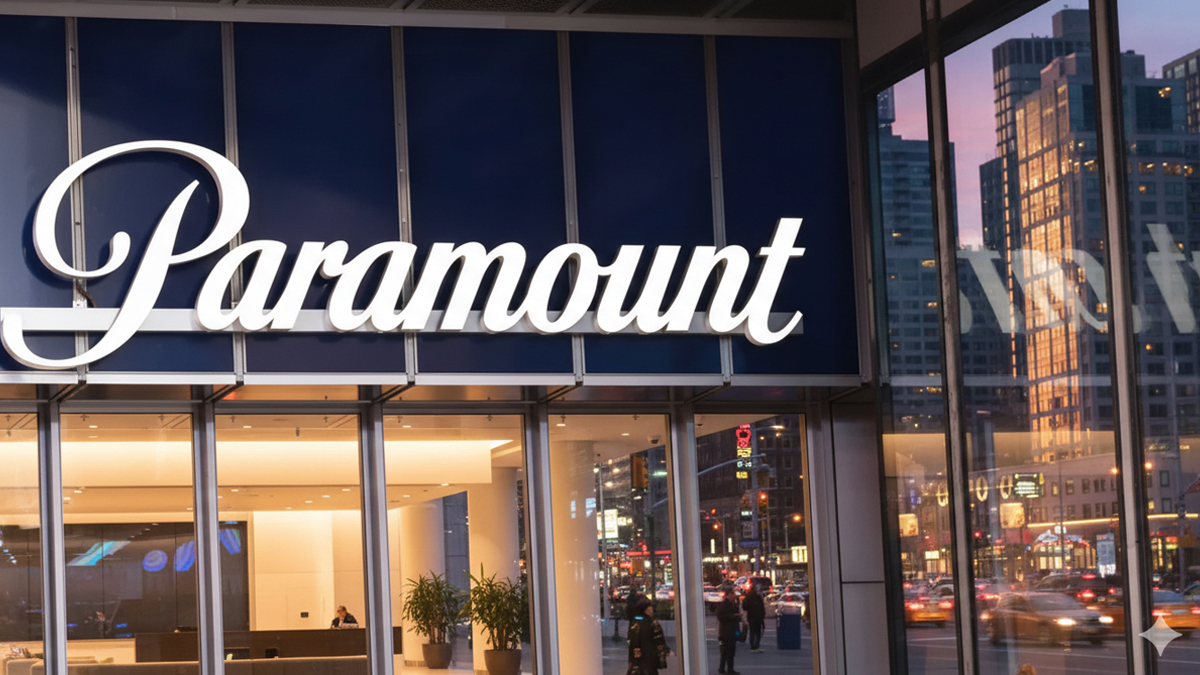
NEW YORK: Paramount Skydance is in talks to secure nearly $24 billion in equity commitments from Gulf sovereign wealth funds to support its planned takeover of Warner Bros. Discovery, according to a WSJ report.
The funding push comes as Paramount Skydance advances its proposed $110 billion deal for Warner Bros. Discovery, which carries an equity valuation of $81 billion and is expected to close in the third quarter of 2026.
At the heart of the financing plan are three major Gulf investors. Saudi Arabia’s Public Investment Fund is expected to contribute roughly $10 billion, while the Qatar Investment Authority and Abu Dhabi-based L’imad Holding are likely to make up the remainder.
Crucially, the proposed investments are structured as non-voting stakes. This means the Gulf backers would not have direct control in the combined entity, a move designed to ease regulatory concerns in the United States. Paramount executives reportedly do not expect the deal to trigger scrutiny from bodies such as the Committee on Foreign Investment in the United States or the Federal Communications Commission.
If completed, the merger would bring together a formidable portfolio of entertainment and news assets, including CNN and CBS. The combined entity aims to better compete in a fast-evolving media landscape where streaming platforms are steadily pulling audiences away from traditional television.
The deal reflects a broader shift in global media, where scale is increasingly seen as essential to survive the streaming wars. By pooling content libraries, technology and distribution, Paramount Skydance and Warner Bros. Discovery are betting on size and synergy to drive future growth.
The involvement of deep-pocketed Gulf investors also underscores the growing role of sovereign wealth in shaping global media consolidation, particularly at a time when high-value deals demand equally large financial backing.
With shareholder votes and regulatory milestones still ahead, the proposed tie-up remains one of the most closely watched media deals of the year. If it clears the final hurdles, it could redraw the competitive map of the global entertainment industry.






