International
Russel Crowe set to host two AACTA award ceremonies

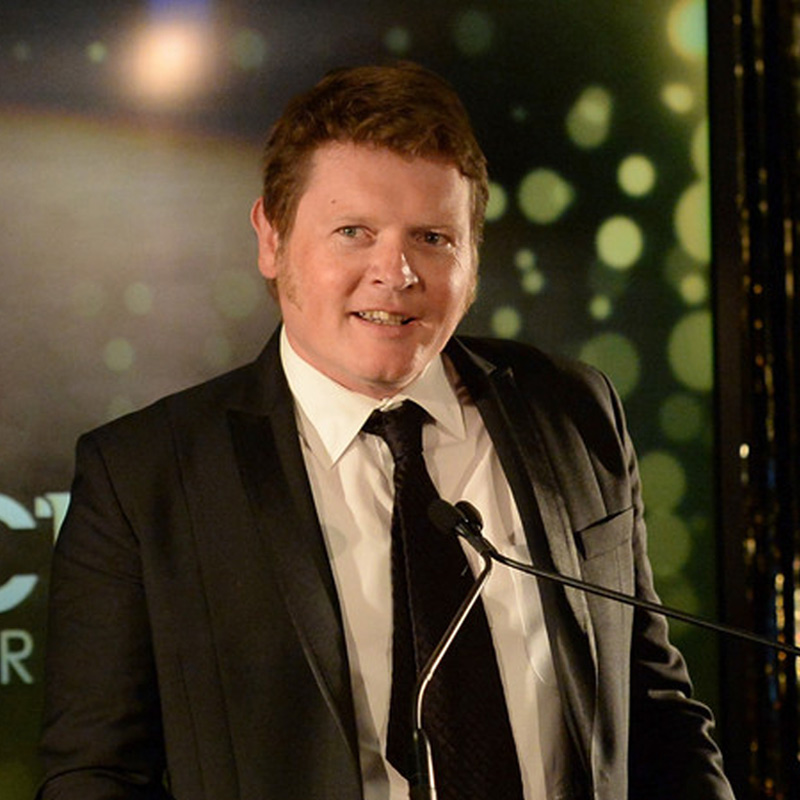
MUMBAI: Russell Crowe will host two of the Australian Academy of Cinema and Television Arts‘ upcoming trio of awards ceremonies that will commence with the AACTA International awards. The event will be held in Los Angeles on 26 January, which also happens to be Australia Day.
Taking the AACTA‘s awards season forward will be a luncheon party on 28 January where the craft award and the prestigious Raymond Longford Award for lifetime achievement will be given. The star will then fly to Sydney to host the main awards ceremony on 30 January.
Following the withdrawal of local actor Hugh Sheridan who cited a scheduling conflict Crowe is stepping in to the host the events. The actor will join Geoffrey Rush (AACTA president) and Cate Blanchett (Australian Film Institute-AACTA Ambassador) in the lineup of AACTA awards presenters.

Leading the nominations for the second annual AACTA Awards is indigenous hit musical The Sapphires, which was named on Wednesday as the top-grossing Australian film at the box office in 2012, taking AUS$14.5 million ($15.3 million) in its home territory.
The Sapphires is up for a total of 12 awards, including best film, where it is vying for the top prize against Jonathan Teplitzsky‘s Burning Man, Cate Shortland‘s Lore and Kieran D‘Arcy-Smith‘s Wish You Were Here.
AACTA CEO Damian Trewhella said that Crowe has shown his commitment to the Australian Academy since its launch 18 months ago.
“Russell Crowe is a formidable talent whose work has been recognized through peer assessed awards the world over, including through the Oscars, BAFTAs and AFI Awards,” Trewhella said.
“That Russell is hosting two events for the Australian Academy in L.A. and Sydney within the space of a week attests to both his support of the Australian screen industry, and his leadership with AACTA as we promote a voice for the Australian industry in the U.S,” he added.
Crowe will be reunited with his Les Miserables co-star Hugh Jackman who is up for best actor at the AACTA International Awards.


International
Russia-India cinematic spectacle Persimmon of My Love set for grand Moscow debut
Hindi cinema style musical revives Indo-Soviet cinema ties for today

MUMBAI: A new chapter in cross-border storytelling is set to unfold as Persimmon of My Love gears up for its premiere in Moscow on 1 April 2026, marking the first large-scale cinematic collaboration between Russia and India in decades.
Positioned as a modern nod to the cultural exchange that once brought Indian classics to Soviet audiences, the film blends Hindi cinema flair with Russian storytelling, aiming to rekindle a long-standing cinematic friendship.
Directed by Marius Weisberg, the musical comedy follows two brothers navigating a lively world of music, family and romance. The lead roles are played by Demis Karibidis and Mikhail Galustyan, with Karibidis also contributing as a screenwriter.
Shot entirely in India, the production leans heavily into Hindi cinema style spectacle. Filming took place across Mumbai studios and the cities of Udaipur and Jodhpur, whose architecture was used to create the fictional setting of Khurmada. A crew of over 350 worked on the project, with large-scale sequences featuring up to 1,000 extras.
The film also brings Indian creative talent into the mix. Dance sequences are choreographed by Jay Kumar, while music by Zurab Matua features songs in both Hindi and Russian, adding to its cross-cultural appeal.
Backed by TNT channel, MyWayStudio and the Russian Cinema Fund, the project reflects a broader push to strengthen cultural ties between the two countries.
With its mix of colour, comedy and cross-border collaboration, Persimmon of My Love is not just a film release but a reminder that cinema, much like music, travels well across borders.






