Hindi
Ritesh Batra’s ‘Lunchbox’ awarded at APSA

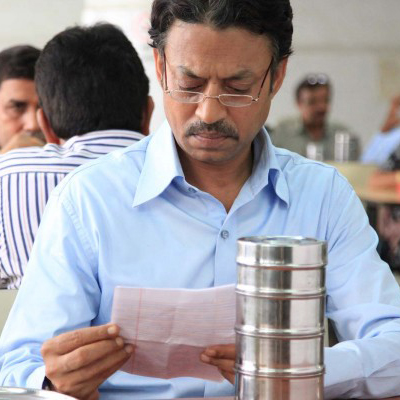
NEW DELHI: Director Ritesh Batra won the best award for Screenplay in Lunchbox and also the Grand Jury Prize at the Asia Pacific Screen Awards in Brisbane recently.
The film – which has already won a large number of laurels worldwide – had recently also won three awards at the 56th Asia-Pacific Film Festival award ceremony held in Macau.

Renowned filmmaker Shyam Benegal was chairman of the jury for the annual Asia Pacific Screen Awards where Anurag Kashyap’s film Ugly had also been entered in competition. Other jury members were Korean screenwriter and director Kim Tae-yong, “Queen of Sri Lankan Cinema” actress of stage and screen Hon Dr Malani Fonseka, Turkish actor Tamer Levent, Swiss director Christoph Schaub and Hong Kong producer Albert Lee. The preview committee included film critic Meenakshi Shedde from India.
The Asia Pacific Screen Awards (APSA) is an international cultural initiative of the State Government of Queensland, Australia, through Events Queensland, to honour and promote the films, actors, directors, and cultures of Asia-Pacific to a global audience and to realise the objectives of UNESCO to promote and preserve the respective cultures through the influential medium of film.
Staged for the first time in 2007, APSA collaborates with UNESCO and FIAPF – the International Federation of Film Producers Associations, which is the body that recognises international film festivals. Winners are determined by an international jury and films are judged on cinematic excellence and the way in which they attest to their cultural origins. APSA takes the works of filmmakers across more than 70 countries and areas in the Asia-Pacific region to new international audiences.
The FIAPF Award for Outstanding Achievement in Film was given to Korean film producer Lee Choon-yun by FIAPF Executive Member and Film Federation of India Secretary General Supran Sen. This award celebrates a filmmaker from the region whose career and actions strongly contribute to the development of the film industry.
The awards are the Asia Pacific region’s highest accolade in film, recognising and promoting cinematic excellence and cultural diversity of the world’s fastest growing film region: comprising 70 countries and areas, 4.5 billion people, and responsible for half of the world’s film output.
There were a total of over 230 films from 41 countries and areas, including Academy Award Best Foreign Language Film submissions from an unprecedented 19 countries.






Hindi
Dhurandhar the revenge storms past Rs 1,000 crore in a week, rewrites box office records
Aditya Dhar’s spy thriller sets fastest run to Rs 1,000 crore with record-breaking weekday hold

MUMBAI: The box office has a new juggernaut—and it is moving at breakneck speed. Dhurandhar the revenge has smashed past the Rs 1,000 crore mark worldwide in just a week, clocking a staggering Rs 1,088 crore and resetting the rules of the blockbuster game.
Backed by Jio Studios and B62 Studios, and directed by Aditya Dhar, the spy action sequel opened to the biggest weekend ever for an Indian film globally—and then refused to slow down. Unlike typical tentpole releases that taper off after Sunday, this one powered through the weekdays with rare muscle, posting Rs 64 crore on Monday, Rs 58 crore on Tuesday, Rs 49 crore on Wednesday and Rs 53 crore on Thursday.
The numbers stack up to a formidable first-week haul. India collections stand at Rs 690 crore nett and Rs 814 crore gross, while overseas markets have chipped in Rs 274 crore, taking the worldwide total to Rs 1,088 crore in just eight days.
The film’s opening weekend alone delivered Rs 466 crore, laying the foundation for what is now being billed as the fastest climb to the Rs 1,000 crore club in Indian cinema. Every single day of its first week has set fresh benchmarks, from the highest opening weekend to the strongest weekday hold—metrics that typically separate hits from phenomena.
A sequel to the earlier hit Dhurandhar, the film has not just built on its predecessor’s momentum but obliterated previous records, emerging as the biggest global blockbuster run by an Indian film to date.
At this pace, the film is not merely riding a wave—it is creating one.








