Gaming
Riot Games announces India Closed Qualifiers for ‘Convergence’

Mumbai: ‘Convergence’ by Riot Games in partnership with The Esports Club, is all set to showcase India’s esports prowess as the company today announced its plans to host an India Closed Qualifiers into the upcoming tournament. Joining forces with Lenovo as the Title Sponsor for its first ever international VALORANT esports tournament in India, Riot Games is committed to promoting local teams in the tournament scheduled between 14 to 17 December, 2023 at the Manpho Convention Center in Bangalore.
The India Closed Qualifiers will witness Indian VALORANT teams earn a chance to compete with some of the best professional VALORANT teams from Riot’s International Leagues from across the Pacific, EMEA and Americas. Scheduled to begin on 30 November, the closed qualifiers will invite the top six professional VALORANT teams from India to battle it out and secure a spot in the main tournament. The six teams will follow a Double Elimination format to select the home team that will join the Convergence main event. The upper bracket and lower bracket finals, as well as a grand finale of the qualifiers will be streamed on The Esports Club’s YouTube Channel, starting from 29 November. All teams have secured their invitation to the qualifiers based on their performance in the Indian domestic season in 2023.
Riot Games esports lead India & South Asia Sukamal Pegu said, “We are super excited to announce that the India Closed Qualifiers gives top local teams a great platform to showcase skills and play against some of the best professional VALORANT teams in the world. The goal behind Convergence is to grow esports talent in India and the qualifiers are a testament to the hyperlocal opportunities we are creating for our VALORANT community in the region.”

“Lenovo India has been championing esports as a dedicated way to reach out to gaming audiences, and with VALORANT being a popular title that’s well enjoyed across India we have been engaging with the title during various online and offline events. With our portfolio of great gaming products on Legion and LOQ, we feel it’s a great way for Lenovo to be seen and experienced by relevant younger TG who we believe will be glad that we are able to bring a great esports event to India” said Lenovo India director – marketing Chandrika Jain.
The main Convergence event starting from 14 December will be broadcast live in English on Riot’s Pacific Channels and in Hindi on Riot’s South Asia channels. The Esports Club will also carry the broadcasts on their channels.
Bolstering the gaming culture in India, Riot Games has been actively involved in fostering community engagement and enhancing the player experience with multiple initiatives over the past year. Recently, Riot Games celebrated the one-year anniversary of VALORANT’s first ever Indian agent Harbor by conducting a beach clean-up with the Indian gaming community, and also commemorated the third anniversary of VALORANT in India with BHARAT VALORANT celebrations.
The gaming community can witness the live action of the upcoming Convergence tournament through free and paid ticket options. Stay tuned for further details on ticketing set to be revealed in the coming weeks.




Gaming
Konami concludes successful eFootball India campaign
Campaign featuring Rinku Singh, Varun Chakravarthy and other stars boosts engagement ahead of FIFA World Cup 2026.
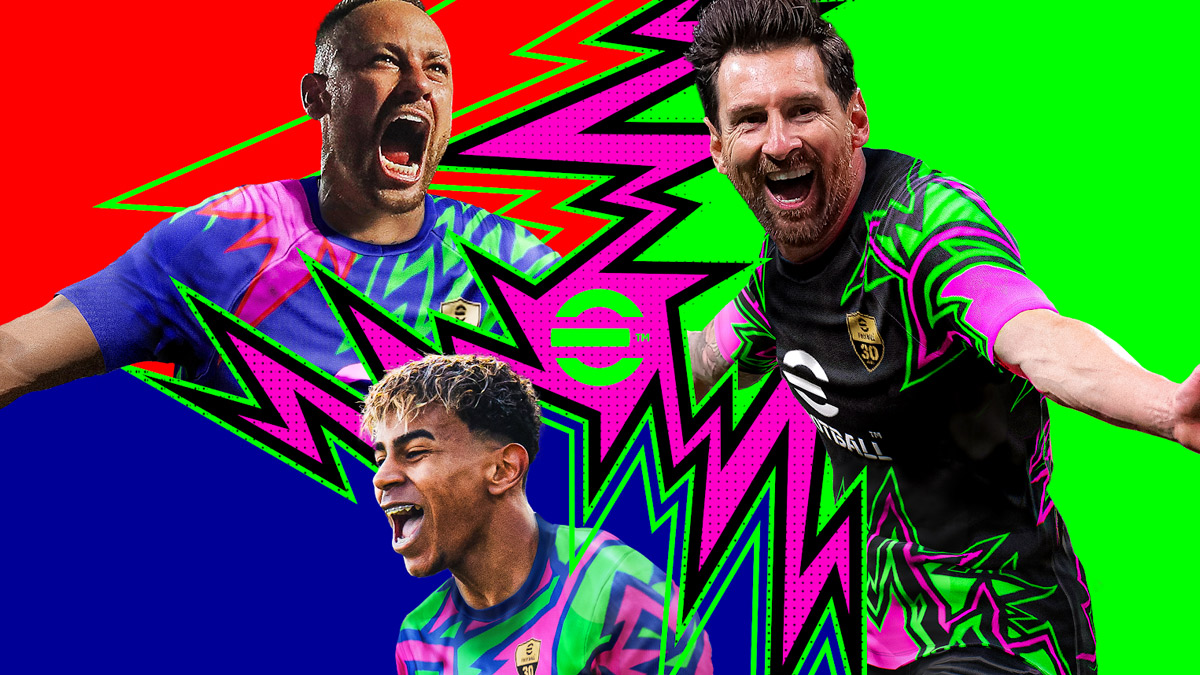
MUMBAI: When cricket meets football in the virtual world, even the biggest fans can’t help but score and Konami’s latest eFootball campaign in India has clearly hit the back of the net. Konami Digital Entertainment has successfully wrapped up its India campaign for eFootball, which brought together cricketers Rinku Singh and Varun Chakravarthy, actors Naslen Gafoor and Chandu Salim Kumar, and footballers Sahal Abdul Samad and Shubhasish Bose. The multi-star campaign generated strong excitement across gaming, football, and creator communities through social content, fan participation, and in-game engagement.
Building on the initial launch that featured a limited-time Lionel Messi card, the campaign united fan communities, lifestyle creators, football creators, and competitive eFootball influencers. It significantly expanded the game’s visibility and deepened engagement with fans across the country.
The campaign also saw thousands of entries submitted as part of its social media engagement challenge, reflecting high levels of community enthusiasm and active creator involvement.
Looking ahead, Konami plans to build on this momentum with more eFootball experiences for Indian fans as the FIFA World Cup 2026 approaches. With global attention on the tournament set to rise, India will remain a key market for deepening community engagement and bringing fans closer to the action.
In a country that lives and breathes sport, Konami has shown that mixing real-world stars with virtual thrills is a winning formula leaving fans eagerly waiting for the next goal.






