News Broadcasting
RIL will stand the test of time: Raghav Bahl

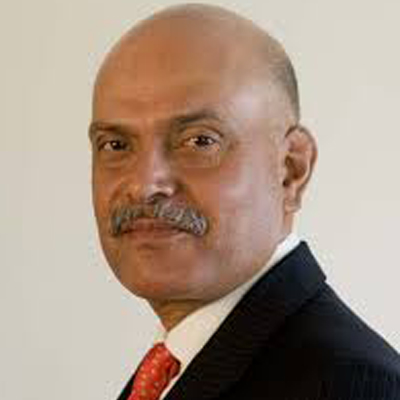
MUMBAI: He was much in the media about three months ago when he had sold his baby to an Indian business tycoon. After spending two months in the US researching for his ‘second innings’ as he calls it, Network18 founder and non-executive director Raghav Bahl is back in business.
Speaking at the TV.Nxt 2014 summit with Vanita Kohli Khandekar, Bahl seemed at ease while talking about his 18 successful years in the business and what could have been avoided. He highlights two life changing situations for his company with the first being in 1999, when he decided to move from a software and content production company to a broadcasting one. ”If you want to scale up you had to be in broadcast and we clearly wanted to be in the news side of it. It was no fun in being a 10 per cent player,” he says.

The second string of life was in 2007-08 when Viacom came to India looking for a partner and along with Network18 created the GEC Colors. ”They thought that if CNN and CNBC could coexist in the same balance sheet then they must be doing something right,” he proudly says adding that their main point was being a news company that entered the entertainment field.
“When the parent is a news company, we have a draconian law in India that a single Indian shareholder has to have 51 per cent of the news broadcast company, which meant I had to have 51 per cent at any point of time. That’s draconian for a single first generation entrepreneur. A lot of issues that TV18 faced were due to this, which is a less understood facet of the company,” he adds.
However, he also agrees that his peak investment phase in 2008 including diverging into HomeShop18 and Infomedia was a classical error because it coincided with the economic depression. ”We were losing about Rs 2 crore a day with cash loss of Rs 750 crore.” he admits. Although in 2009-10 he got an infusion of Rs 1000 crore equity capital, Bahl says that he should have used at least half of it to reduce debts than expand.
As popularly perceived that news is a loss making business, Bahl disagrees by saying that it actually makes a lot of money. Network 18’s news side was making Rs 700 crore to Rs 800 crore topline which it reinvested back in the business. “Which is why it seemed like it was making losses,” he says.
Bahl also points out that in the last four months, the company has launched six channels. ”Our EBIDTA was Rs 150 crore to Rs 200 crore. This is very healthy. Out of this, Rs 100 crore EBIDTA comes from CNBC business,” he informs. As per him, the nearest competitor to Network18 reaps Rs 250 crore to Rs 300 crore in topline.
He is unperturbed about the hype that surrounded Reliance Industries’ takeover of his company. ”There has been a lot of prejudgment regarding RIL. Just because we were a news company, we were in focus because there is an institutional morality built into it. The larger the biz house, the more the issue,” he says, while adding that Ronnie Screwvala’s deal of selling UTV to Disney didn’t come as much under media scanner as his company. The deal with Mukesh Ambani was a contractual commitment that was declared as convertible debentures on the first day. He hopes well for Network 18 in its new owners’ hands. ”Few years down the line, its balance sheet will be good,” he says. Side by side, he also foresees subscription revenues to grow to Rs 1000 to Rs 1500.
Addressing the slew of exits from the company after his own departure, Bahl asserts that those were just a few, while dozens have stayed loyal including R Jagannathan from Firstpost and Senthil Chengalvarayan, Menaka Doshi and Latha Venkatesh from CNBC-TV18. ”We just assume that the owner wants to compromise. I think Reliance Industries will stand the test of time,” he asserts.
Fear of journalism being tampered with is also a big question with the acquisition. Bahl feels that people undervalue Indian journalism. ”The world thinks it is power but it actually is a thankless business,” he says. Media in India is independent and plural with no media having more than 5-7 per cent voice, he adds.
With digital on the rise, which is also to be Bahl’s second stint at entrepreneurship, he believes that it will be the biggest competition to news, though not immediately but in the next 10 years. He has chosen to tread the path of mobile news. ”I am out of the TV business but news is my first love. There is a large amount of innovation happening in news. The way I serve, target, personalise and curate content will be important,” says he. According to him, the next generation news companies won’t be just content focused but will be a 50:50 share of content and technology. At the same time, the engineer will be as important as the editor.
Khandekar said that this view was similar to what Google is doing by offering news. But Bahl clarified that Google does not create content, it only curates content. In today’s world even big media companies, curate content apart from its original ones. But what matters most to the consumer is the experience. ”Anybody who says that he won’t curate or aggregate content is living in the medieval age. A journalist is a curator himself. But, the quality of original content will be the differentiating factor,” he stresses. His two month experience in the US has also taught him that in order to have a good brand, one needs at least 33-40 per cent original stuff.
While company acquisitions happen world over, Bahl feels that the industry does need capital in it. He feels that technology companies will find it difficult to enter the news business but news creators can learn technology easily. According to him New York Times and Times of India are examples of how companies have adopted better technology while online sites such as Vice and Vox have emerged into the digital era with high quality production of news.
Finally talking about the huge sum of money that Bahl pocketed from the transaction, he says that although it has taken away his insecurity, it has also made him more sensible.





News Broadcasting
News TV viewership jumps 33 per cent as West Asia war draws audiences
BARC Week 8 data shows news share rising to 8 per cent despite T20 World Cup
NEW DELHI: Even as individual television news channel ratings remain under a temporary pause, the genre itself is seeing a clear surge in audience attention.
According to the latest data from Broadcast Audience Research Council India, television news recorded a 33 per cent jump in genre share in Week 8 of 2026, covering February 28 to March 6.
The news genre accounted for 8 per cent of total television viewership during the week, up from 6 per cent the previous week. The spike in attention coincided with escalating geopolitical tensions involving the United States, Israel and Iran, which have kept global headlines firmly fixed on West Asia.
The rise is notable because it came at a time when cricket was dominating television screens. The high-stakes stages of the ICC Men’s T20 World Cup, including the Super 8 fixtures and semi-finals, were being broadcast during the same period.
Despite the cricket frenzy, viewers appeared to be toggling between sport and global affairs, boosting the overall share of news programming.
The surge in genre share comes even as the government has enforced a one-month pause on publishing ratings for individual news channels. The move followed regulatory scrutiny of the television ratings ecosystem.
While channel-level rankings remain temporarily out of sight, the genre-level data suggests that when global tensions escalate, audiences continue to turn to television news for real-time updates.