News Broadcasting
RIL posts strong Q2 earnings, media biz betters performance


KOLKATA: Reliance Industries Ltd (RIL) reported strong Q2 earnings on Friday. The telecom and retail business has driven the growth and the media business also bettered its performance.
“We delivered strong overall operational and financial performance compared to the previous quarter with recovery in petrochemicals and retail segment, and sustained growth in digital services business,” RIL CMD Mukesh Ambani said.
“Domestic demand has sharply recovered across our O2C business and is now near pre-Covid2019 level for most products. Retail business activity has normalised with strong growth in key consumption baskets as lockdowns ease across the country. With large capital raise in last six months across Jio and retail business, we have welcomed several strategic and financial investors into Reliance family. We continue to pursue growth initiatives in each of our businesses with a focus on the India opportunity,” he added.

The company’s operating profit fell 6.6 per cent year-on-year to Rs 10,602 crore in the July-September period. Its revenue fell 24 per cent over last year to Rs 1.16 lakh crore while operating margin widened to 16 per cent from 14.4 per cent earlier.
Reliance Jio’s revenue including access revenues for the quarter was Rs 21,708 crore, EBITDA stood at Rs 7,971 crore. It netted Rs 3,020 crore quarterly profit, a jump of 185 per cent year on year. The telco operator’s ARPU rose to Rs 145 per subscriber per month.
How did the media segment perform?
The media business' revenue rose by 31.5 per cent quarter-on-quarter to Rs 1,061 crore as Covid2019-linked impact on ad-revenues receded over the quarter. EBITDA for the quarter was at Rs 166 crore. Operating margins continued to improve, as broadcasting margins rose sharply, and digital news business swung into profitability.
The company said in a statement that ad-revenues rebounded sharply, as economic activity restarted on tapering of lockdowns. News business’ advertising has fully recovered, and entertainment recovery is near-complete by the end of the quarter. Subscription revenues have been resilient and domestic subscription revenue continues to rise led by expanding TV and Digital distribution tie-ups.
“TV viewership has now settled at 1.1x pre-Covid levels. Pay-TV has clawed back its share from free-to-air channels, as entertainment programming is back in full-swing. An increased propensity to pay for content has been witnessed. Flagship properties Moneycontrol and Voot have witnessed rapid growth in subscribers,” it added.







News Broadcasting
Kamlesh Singh receives Haldi Ghati Award from MMCF
India Today Group editor honoured for three decades of journalism at Udaipur ceremony.
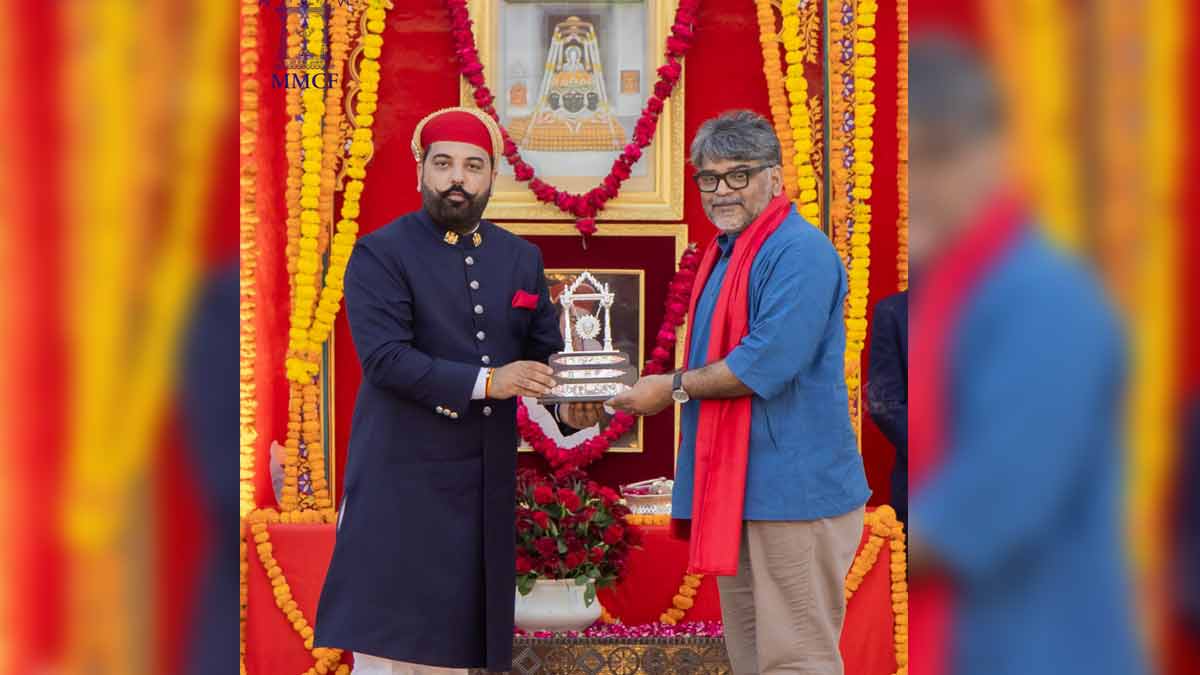
MUMBAI- Kamlesh Singh just turned a lifetime of sharp words into a shiny shield because when journalism wakes up a society, even the Maharana of Mewar wants to pin a medal on it.
The Maharana of Mewar Charitable Foundation (MMCF) conferred its prestigious Haldi Ghati Award on Kamlesh Singh, a senior editor at the India Today Group, during a ceremony in Udaipur on 15 March 2026. The national award, instituted in 1981-82, recognises “work of permanent value that initiates an awakening in society through the medium of journalism.”
Singh, who leads several editorial initiatives including Aaj Tak Radio, the Teen Taal community and The Lallantop, was presented the honour by Lakshyaraj Singh Mewar, Managing Trustee of MMCF. The citation highlighted his three decades of contributions to Indian media, innovations in digital journalism, mentoring young reporters, and his popular podcast persona “Tau” on Teen Taal, which fosters thoughtful public discourse.
The Haldi Ghati Award, named after the historic Battle of Haldighati symbolising valour and resilience, is one of four national awards given annually by MMCF. Past recipients include Tavleen Singh, Piyush Pandey and Raj Chengappa.
Other honourees this year included Padma Vibhushan Pt Hari Prasad Chaurasia, Vedamurti Devvrat Rekhe, Treeman of India Marimuthu Yoganathan, Vir Chakra Capt Rizwan Malik, and US-based researcher Molly Emma Aitken, who received the Colonel James Tod Award for contributions to understanding Mewar’s spirit and values.
In an era where headlines often shout louder than substance, the MMCF quietly reminded everyone that real journalism isn’t about noise, it’s about the quiet, persistent work that stirs society awake, one thoughtful story at a time.







