News Broadcasting
Reuters employees in the US steps up protest action against management

MUMBAI: Reuters US’ employees who are represented by the Newspaper Guild of New York have launched a strict work-to-rule campaign and a five-day national byline strike on Friday. This action comes as a round of negotiations begin today to reach a contract after nearly three years of talks. The effort to get an acceptable pact has mobilised Guild members in the editorial, technical and administration departments into a show of support for the Guild’s bargaining committee, which is scheduled to resume stalled contract talks today with the management of Reuters America.
Guild members are holding lunch time demonstrations at Reuters offices in
several cities, including the company’s North American headquarters in Times Square New York. They sport their traditional red t-shirts and perform only required work tasks. The Guild already has tentatively agreed to some reductions in health care coverage. It is also battling what it calls Reuters management’s attacks on retiree medical care and on active employees’ employment security. This took place after company managers sent US based reporting and picture-editing work offshore to low-wage countries.
New York Guild president Barry Lipton said, “It is particularly meaningful that in this time of big news stories our editorial members are withholding their bylines and credits in a show of support. These actions should send management the message that this is not a time of business as usual. Our members are demanding a fair contract.”

The Guild and its parent union, the Communications Workers of America
(CWA) have placed an advertisement in Monday’s edition of The New York Times. This calls attention to Reuters sending U.S.-based work to lower wage countries and the pitfalls of trying to cover American news from thousands of miles away. The Times’ advertisement includes an e-mail address telltom@nyguild.org, for those who want to tell Reuters CEO Tom Glocer what they think of his reckless experiment in “remote control journalism” Lipton said.




News Broadcasting
CNN-News18 to host Fury in the Gulf conclave on West Asia crisis
Three-hour summit to unpack geopolitical fallout and impact on India
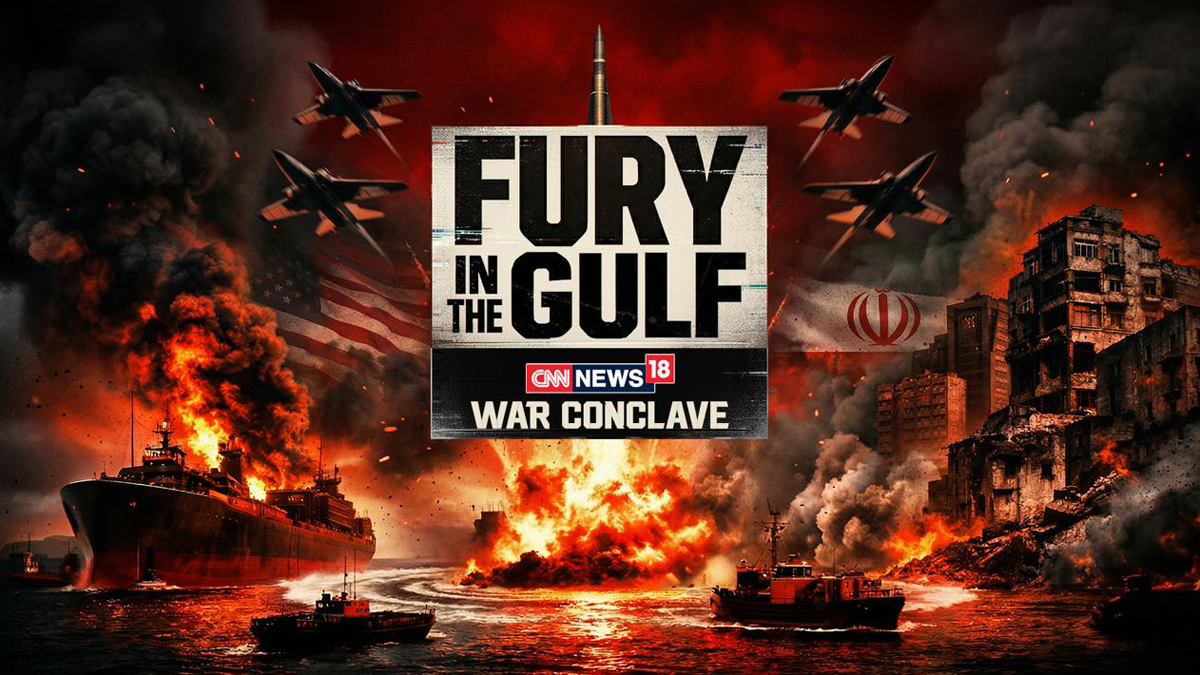
MUMBAI: CNN-News18 is set to host a special three-hour broadcast, Fury in the Gulf – War Conclave, on April 7, aiming to decode the escalating West Asia crisis and its far-reaching implications for India.
Scheduled from 4:00 PM to 7:00 PM, the conclave comes at a time when tensions between Iran and the United States are reshaping global geopolitics and triggering economic uncertainty. With India’s deep energy ties, trade links and large diaspora in the Gulf, the developments carry significant domestic relevance.
Built around the theme ‘Conflict, Consequences, and The Future,’ the programme will feature six curated sessions combining one-on-one interviews and panel discussions. The focus is to cut through the clutter and offer viewers a clearer understanding of the fast-evolving situation.
Key sessions include ‘Diplomacy in Times of War’ featuring Shashi Tharoor, and ‘World After the Iran Conflict’ with voices such as Ram Madhav, Reuven Azar, representatives from the European Union and the Iranian Deputy Envoy. Another session titled ‘Another Dunkirk?’ will bring together K. J. S. Dhillon and Jitin Prasada among others.
CNN-News18 editorial affairs director Rahul Shivshankar said, “In times of war, clarity becomes the most powerful tool. Fury in the Gulf – War Conclave brings together credible voices to address the questions and confusion that arise amid an overwhelming influx of information.”
He added that the initiative is aimed at delivering “facts, perspective, and insight” at a time when misinformation can easily cloud public understanding.
Echoing the sentiment, CNN-News18 CEO– English and business news Smriti Mehra said the conflict marks a defining global moment, with consequences that extend well beyond the region. She noted that the conclave seeks to present the crisis with “depth, nuance and responsibility” so audiences can better grasp its real-world impact.
As geopolitical tensions continue to dominate headlines, the conclave positions itself as an attempt to bring order to the noise, offering viewers a structured, insight-led look at a complex and rapidly shifting global situation.






