Education
Retirement Planning- The Basics that you need to keep in mind


Retirement planning is extremely important for every individual, irrespective of their career trajectory and financial background. A solid retirement plan is a must to get you through the twilight years without any compromises or financial hurdles. What comes to your mind when you consider the term retirement planning? This is basically the process where you work out your income based goals after retirement and the current steps required for achieving the same.
Working out the right retirement plan involves first zeroing in on income sources, forecasting future expenditure, sticking to a plan for increasing savings and also the management of risks and assets. The best retirement plans are those which cover future needs including medical care, emergency funds, post-retirement goals like buying a house or taking a vacation and also monthly expenses for the rest of one’s lifetime. You can start planning for retirement at any time in your career but as they say, the earlier the better!
Delving deeper into retirement planning

There are several types of retirement plans that are at your fingertips. You should always invest wisely in future retirement schemes, having clear information about the investment channel/avenue, the returns to be expected, market risks and the amount to be invested periodically among other factors. You should carefully plan the corpus that you wish to build for your post-retirement years. This should encompass all your lifestyle preferences including buying property, taking holidays every year, eating out, buying gadgets/appliances, buying something for your children/grand-children, investing in your children’s future, weddings, medical emergencies and so on.
Putting aside ample funds for the post-retirement years is of crucial importance. You should start investing as early as possible to reap the benefits later on. Planning for retirement should start long before your actual retirement. You should have a proper number in mind after thoroughly analyzing your future needs and also taking future inflation rates into account. Many people say that you require at least Rs. 1-2 crore to enjoy a comfortable retirement. Some say that you should accumulate enough money to sustain yourself on 80% of your monthly income post retirement. Suppose you earn Rs. 12 lakh annually and hence you should be able to sustain yourself on Rs. 9.6 lakh every year. This works out to around Rs. 1.92 crore or roughly Rs. 2 crore for a period of 20 years. Consult financial experts to work out how much you should be saving for retirement.
Stages of planning your retirement
There are several stages of life when you should be planning for retirement by investing as per your budget. Here are the key retirement planning stages.
● 21-35 years of age- This is the time when probably building a retirement plan or corpus will not be on your mind. However, you should remember that the earlier you start, the more you will benefit from the power of compounding. At this early professional and personal stage, you will have more money to be invested. Compound interest will enable interest earnings on top of interest and the more years you keep at it, the more will be your accumulated savings. Suppose you invest just Rs. 5,000 every month at the age of 25 when you start working. This will be worth at least 3-4 times more if you invest it at this young age rather than if you start investing at the age of 50 or so. This is the power of compounding interest. Check out the right mutual funds or stocks for investments and stay invested for a long time period. This will help you create wealth considerably. Try and invest at least 20-30% of your monthly income for your retirement. Contribute at least the amount deducted by your employer by way of PF.
● 36-50 years of age- This is the time when your income goes higher but expenses mount as well including the cost of starting a family, repaying higher education debt, home loans, weddings, children’s expenses, car loans and so on. Yet, you should continue saving for retirement. Maintain your original systematic investment plans or other mutual fund investments. Make sure that you and your family are insured both for life and health. Also try and utilize bonuses or surplus funds for investments.
● 50-60 years of age- This is the time when your income is at its peak and you have possibly managed to cover a lot of your debt and other liabilities. This is when you should invest all your surplus monthly income into aggressive investments for beefing up your retirement corpus. You already have your home and insurance investments ready. You can now diversify into other mutual funds and stocks, particularly of blue-chip companies if you desire. You can take a few risks, i.e. by investing in high-return funds which are subject to market volatility. This is the decade when you make up in terms of your overall savings.
Why mutual funds or stocks?
You should consider mutual funds or stocks for investments tailored to serve you well after your retirement. You must already know that conventional means of investments like bank deposits, real estate and PPF among others, are either constrained by falling rates that will not outstrip inflation or come with long lock-in periods or even liquidity issues. As a result, while you should always have a diversified portfolio with some real estate, some insurance and some conventional investment allocations, remember that to beat inflation, you should carefully invest in stocks and mutual funds. These are avenues which can give you good returns that easily surpass inflation.
However, you have to stay invested for the long haul and should be ready to suffer minor market blips in the course of time. Be patient and let the corpus accumulate over a period of time. Additionally, do your research and choose the best funds for investments. Always consult the experts like Groww which helps you plan and manage your investments to perfection. The transparent and user-friendly investment platform will enable steady wealth creation for retirement along with all the advice and inputs that you require from expert professionals. Here’s to a healthy retirement kitty!







Education
Abhishek Singh appointed director general of National Testing Agency
Technocrat with deep roots in India’s digital infrastructure push takes charge of the exam body that has faced intense scrutiny
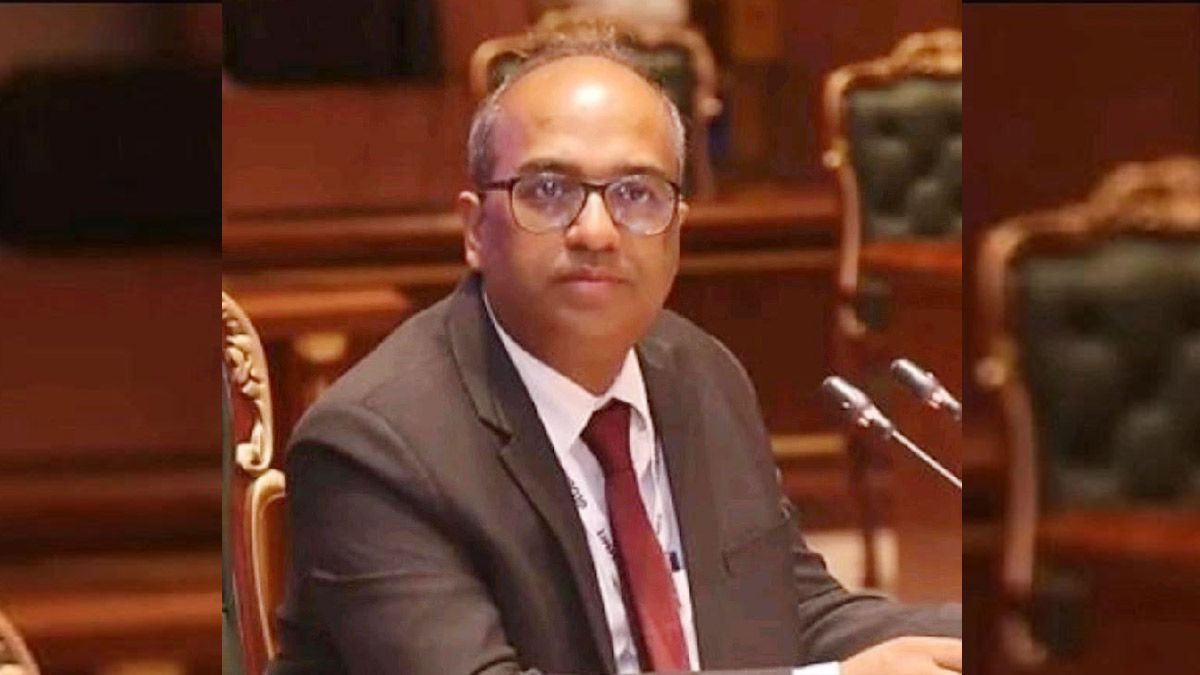
NEW DELHI: India’s beleaguered examination authority has a new boss. Abhishek Singh, currently director general of the National Informatics Centre (NIC), has been appointed director general of the National Testing Agency (NTA), which sits under the Ministry of Education. In a signal of just how seriously the government is treating the role, the post has been temporarily upgraded to the rank and pay of secretary to the government of India.
Singh is not your typical bureaucrat shuffled sideways into a troubled institution. At the NIC, he also held additional charge as additional secretary in the Ministry of Electronics and Information Technology (MeitY), overseeing artificial intelligence, emerging technologies and the Digital India Bhashini division, while simultaneously serving as chief executive of the India AI Mission. That is a formidable technology portfolio by any measure.
His CV reads like a guided tour of India’s digital public infrastructure. He served as president and chief executive of the National e-Governance Division, managing director and chief executive of Digital India Corporation, chief executive of Karmayogi Bharat, and chief executive of MyGov between 2019 and 2024. Before that, from 2014 to 2017, he was executive director at the Food Corporation of India, where he handled information technology, engineering, storage and, additionally, the North Zone operations and the role of chief vigilance officer.
His field credentials are equally robust. Singh has served in both Nagaland and Uttar Pradesh across multiple tenures, navigating law and order, floods, droughts and communal tensions with equal measure. As principal secretary to the chief minister of Nagaland between 2017 and 2019, he also held charge of urban development, personnel and administrative reforms, and, in 2018, home commissioner. At the grassroots, he built roads, irrigation systems, schools and hospitals, and drove welfare programmes focused on poverty alleviation, education and healthcare.
Singh has also worked alongside international agencies including DFID, UNICEF and WHO, contributing to the Child’s Environment Project in Budaun and the Pulse Polio Eradication Programme in Uttar Pradesh. He has conducted elections at the parliamentary, state assembly and local body levels.
Academically, he is no slouch either. Singh holds a master’s degree in public administration from Harvard Kennedy School, where he was a Mason Fellow, and completed his B.Tech and M.Tech from IIT Kanpur.
Meanwhile, the broader bureaucratic reshuffle sees Bihar cadre IAS officer Chanchal Kumar named the new secretary in the Ministry of Information and Broadcasting. Rohit Kansal of the UT cadre moves to the Rural Development Ministry as special secretary, while IAS officer Vikram Yadav has been appointed director general of the Directorate General of Civil Aviation. The outgoing I&B secretary has been reassigned as secretary in the Ministry of Development of North Eastern Region.
The NTA needed someone who could rewire both its credibility and its systems. Singh has spent a career doing exactly that.






